










In This Article (7 sections)
Alex Stamos Warns of an AI Cybersecurity Dark Age as Open Weight Models Increase Security Risks
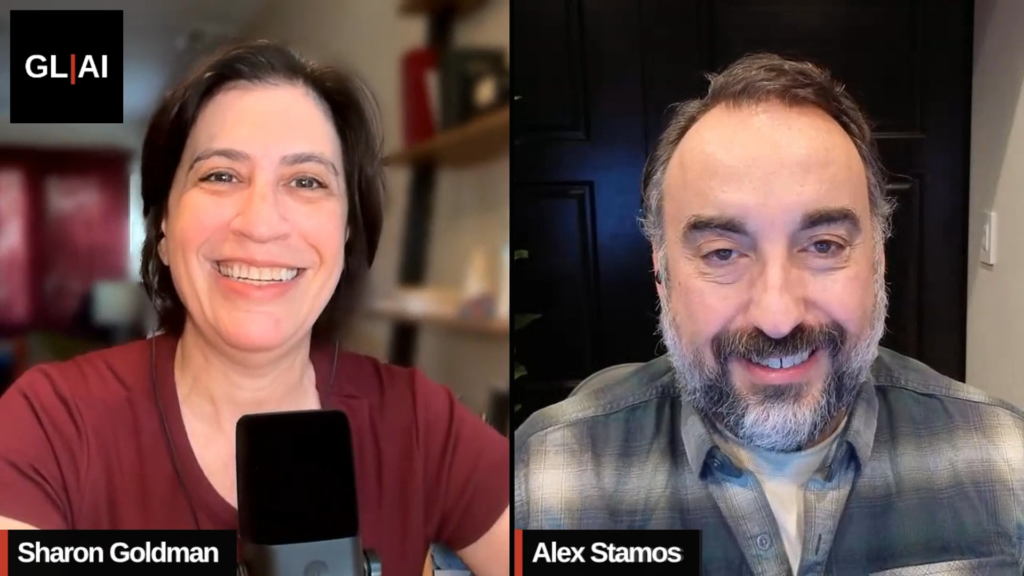
Alex Stamos has warned that open weight artificial intelligence could contribute to a cybersecurity “dark age” as automated attacks challenge established defenses. Speaking with Nilay Patel on The Verge’s Decoder podcast, Cognition’s chief security officer described a difficult period of adjustment rather than a permanent defeat for cybersecurity professionals. His concern centers on whether organizations can improve their security as quickly and economically as attackers can adopt increasingly capable AI tools. Downloadable models are particularly relevant because their developers have fewer opportunities to monitor how independently operated copies are used. However, the same technology also supports legitimate research, private deployments, and defensive applications.
Stamos uses the term cybersecurity dark age to describe a potential period when AI assisted attacks advance faster than the security industry can adapt. The concern involves growing access to tools capable of supporting vulnerability discovery and exploitation. Attackers can experiment against potential weaknesses, abandon unsuccessful approaches, and redirect their attention to other targets. Defenders face additional responsibilities because they must understand their systems, determine which changes are safe, deploy protections, and maintain essential services throughout the process. An organization can therefore improve its security while still facing increasing pressure from attackers adopting more efficient methods.
Finding more vulnerabilities is useful, but it also produces additional findings that require validation and repair. Better detection only improves security when someone can investigate the results and act on important issues. The dark age metaphor is therefore most useful as a description of an adaptation problem. It should not be mistaken for a formal technical category, a measured global condition, or evidence that existing security controls no longer work. The central question is whether successful compromises increase faster than organizations can reduce their exposure.
The possibility of a prolonged period of difficulty reflects the difference between adopting an attack tool and modernizing a large organization. Consider a manufacturer operating software accumulated over several decades. Replacing an exposed application could require identifying its owner, documenting dependencies, testing integrations, negotiating vendor support, and arranging downtime. An AI tool might identify the weakness quickly while leaving those organizational tasks unresolved. The United Kingdom’s National Cyber Security Centre examined similar concerns in its November 3, 2026, assessment of AI enabled intrusion through 2028. Its report anticipated continuing exposure in many systems while presenting several plausible scenarios rather than definite predictions.
There is no established date when defenders will collectively overcome these challenges. Different industries have different resources, replacement cycles, and tolerances for service interruptions. A company with well maintained systems may adapt relatively quickly, while a hospital, local authority, or industrial operator relying on unsupported technology could require a longer modernization program. The duration depends on practical investment, organizational execution, and the development of both offensive and defensive capabilities. A warning about several difficult years should therefore be understood as a possible trajectory rather than a guaranteed timetable.
Open weight AI models make their trained numerical parameters available for others to obtain and operate, subject to the applicable license. These parameters encode patterns learned during training and are used when the model generates responses. Access to model weights can allow organizations to run systems on infrastructure they control, adapt them for specialized tasks, and integrate them into their applications. However, hardware requirements vary considerably, meaning a downloadable model will not necessarily run efficiently on an ordinary laptop.
Open weight and open source are related but different descriptions. Making model weights available does not automatically provide the original training data, complete training code, or unrestricted rights to modify and redistribute every component. The National Telecommunications and Information Administration’s 2024 report examined the benefits and risks associated with widely available model weights. It considered the additional risks created by broad availability compared with alternative technologies and deployment arrangements, reflecting the evidence available at that time.
For cybersecurity, the important distinction involves operational control. Who operates the model, who can modify its surrounding software, and who can observe its activity all affect the available safeguards. Open weight distribution can increase the number of people capable of experimenting with powerful models independently, including security researchers, companies developing internal systems, and malicious operators. However, availability alone does not determine the level of danger. Coding ability, reliability, operating costs, tool access, and deployment conditions all matter. A model that produces plausible security advice is different from a system that can repeatedly perform useful technical tasks and accurately interpret their results.
The UK NCSC’s 2026 assessment includes a scenario in which malicious actors adapt publicly available models for their purposes. That scenario illustrates a possible development rather than demonstrating that every downloadable model already offers equivalent offensive capabilities. The defensive benefits also deserve consideration. Independent researchers can examine model behavior, evaluate weaknesses, and develop security tools without depending entirely on a commercial provider. Organizations may prefer local processing when handling sensitive information, particularly when they need direct control over their data and infrastructure.
The resulting risk is conditional. Wider access becomes especially significant when capable models, affordable operation, and effective automation become available together. It would be misleading to treat the open weight label as a complete measure of either security or insecurity. The practical consequences depend on how the technology performs, how it is deployed, and whether operators have the expertise and infrastructure needed to use it effectively.
Independently operated models also create different monitoring challenges. When a model runs entirely on another organization’s infrastructure, its original developer does not automatically receive the prompts, outputs, or records of tool activity. Downloading model weights does not inherently require sending subsequent requests back to the developer. Hosted services operate differently because requests pass through an environment controlled by the provider, which may be able to inspect abuse signals, restrict accounts, adjust safeguards, or suspend access.
NTIA’s consultation on widely available model weights identified monitoring and oversight as important issues. The limitation is architectural rather than simply a question of acceptable use policies. A license can establish conditions, but it does not necessarily provide a technical mechanism for disabling an independently operated copy. Removing an original download also does not erase copies already obtained. Nevertheless, local operation does not mean activity is unobservable to everyone. The organization running the model can maintain logs, access controls, and monitoring systems. The difference is that oversight shifts toward the deployer rather than remaining primarily with the original model provider.
The warning therefore concerns the relationship between increasingly accessible AI capabilities and the ability of security organizations to respond. Open weight systems can expand opportunities for experimentation and defensive development while also making capable tools available to malicious actors. Whether this produces a prolonged cybersecurity dark age depends on how effectively organizations improve their systems, adopt reliable defensive automation, and reduce vulnerabilities before attackers can exploit them.

How AI Accelerates Cyberattacks, Vulnerability Discovery, Exploitation, and Defensive Security
Artificial intelligence can help security researchers interpret unfamiliar source code, identify suspicious behavior, connect related functions, and suggest areas requiring further testing. When integrated with analysis tools, it can also help researchers move from a hypothesis toward supporting evidence. However, generating a warning is different from demonstrating a real vulnerability. A credible finding requires an explanation of the affected behavior, reproducible evidence, and an assessment of the circumstances in which the weakness matters. AI can reduce the time needed to investigate complex systems, but its usefulness depends on whether the resulting conclusions are accurate.
Google Project Zero and DeepMind’s Big Sleep collaboration demonstrated this potential in 2024. The team reported that its AI agent discovered a previously unknown vulnerability in SQLite, showing that model assisted security research could produce a concrete result in widely used software. The example supports the possibility of useful automated discovery, but it does not establish a universal detection rate across programming languages, applications, or vulnerability categories. AI can also generate false positives or overlook dependencies that change the significance of a finding. Producing longer lists of speculative problems may increase defenders’ workloads without making systems safer.
AI can also influence the interval between vulnerability disclosure and exploitation. Several different periods are often combined under the term time to exploit. A vulnerability may first be discovered privately, disclosed publicly, patched by its developer, and eventually repaired on each affected customer’s system. These stages can occur at different times. AI may accelerate portions of an attacker’s research after disclosure, increasing pressure on organizations still operating vulnerable software. The UK NCSC’s assessment through 2027 warned that AI could further compress the already limited period between disclosure and exploitation.
For defenders, publication of a software update is only the beginning. Security teams must determine whether an affected component exists in their environment, whether it is reachable, and how to deploy the repair safely. Consider a hypothetical organization requiring two days to validate and distribute an update while hostile activity begins within hours. Although those figures are illustrative, the resulting exposure window demonstrates the problem. Faster discovery can benefit both sides, but the important outcome is whether verified repairs reach vulnerable systems before an attacker succeeds.
AI also changes the economics of repeated attack attempts. An attacker benefits when automation reduces the effort required to examine potential targets, assess results, and decide what to investigate next. Defensive operations carry additional constraints because businesses must preserve availability, avoid disrupting legitimate users, and ensure hurried changes do not create new failures. These responsibilities remain even when technical analysis becomes faster. Consequently, attackers may gain a temporary advantage when useful automation is adopted more quickly than reliable defensive safeguards.
Anthropic’s November 2025 account of an espionage campaign provides an example of AI being used in malicious operations. The company reported that attackers used Claude Code against approximately 30 targets, succeeded in a small number of cases, and relied on AI for much of the operational work. It also reported fabricated credentials and other errors, demonstrating that the technology continued to have limitations. Importantly, the incident involved a hosted product, showing why AI enabled cyber risks cannot be attributed exclusively to downloadable models.
The reported campaign also illustrates how provider visibility can support intervention. Anthropic said it investigated suspicious activity, banned identified accounts, notified affected organizations where appropriate, and coordinated with authorities. Those actions depended on visibility and control within its service. However, monitoring does not guarantee prevention because malicious requests may resemble legitimate research, and attackers may distribute activity across different accounts. Independently hosted deployments require comparable oversight from the organizations operating them.
Hosted AI services and open weight models are not mutually exclusive categories. Open weight describes access to model parameters, while a hosted API describes how users access a running service. A company can offer a hosted service using an open weight model. The more meaningful distinction concerns whether the operator retains control over access, monitoring, and enforcement. A hosted provider may associate activity with accounts, apply usage limits, investigate suspicious patterns, and revoke credentials. What it actually does depends on product design, contracts, privacy practices, and security policies.
Defensive AI is also developing rapidly. DARPA’s August 2025 AI Cyber Challenge results reported that participating systems found 54 of 63 synthetic vulnerabilities and patched 43. They also discovered 18 real vulnerabilities that had not been inserted for the competition and supplied 11 patches for those findings. These results demonstrate that automated security systems can produce useful repairs rather than simply generating warnings. However, competition performance does not establish that identical success rates apply to every enterprise application or that generated patches can be deployed without review.
A successful repair must address the actual weakness, preserve intended software behavior, and remain compatible with the organization’s dependencies. Testing and rollback planning remain necessary even when AI generates the change. Longer term prevention also matters. NSA and CISA guidance published in 2025 highlights memory safe programming languages as a way to reduce memory related vulnerabilities at their source. Such improvements can eliminate recurring categories of defects, although they do not address every cybersecurity problem.
The most useful defensive applications of AI involve reducing the time required to reach verified outcomes. Examples include:
- Vulnerability analysis: Reviewing source code and identifying suspicious behavior that warrants investigation.
- Security research: Helping researchers examine unfamiliar software and connect related technical findings.
- Patch generation: Preparing possible repairs for validation and testing.
- Incident investigation: Gathering relevant records and organizing information about suspicious activity.
- Alert management: Grouping related findings and reducing repetitive analysis.
- Remediation planning: Helping engineers identify affected systems and prepare appropriate corrective actions.
- Security monitoring: Supporting the examination of activity patterns while retaining human oversight.
These applications can improve efficiency, but the distinction between proposed actions and authorized production changes remains essential. A tool permitted to read logs requires a different level of trust from one capable of disabling accounts or changing infrastructure. Organizations should begin with bounded tasks whose results can be checked, compare performance with existing workflows, and expand access when evidence supports doing so. Someone must remain responsible for the decision and its consequences.
NIST’s April 2025 incident response guidance places response within broader cybersecurity risk management, connecting preparation with detection, response, and recovery. This framework explains why purchasing an AI security product cannot independently complete an organization’s defensive responsibilities. Teams still need accurate asset information, usable records, responsible system owners, and dependable recovery procedures. AI can help process information, but incomplete inventories and unclear authority can delay action even when technical analysis becomes faster.
The strongest defensive outcome is a smaller pool of exploitable systems, achieved through both immediate repairs and better underlying software. AI may help identify weaknesses and prepare fixes more efficiently, but success depends on whether organizations can validate those findings, deploy reliable changes, and maintain essential services. The competition between attack and defense therefore concerns operational execution as much as model capability.
How AI Companies and Enterprise Security Teams Can Respond to Cybersecurity Risks
Reducing AI related cybersecurity misuse requires attention to model capabilities, deployment arrangements, and observed abuse. Improving refusal behavior can be useful, but it should form part of a wider security program rather than serve as the only safeguard. Before release, model developers can evaluate realistic tasks involving multiple steps, examine behavior when connected to tools, and test whether safeguards remain effective against attempts to bypass them. Reporting should distinguish unsupported model claims from actions verified to succeed, since apparent technical confidence is not evidence of successful exploitation.
For hosted services, account security and abuse detection can complement these evaluations. Providers need processes for investigating concerning activity while protecting legitimate security research and handling user information appropriately. Downloadable model releases require particular attention before distribution because original developers have fewer opportunities to intervene after copies become independently operated. Release decisions should therefore consider model capability, modification risks, available mitigations, and the expected benefits of broader access.
Defensive access also deserves consideration. DARPA’s AI Cyber Challenge made participating systems available as open source tools, illustrating how public research can support security practitioners. Wider access can help organizations test capabilities, understand limitations, and develop their own defensive systems. Effective programs should measure whether safeguards reduce harmful outcomes while preserving legitimate research and development rather than assuming that restricting access or improving refusal behavior alone will eliminate misuse.
Enterprise security teams may increasingly use supervised automation for routine activities. AI could help gather incident records, summarize timelines, group related findings, and prepare proposed repairs for engineers to review. However, the authority to recommend an action should remain distinct from permission to execute it. Organizations need to establish appropriate access controls, approval procedures, and accountability before allowing automated systems to make changes affecting production infrastructure.
A sensible adoption process begins with clearly defined tasks whose outputs can be verified. Teams can compare AI assisted results with existing workflows, measure mistakes, and expand responsibilities when performance supports doing so. The process should preserve human accountability for important decisions and their consequences. Security teams need to understand not only whether an AI system produces useful suggestions but also how reliably those suggestions translate into safe operational changes.
Measuring defensive progress requires connecting technical activity with exposure and actual harm. Counting generated reports, blocked prompts, or discovered vulnerabilities does not establish that an organization has become safer. One useful metric is the interval between a vulnerability becoming relevant to the organization and verified remediation on affected systems. This measurement should include delays before security teams recognize that they operate an affected component.
Another useful measure is the proportion of important exposures resolved before observed exploitation. Organizations can also track investigation time, containment time, recurring incidents, service disruption, and the operational cost of resolving validated problems. FIRST’s Exploit Prediction Scoring System estimates the probability that a published vulnerability will be exploited in the wild during the following 30 days. It can support prioritization, but it is not a complete measure of an organization’s risk or direct evidence that AI was involved in an attack.
Useful performance indicators include:
- Time to verified remediation: How quickly an identified vulnerability is repaired across affected systems.
- Exposure before exploitation: The proportion of serious weaknesses corrected before attackers exploit them.
- Incident investigation time: How efficiently teams establish what happened and identify affected systems.
- Containment speed: The time required to prevent an identified incident from spreading.
- Recurring incidents: Whether similar weaknesses continue producing security problems.
- Service disruption: The operational impact of incidents and defensive changes.
- AI evaluation accuracy: False positives, missed findings, patch regressions, and the amount of human correction required.
Comparisons should account for changes in workload and coverage. A larger vulnerability count may indicate better visibility rather than worsening security, while fewer reports may simply reflect less testing. The important question is whether defensive improvements reduce exploitable conditions and damaging incidents. Measuring output volume alone can reward activity without establishing useful results.
Alex Stamos brings experience from major technology companies to this discussion. His previous roles include chief security officer at Facebook and chief information security officer at Yahoo. Stanford’s biographical material documents that background and his work on information security and online safety. Cognition’s October 28, 2026, announcement that Corridor was joining the company identifies Stamos as Cognition’s chief security officer. The announcement connects Corridor’s arrival with work on Devin Security and more secure software development.
His position provides relevant context when evaluating the warning. Experience responding to security challenges at large technology companies can offer insight into operational constraints, while working for a company developing AI related security capabilities creates a commercial interest in the subject. Both facts belong in the assessment. Professional expertise can inform a perspective, but claims about the future of cybersecurity should also be evaluated against independent research, demonstrated outcomes, and measurable evidence.
Stamos discussed these concerns on The Verge’s Decoder podcast with Nilay Patel. The interview page is titled “AI broke the cybersecurity world. What’s next?” and contains the edited conversation. The episode was published in November 2026. Searching for the program alongside Stamos’s name and cybersecurity helps distinguish this discussion from his earlier interviews. The original conversation provides context for how he connects model capabilities, security economics, and possible responses.
When examining excerpts from the interview, it is important to distinguish Stamos’s assessment from independently established facts. A podcast discussion can combine professional experience, incident reports, technical explanations, and predictions within the same conversation. The broader evidence comes from different sources serving different purposes. NCSC assessments describe possible future developments, DARPA results demonstrate particular defensive capabilities, and provider incident reports describe observed activity. None should be treated as interchangeable.
The cybersecurity dark age warning is therefore best understood as an experienced practitioner’s assessment of a difficult transition. It is not itself a benchmark or statistical measurement showing how much open weight AI has increased successful attacks worldwide. The practical response is to improve security operations, measure outcomes accurately, and adopt defensive automation where it can be validated. Whether AI ultimately widens or narrows the gap between attackers and defenders will depend on how effectively organizations translate technical advances into reliable security improvements.
Frequently Asked Questions (FAQs)
- Does a cybersecurity dark age mean the internet will stop working?
No. The phrase describes a possible period of increased cyber threats and difficulty adapting to rapidly developing attack capabilities. It does not mean that internet services will stop functioning or that every organization will experience a serious breach. The concern is that attackers could adopt useful AI automation faster than some organizations can strengthen their defenses, creating greater pressure on existing security systems. - Are open-weight AI models automatically malicious?
No. Open weight models can support legitimate research, software development, private computing, and defensive cybersecurity applications. Their risks depend on technical capability, operator intent, access to external tools, and the safeguards surrounding their deployment. Making model weights available does not automatically make the technology harmful. However, independent operation can reduce the original developer’s ability to monitor or intervene when copies are misused. - Is open-weight AI the same as open-source AI?
Not necessarily. Open weight AI means the model’s trained parameters are available for others to obtain and operate under applicable licensing terms. Open source AI can involve broader access to development materials, permissions, and supporting components. Releasing model weights does not automatically provide training data, complete training code, or unrestricted redistribution rights. Developers should examine the actual license and release materials before assuming a model satisfies a particular open source definition. - Can hosted AI services also be used in cyberattacks?
Yes. Cybersecurity misuse is not limited to downloadable models. Anthropic’s November 2025 report described an espionage campaign in which attackers used Claude Code against multiple targets. Hosted services can provide operators with opportunities to identify suspicious activity, restrict accounts, and intervene, but these safeguards do not guarantee that misuse will never occur. The practical level of protection depends on monitoring capabilities, enforcement procedures, and the design of the service. - Can AI find previously unknown software vulnerabilities?
Yes. Google Project Zero and DeepMind’s Big Sleep research demonstrated that AI assisted analysis could discover a previously unknown vulnerability in SQLite. This provides evidence that AI can contribute to genuine security research rather than simply repeat known information. However, success in one project does not establish reliable vulnerability detection across every programming language or application. Findings still require verification and assessment before they can support effective remediation. - Does an AI-generated patch automatically make software secure?
No. An automatically generated patch may contain mistakes, fail to address the actual vulnerability, or unintentionally disrupt legitimate functionality. Security teams must verify that the repair resolves the weakness and remains compatible with the affected system. Appropriate testing, review, and rollback planning are still necessary. The final step is confirming that the validated repair has been deployed successfully to the systems that require it. - How long could the cybersecurity dark age last?
There is no established duration. Stamos’s warning reflects the possibility that organizations may need several years to adapt to rapidly improving AI capabilities used in cyberattacks. However, different sectors face different challenges, and some may strengthen their defenses more quickly than others. The eventual duration would depend on attacker development, defensive innovation, investment, and how effectively organizations modernize vulnerable systems. - Will AI replace enterprise security teams?
The evidence discussed does not establish that AI will replace enterprise cybersecurity teams. AI can assist with vulnerability analysis, incident summaries, alert investigation, and proposed repairs, potentially reducing repetitive work. However, decisions involving production changes, access permissions, incident response, business priorities, and recovery still require accountable oversight. Organizations are better served by evaluating where supervised automation improves results rather than assuming every security responsibility can be transferred to AI. - What is the most useful measure of defensive progress?
Reduced exposure to exploitable vulnerabilities and fewer damaging incidents are more meaningful than simply counting detected bugs or generated alerts. Organizations should track how quickly important weaknesses are repaired, how effectively incidents are contained, and how much disruption occurs. They should also measure false positives, missed findings, and the reliability of automated repairs. These indicators help establish whether defensive activity produces genuine improvements in security. - Does Stamos’s job at Cognition affect how his warning should be read?
Yes, it provides relevant context. Stamos has extensive cybersecurity experience, including senior security roles at Facebook and Yahoo, which informs his understanding of operational challenges. He is also Cognition’s chief security officer, and the company develops AI related security capabilities. Readers should consider both his professional experience and the commercial context of his current position while evaluating his warning alongside independent research, demonstrated technical results, and documented security incidents.
Conclusion
Alex Stamos’s cybersecurity dark age warning highlights a significant challenge: faster technological capabilities do not automatically translate into faster organizational defenses. Open weight AI models change who can operate advanced systems and where responsibility for monitoring resides. Hosted services provide different opportunities to detect and prevent misuse, but they remain vulnerable to malicious activity. At the same time, defensive research demonstrates that AI can identify genuine software vulnerabilities, assist with patch generation, and improve security operations.
The central issue is whether these defensive benefits can reach vulnerable systems quickly, reliably, and affordably. Meaningful progress should be measured through verified repairs, reduced exposure, effective incident response, and fewer damaging security incidents. A difficult transition is possible, but its severity and duration remain uncertain. The long term outcome will depend on how effectively organizations turn AI capabilities into dependable security improvements.
Sources and Citations
- The Verge, November 8, 2026: AI broke the cybersecurity world. What’s next?
Decoder interview with Alex Stamos, Cognition’s chief security officer, in which he warns that AI could push cybersecurity into a multi-year “dark age.” He discusses open-weight models, automated vulnerability discovery and exploitation, attack economics, legacy software, defensive AI, and the need to reduce the cost of securing systems. The Verge - UK National Cyber Security Centre, November 3, 2026: Artificial intelligence and cyber intrusion
The NCSC assesses AI-enabled cyber threats through 2028 using baseline, pessimistic, and optimistic scenarios. It says the scenarios are plausible possibilities rather than predictions and examines faster attacks, greater proliferation of AI-cyber capability, vulnerability exploitation, and the possibility that offensive capability could outpace defensive adaptation. National Cyber Security Centre - National Telecommunications and Information Administration, July 2024: Dual-Use Foundation Models with Widely Available Model Weights
NTIA’s report examines the benefits and risks of making foundation-model weights widely available, including innovation, research access, malicious use, oversight, monitoring, accountability, licensing, and the difficulty of regaining control once model weights have been broadly distributed. NTIA - NTIA, February 21, 2024: Dual Use Foundation Artificial Intelligence Models with Widely Available Model Weights
The underlying consultation explains why model-weight availability matters for security and oversight. It notes that widely available weights can support research and competition while also creating misuse risks and reducing the original developer’s ability to monitor independently operated copies. NTIA - Google Project Zero and Google DeepMind, November 1, 2024: From Naptime to Big Sleep: Using Large Language Models to Catch Vulnerabilities in Real-World Code
Documents the Big Sleep AI agent discovering a previously unknown exploitable stack-buffer-underflow vulnerability in SQLite. Google says the issue was reported to SQLite developers and fixed the same day, providing a concrete example of AI-assisted vulnerability research. Google Project Zero - Anthropic, November 13, 2025: Disrupting the first reported AI-orchestrated cyber espionage campaign
Anthropic describes a sophisticated campaign in which threat actors used Claude Code as part of cyber-espionage operations. The report discusses roughly 30 targets, AI-directed operational work, model errors, Anthropic’s investigation, account bans, notifications, and the provider visibility that enabled intervention. Anthropic - DARPA, August 8, 2025: AI Cyber Challenge marks pivotal inflection point for cyber defense
DARPA reports that AI Cyber Challenge systems discovered 54 of 63 synthetic vulnerabilities and patched 43. They also identified 18 real vulnerabilities and produced 11 patches for those non-synthetic findings, demonstrating that automated AI systems can contribute to both vulnerability discovery and remediation. darpa.mil - NSA and CISA, June 24, 2025: Memory Safe Languages: Reducing Vulnerabilities in Modern Software Development
NSA and CISA recommend greater adoption of memory-safe programming languages to eliminate classes of memory-related vulnerabilities at the source. The guidance also discusses phased migration, interoperability with existing code, and alternatives when complete migration is impractical. National Security Agency - CISA, February 2025: Secure by Design Alert: Eliminating Buffer Overflow Vulnerabilities
CISA recommends memory-safe languages where feasible, aggressive testing, compiler protections, fuzzing, and published memory-safety roadmaps to reduce recurring vulnerability classes rather than repeatedly patching individual instances. CISA - NIST, April 3, 2025: Incident Response Recommendations and Considerations for Cybersecurity Risk Management
NIST SP 800-61 Rev. 3 integrates incident response into the broader Cybersecurity Framework, emphasizing preparation, detection, response, and recovery. It supports the article’s point that AI tools cannot replace accurate asset inventories, responsible system ownership, operational planning, and dependable recovery processes. NIST Computer Security Resource Center - FIRST: Exploit Prediction Scoring System FAQ
FIRST explains that EPSS estimates the probability that a published vulnerability will be exploited in the wild during the next 30 days. It also stresses that EPSS is not a complete risk score and must be combined with organizational context such as asset exposure and impact. FIRST - FIRST: How EPSS Works
Technical documentation explains the model’s threat-intelligence inputs, exploit-code signals, exploitation telemetry, scoring process, and known limitations. It supports using EPSS as a prioritization signal rather than treating it as direct proof that a specific organization will be attacked. FIRST - Stanford University: Alex Stamos – Stanford Profile
Stanford documents Stamos’s long cybersecurity career, including service as Chief Security Officer at Yahoo and Facebook, founding the Stanford Internet Observatory, and teaching cybersecurity and trust-and-safety courses. Stanford Profiles - Stanford Freeman Spogli Institute: Alex Stamos
Provides additional biographical context on his work in cybersecurity, online safety, Facebook security, Stanford research, and policy. cyber.fsi.stanford.edu - The Verge, November 2026: AI broke the cybersecurity world. What’s next?
The interview itself identifies Stamos as Cognition’s chief security officer, making it the strongest currently indexed source I found for his present role and his comments about Cognition’s AI-security work. The Verge
Recommendations
- Paramount Closes $111B to Warner Bros. Deal: WB Games Uncertain
- Final Fantasy X/X-2 HD Remaster Switch 2 Release Guide and New Features
- Blender DLSS (2026 Guide): Enable DLSS Ray Reconstruction for Faster Cycles Viewport Denoising
- Steam Controller Hidden Easter Egg Explained: Why It Screams When Dropped and What It Means
- ANBERNIC RG DDS: 3DS-Inspired Handheld Starts at $299.99
- Anthropic’s $660M Charity Match Bill Could Reach Billions After IPO
- Ghostly Whiskers Faces Haunted Paws Copycat Allegations on Nintendo eShop
- Chaos releases V-Ray 7.4 for Houdini
- Marvel Rivals “Daredevil’s Shadowed Start” Costume Trailer Explained: Release Date, Event Details, Skin Rewards, and Everything We Know
- Horror Romance Visual Novel This Game Is Not Real Gets Rejected By Steam For “Not Meeting Platform Criteria”



































































































