








In This Article (19 sections)
James Bond in 007 First Light vs Film Versions: Key Differences Explained
The portrayal of James Bond in 007 First Light represents a notable reinterpretation of the iconic spy archetype established across decades of cinema. Unlike the traditional film versions of James Bond—most famously embodied by actors such as Sean Connery and Daniel Craig—the First Light version leans into a younger, more psychologically grounded operative.
In the films, Bond is typically portrayed as a fully formed MI6 agent with years of field experience, emotional restraint, and polished espionage instincts. In contrast, 007 First Light emphasizes early-career uncertainty, situational improvisation, and a less refined combat style.
This shift is significant because it reframes Bond not as an untouchable super-spy but as a developing intelligence asset still learning the rules of espionage. The emotional tone is also different: where film Bond often carries a hardened cynicism, First Light introduces vulnerability and curiosity, suggesting a formative stage of his identity.
Another major difference lies in narrative pacing. Classic films prioritize mission-driven arcs, while First Light focuses more on character-building sequences, training evolution, and moral decision-making under pressure.

Who Plays James Bond in 007 First Light and How it Compares to Daniel Craig and Sean Connery
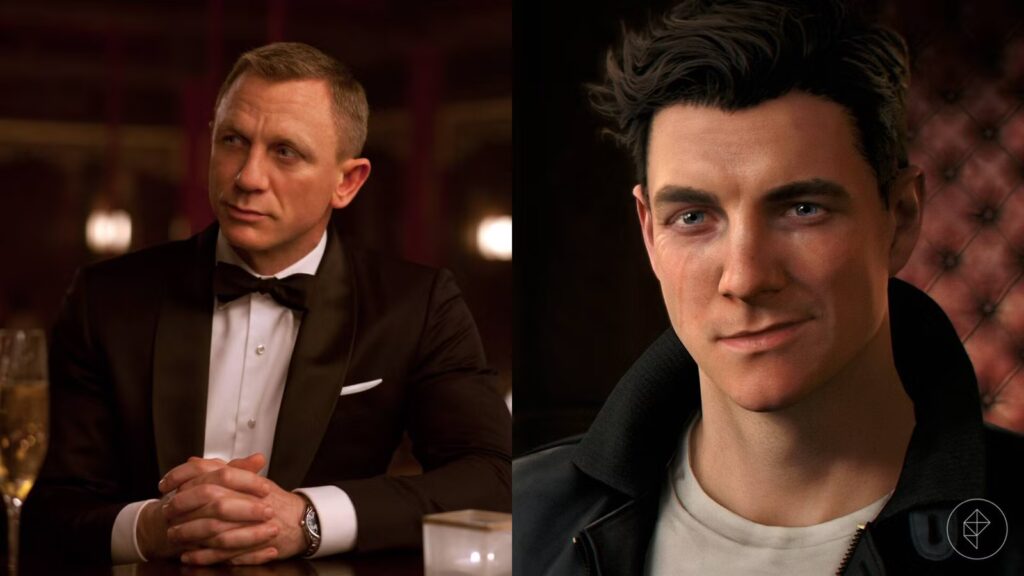
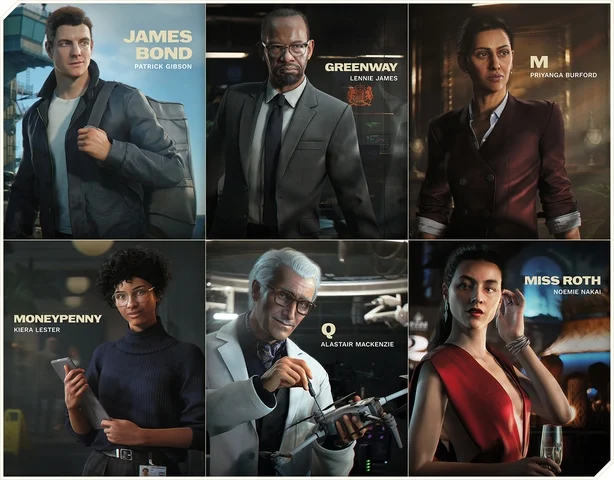
In 007 First Light, James Bond is portrayed by a younger reinterpretation of the character, designed to align more with a “rookie agent” archetype than the polished operatives seen in earlier adaptations.
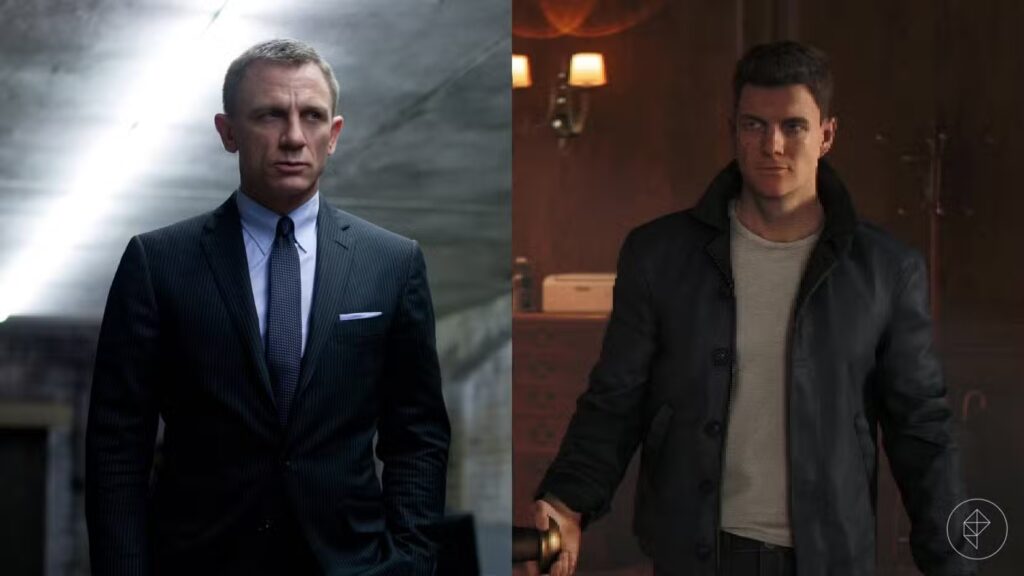
Comparatively, Daniel Craig delivered a more physically intense and emotionally raw Bond, especially in films like Casino Royale, where Bond is still learning the consequences of espionage. Meanwhile, Sean Connery represented the classic suave, charismatic spy who defines the original cinematic template.
The First Light interpretation sits between these extremes. It borrows Craig’s realism but strips away the veteran confidence, while also retaining some of Connery’s charm but without the fully developed sophistication.
This creates a hybrid characterization:
- Less experience than Craig’s Bond
- Less polish than Connery’s Bond
- More adaptability than both in certain field scenarios
The result is a character study focused on evolution rather than perfection, allowing players or viewers to witness Bond becoming the icon rather than simply embodying it.
M in 007 First Light Compared to Judi Dench and Ralph Fiennes Versions
The character of M in 007 First Light serves as a structural anchor for MI6 authority, much like in the films. Traditionally, M has been portrayed by Judi Dench and later Ralph Fiennes, each bringing distinct leadership tones.
In First Light, M is depicted with a more developmental oversight role rather than the hardened bureaucratic authority seen in the films. Judi Dench’s version of M often displayed emotional investment in Bond, while Ralph Fiennes’ interpretation leaned toward institutional discipline.
The First Light M blends these traits but places greater emphasis on training oversight and operational testing. This version of M functions more like a mentor-evaluator than a distant command figure.
Key differences include:
- More direct involvement in Bond’s early missions
- Less political constraint, more field-oriented decision-making
- Stronger emphasis on shaping MI6’s future agents
This reimagining reflects a modern storytelling approach where authority figures are more actively involved in protagonist development.
Q in 007 First Light vs the James Bond Movies: Gadget Master Evolution
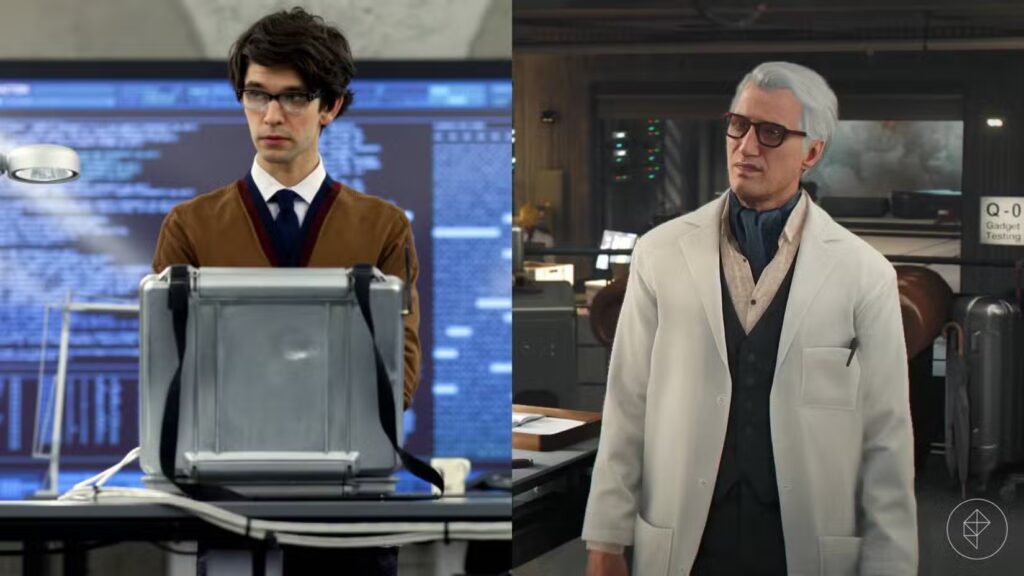
Q remains one of the most iconic supporting characters in the Bond universe, traditionally portrayed as the tech genius behind MI6’s gadgets.
In the films, Q evolves from the older, more traditional engineer archetype into a younger, more sarcastic hacker-style inventor, particularly in modern interpretations. The First Light version continues this evolution but pushes it further into experimental technology and prototype-based equipment.
Compared to film versions, Q in First Light:
- Provides early-stage prototype gadgets rather than polished tools
- Plays a more hands-on role in field testing
- Engages more directly with Bond during missions
This version of Q reflects a transitional phase in MI6 technology, where innovation is still unstable and experimental. The dynamic between Bond and Q becomes more collaborative, resembling field science rather than one-way gadget supply.
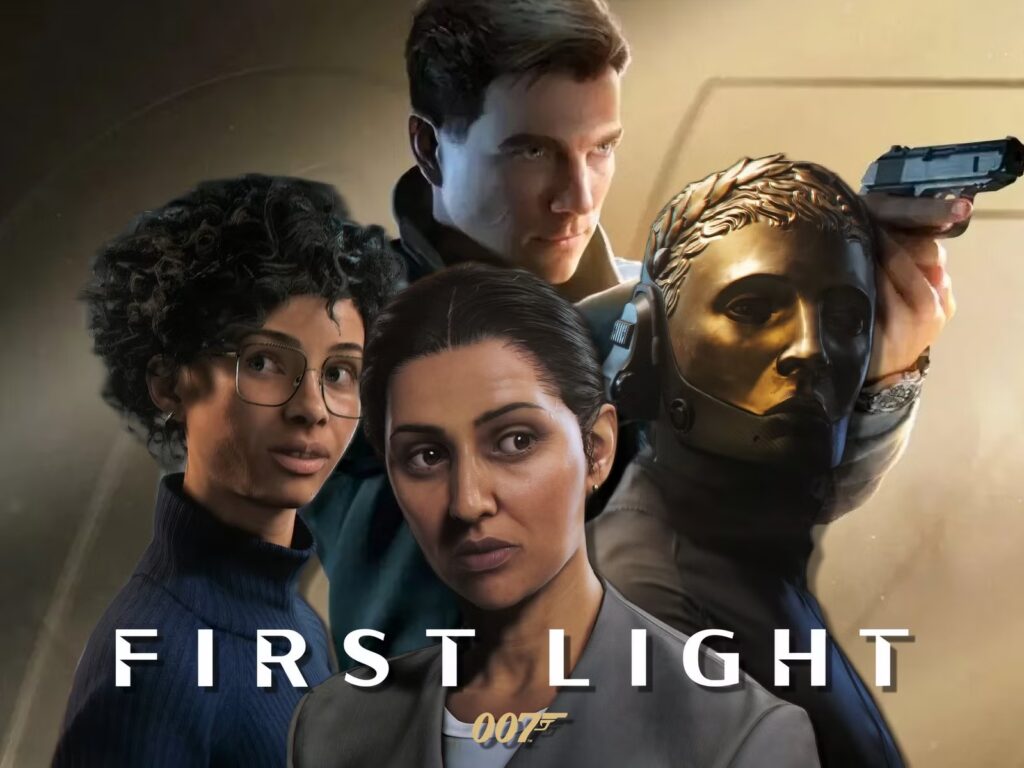
Miss Moneypenny in 007 First Light and Her Expanded Role Compared to the Films
Miss Moneypenny, traditionally portrayed as MI6’s administrative and emotional anchor, undergoes significant expansion in 007 First Light.
In the films, Miss Moneypenny is often positioned as a flirtatious yet professional figure who supports Bond from behind the desk. However, First Light elevates her role into operational intelligence coordination.
Key expansions include:
- Active involvement in mission logistics
- Real-time communication support during field operations
- Analytical contributions to intelligence gathering
This shift modernizes her character from passive support to active strategic contributor, reflecting contemporary storytelling trends that emphasize competence and agency in supporting roles.
John Greenway Character Explained: is He Replacing Classic Bond Mentors?
John Greenway is introduced in 007 First Light as a senior MI6 figure who plays a mentorship-adjacent role in Bond’s development.
Unlike classic mentors in Bond films, Greenway is not a direct replacement for any single character but rather a composite of multiple archetypal figures seen across the franchise.
His role includes:
- Tactical briefing oversight
- Psychological evaluation of Bond’s field readiness
- Institutional enforcement of MI6 protocol
Greenway’s presence raises speculation about whether he is replacing traditional mentorship structures seen in earlier films. However, rather than replacing characters like M or other senior agents, he represents a structural expansion of MI6’s internal hierarchy.
007 First Light Cast List vs James Bond Film Characters: Full Comparison
The cast structure of 007 First Light mirrors the film universe but introduces several reinterpretations.
Compared to the film roster:
- James Bond remains the central operative figure
- M retains leadership authority
- Q continues technical development oversight
- Moneypenny expands into operational support
However, First Light introduces additional internal MI6 training staff and field coordinators who do not have direct equivalents in the films. These roles emphasize training infrastructure and early-career development.
This expanded cast structure creates a more institutional view of MI6, compared to the film series’ focus on mission-centric storytelling.
How 007 First Light Reimagines MI6 Characters for a Modern Spy Story
007 First Light modernizes MI6 by shifting its portrayal from a secretive, elite organization into a more structured intelligence ecosystem.
Traditional films depict MI6 as sleek and minimalistic, but First Light expands its operational layers:
- Training divisions
- Psychological assessment units
- Experimental tech departments
This reinterpretation aligns with modern espionage storytelling trends that emphasize bureaucracy and internal complexity.
MI6 becomes less of a backdrop and more of an active ecosystem shaping Bond’s identity.
Villains in 007 First Light Compared to Classic Bond Movie Antagonists
Classic Bond villains are often characterized by global domination schemes, eccentric personalities, and theatrical lairs.
In contrast, 007 First Light introduces antagonists who are:
- More grounded in geopolitical conflict
- Less theatrical, more operational
- Motivated by intelligence warfare rather than world domination
While classic villains often represent exaggerated ideological extremes, First Light focuses on realistic threat actors, such as rogue intelligence operatives and corporate espionage networks.
This shift enhances realism and aligns with the game’s grounded tone.
Is 007 First Light a Canon James Bond Story or a Reboot Universe?
The canonical status of 007 First Light is interpreted as a reimagined continuity rather than a direct extension of existing film canon.
It draws inspiration from the established universe of James Bond but does not strictly adhere to any single film timeline.
Instead, it operates as:
- A reinterpretation of Bond’s origin phase
- A modern continuity reset
- A narrative bridge between classic and contemporary spy storytelling
This allows creative flexibility while preserving recognizable character identities.
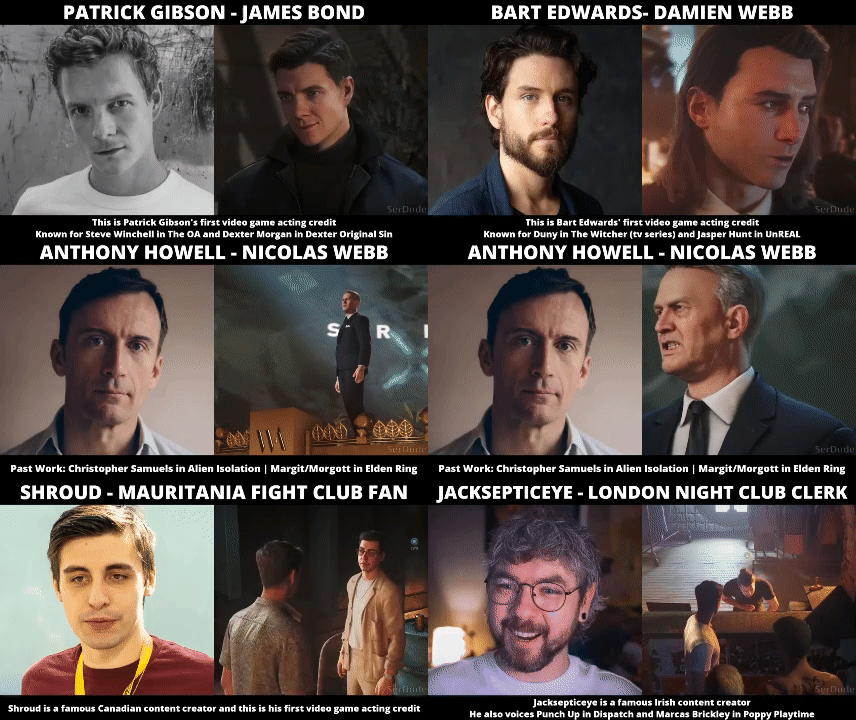
How Patrick Gibson’s James Bond Differs from Film Portrayals of 007
In 007 First Light, Bond is portrayed by Patrick Gibson, whose interpretation emphasizes youth, adaptability, and inexperience compared to film portrayals.
Unlike seasoned versions of Bond, this iteration:
- Relies more on instinct than strategy
- Displays visible learning curves in combat
- Shows emotional reactions more openly
Compared to Craig and Connery, Gibson’s Bond is less polished but more dynamic in growth trajectory.
Easter Eggs in 007 First Light that Reference Classic James Bond Movies
007 First Light includes numerous references to classic Bond films, including subtle visual cues and dialogue callbacks.
Common easter egg categories include:
- Classic weapon and gadget redesigns
- Mission names referencing iconic film titles
- Visual homages to famous Bond locations
These references serve as connective tissue between the new interpretation and the long-standing cinematic legacy.
Which 007 First Light Characters Are Completely Original vs Film Adaptations
Characters in First Light fall into two categories:
Adaptations:
- James Bond
- M
- Q
- Miss Moneypenny
Original additions:
- Training officers
- Intelligence analysts unique to this continuity
- Field simulation coordinators
The presence of original characters allows the narrative to expand MI6’s internal structure beyond what is seen in films.
How MI6 in 007 First Light Compares to the Organization in Bond Films
MI6 in First Light is significantly more layered than its film counterpart.
In films, MI6 is primarily a mission briefing hub. In First Light, it functions as:
- A training institution
- A research and development center
- A psychological evaluation environment
This makes MI6 feel more like a living institution rather than a narrative backdrop.
Pixelhair and the View Keeper in 007 First Light: Hidden References and Fan Theories
The terms “pixelhair” and “the view keeper” appear in fan discussions surrounding 007 First Light as speculative references to hidden development cues and symbolic design elements.
“Pixelhair” is often interpreted as a visual fidelity joke among fans, referring to the hyper-detailed character models used in close-up cinematic sequences. It symbolizes the shift toward ultra-realistic character rendering in modern spy storytelling.
“The View Keeper” is more interpretive, with theories suggesting it refers to in-game surveillance systems or narrative framing devices that “watch” Bond’s progression throughout MI6 evaluations.
While not officially confirmed canon elements, both concepts have become part of fan theory ecosystems analyzing visual storytelling depth.
Frequently Asked Questions (FAQs)
- Is 007 First Light connected to the James Bond films?
It is inspired by the films but operates as a reimagined continuity. - Who is the main character in 007 First Light?
James Bond, portrayed as a younger MI6 recruit. - Is M the same character as in the movies?
Yes, but reinterpreted in a more training-focused role. - Does Q use the same gadgets as the films?
No, most gadgets are prototype versions. - Is Miss Moneypenny more active in First Light?
Yes, she plays a larger operational role. - Are the villains the same as in Bond films?
No, they are original grounded antagonists. - Is the game canon?
It is a reimagined continuity, not strict film canon. - Who plays Bond in First Light?
Patrick Gibson. - Does First Light include classic Bond references?
Yes, through easter eggs and visual callbacks. - Is MI6 different in First Light?
Yes, it is more structured and institutional.
Conclusion
007 First Light redefines the James Bond mythos by focusing on origin-level storytelling, institutional depth, and character evolution. Compared to the traditional films featuring James Bond and performances by actors such as Sean Connery and Daniel Craig, this reinterpretation emphasizes development over mastery.
By expanding MI6’s internal structure, reimagining supporting characters like M, Q, and Miss Moneypenny, and introducing new narrative frameworks, First Light positions itself as both homage and reinvention.
It is a modern rethinking of espionage storytelling that preserves the essence of Bond while reshaping how his early identity is understood.
Sources and Citations
- James Bond Franchise Overview
https://www.007.com/ - MI6 Character Database – James Bond Series
https://www.mi6-hq.com/ - Filmography Reference – James Bond Films
https://www.imdb.com/ - Actor Profiles – Daniel Craig
https://www.imdb.com/name/nm0185819/ - Actor Profiles – Sean Connery
https://www.imdb.com/name/nm0000125/
Recommended
- Beadle & Grimm’s Expands Star Trek Universe with New Games After 2025 Picard Murder Mystery Release
- Starfield’s PS5 Release Is Coming Very Soon: Leak Points to April 7, 2026 Launch, Pre-Orders, Price & Editions
- Slay The Spire 2 Finally Enters Early Access on March 5, 2026: 4-Player Co‑Op, New Characters, and What to Expect
- Town of Zoz: Become a Shaman Chef & Uncover the Mystery of a Town in This Action Adventure
- Stranger Things Creators Call Season 2 Episode Spin-Off Rumors “Bullshit”: Full Explanation of the Lost Sister Controversy
- Dune: Awakening Official ‘The Water Wars’ DLC Launch Trailer Explained: Release Date, New Content, Story Details, and Everything We Know
- Ryan Cohen Says He “Isn’t Passionate” About GameStop While Pushing a $55.5B EBay Bid: What’s Happening, Why it Matters, and What Comes Next
- Tom Clancy’s Jack Ryan: Ghost War Breakdown: Fan Reaction, Trailer Highlights, Release Date, Cast, and Everything We Know
- Hyper-Realistic CGI Steam: Blender, Houdini, Cinema 4D & Unreal Engine Real-Time Simulation Guide (Free & Paid Tools)
- How to Animate a Camera in Blender



































































































