











In This Article (7 sections)
Amazon Bee Frontier and Bee Eclipse Announced: Prices, Features and Release Dates
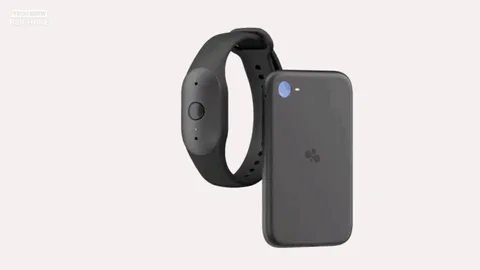
Amazon announced Bee Frontier and Bee Eclipse on October 15, 2026, expanding its personal AI lineup with two devices designed to capture spoken conversations and turn them into useful memories, summaries and reminders. Frontier costs $74.99 and can be worn on the wrist or clipped to clothing, while Eclipse starts at $99.99 and attaches magnetically to a smartphone. Frontier was available at the announcement, whereas Eclipse was described as coming soon, without a confirmed release date.
The announcement introduces another approach to personal AI, focusing on remembering information discussed throughout the day rather than requiring users to enter every detail manually. Bee aims to help people recall appointments, track commitments, revisit conversations and organize important information through a system that processes spoken interactions. Its appeal comes from capturing information while conversations happen, potentially reducing the effort involved in creating reminders or reconstructing discussions afterward.
However, the usefulness of this approach depends on more than microphone quality. A personal AI assistant must accurately interpret conversations, distinguish firm commitments from casual remarks, provide understandable controls and handle personal information responsibly. Amazon’s launch materials describe intended capabilities and manufacturer specifications, but they do not establish independently measured transcription accuracy, real world battery endurance or performance across every supported device and environment.
Bee Frontier and Eclipse belong to a category commonly described as ambient AI. Rather than depending entirely on questions typed into an application, ambient AI attempts to gather relevant context during everyday activities. Someone discussing a project deadline during lunch, for example, could later review the agreed date without manually recording the conversation at the time.
The potential advantage is convenience. Traditional reminders require users to recognize that something needs remembering and then create an entry themselves. A conversation based assistant attempts to identify useful information before it disappears from attention.
Nevertheless, spoken language is often ambiguous. A suggestion, joke, hypothetical plan and firm commitment can sound similar when separated from their original context. The usefulness of Bee’s generated summaries and reminders therefore depends on whether they preserve the meaning of conversations rather than simply producing fluent descriptions.
The two devices provide different ways to access the same broader personal AI service. Frontier follows the wearer, while Eclipse remains attached to the smartphone. This distinction influences how each product fits into everyday routines and which conversations it may be most convenient to capture.
Frontier is designed for people who want a wearable assistant available while moving around. It can be worn as a bracelet or clipped to clothing, making it potentially useful when a smartphone remains in a bag, on a desk or otherwise out of reach.
Eclipse takes a different approach by attaching to the phone someone already carries. Its design may appeal to users who frequently participate in telephone conversations and prefer having their AI accessory integrated with their existing device.
The announced US prices are:
- Bee Frontier: $74.99.
- Bee Eclipse: Starting at $99.99.
- Bee Pro monthly subscription: $11.99.
- Bee Pro annual subscription: $99.99.
The commonly reported $75 and $100 hardware prices are rounded versions of Amazon’s announced figures rather than separate pricing options.
Availability also differs between the products. Frontier was announced as available immediately on October 15, 2026, while Eclipse was introduced as an upcoming product. An announcement does not necessarily establish immediate delivery, and the reviewed launch information did not provide an exact release date for Eclipse.
This distinction matters when comparing the devices. Someone needing a conversation assistant immediately can evaluate Frontier as an available product. Someone specifically interested in Eclipse’s phone mounted format must also consider the uncertainty surrounding its shipping schedule.
The announced dollar prices should also be understood in their original market context. They do not automatically establish local pricing, international shipping coverage, import costs or warranty arrangements in other countries. Converting the headline price into another currency would not necessarily produce an accurate final purchase total.
Hardware pricing is only one part of ownership because Bee also offers free and paid service tiers. Depending on how someone intends to use the system, subscription costs could become more significant over time than the approximately $25 difference between Frontier and Eclipse.
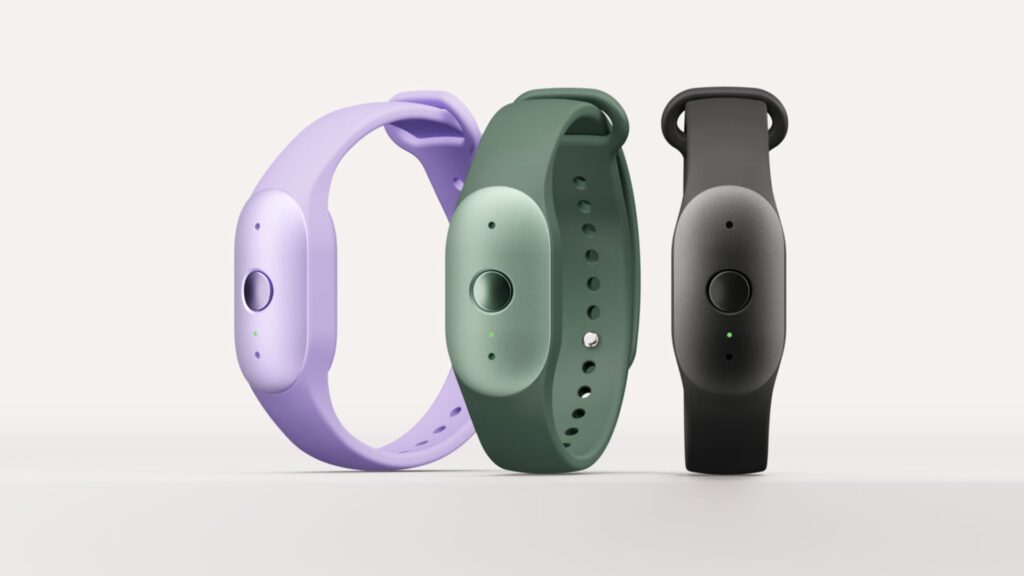
Frontier’s official product information identifies a wristband and clothing clip among its included accessories. The wearable also provides physical controls intended to make conversation capture easier to manage without repeatedly opening a smartphone application.
Its documented controls include:
- Single press: Starts or stops conversation capture.
- Long press: Creates a note.
- Double press: Bookmarks an important moment.
- Green status light: Provides a visible indication of device activity.
- Dual microphones: Support audio capture with noise filtering.
- IP67 rating: Indicates the device’s stated level of resistance to water and dust.
These features are designed to make Frontier practical for everyday use, although its placement may affect the audio available for processing. A device worn on the wrist can experience changes in microphone orientation as the user moves, while one clipped to clothing may pick up fabric movement or rubbing sounds.
A bracelet positioned beneath a sleeve may also experience different recording conditions from a clip attached near the upper chest. These considerations do not establish that one position consistently provides better results, but they demonstrate why microphone specifications alone cannot determine real world capture quality.
The bookmarking control could be particularly useful during conversations containing several topics. Rather than treating every statement as equally important, users may want to identify a deadline, address, decision or commitment that deserves attention later.
Frontier’s IP67 rating should also be interpreted according to the manufacturer’s care instructions. Water resistance does not eliminate the need to consider the conditions in which the device is used or stored.
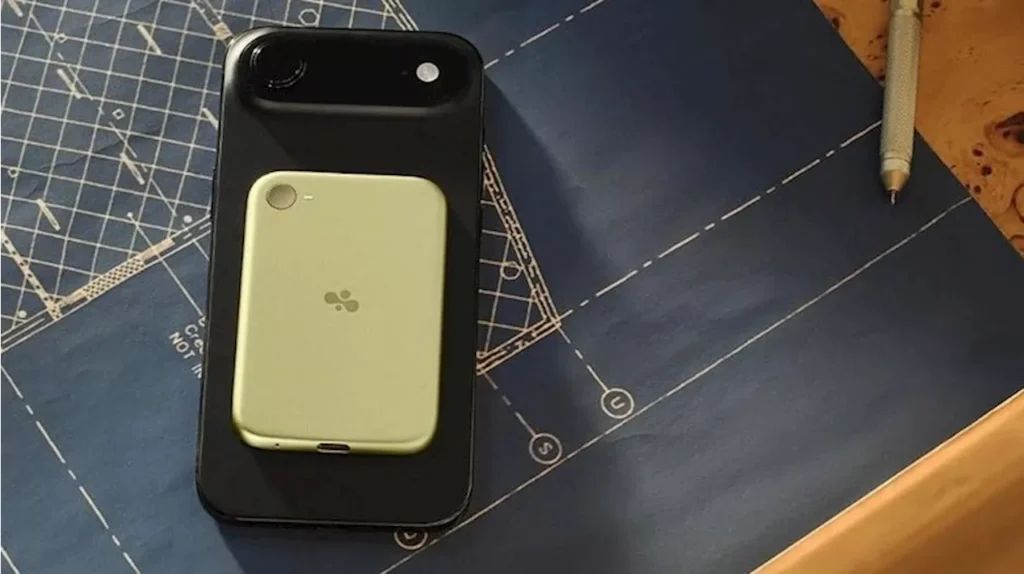
Eclipse uses a substantially different physical design. Bee describes it as a MagSafe compatible smartphone attachment measuring 4.6mm thick. Its product information identifies a metal ring accessory in the box and USB-C charging, allowing the device to be attached to compatible phones or suitable cases.
Its position on the back of a smartphone may reduce the need to carry a separate wearable. However, magnetic attachment and software compatibility are different considerations. A device may fit physically without that alone proving that every feature works with every handset, operating system version or calling application.
Eclipse’s appearance may resemble a magnetic battery pack, but its purpose is conversation capture and AI assistance. The fact that it attaches to the back of a smartphone does not establish that it charges the phone.
Practical comfort also matters. Even a relatively slim attachment can affect how a phone feels when held during lengthy calls, placed in a pocket or used with a stand. Buyers may therefore need to consider how Eclipse fits with their existing cases, accessories and charging habits.
The main hardware distinction concerns audio capture. Published launch specifications describe Frontier as having two microphones, while Eclipse includes four MEMS microphones and a vibration microphone intended to help capture both sides of telephone conversations.
These specifications indicate different design priorities rather than guaranteeing that Eclipse will provide better transcription in every situation. Background noise, speaking distance, microphone placement and individual speaking styles can influence the quality of captured information.
For frequent callers, the more important consideration is whether Eclipse can preserve the meaning of conversations and distinguish participants’ statements clearly enough to identify decisions and responsibilities.
The devices’ advertised battery performance also differs. Amazon claims up to seven days of battery life for Frontier and more than 21 days for Eclipse. Both products use USB-C charging, with Frontier’s port positioned on the rear and Eclipse’s charging port located at the bottom.
These are manufacturer claims rather than independently verified endurance results. The reviewed materials do not provide enough information to calculate how every recording pattern or operating condition affects battery performance.
Battery reliability is particularly important for a device designed to support memory. If the accessory is unavailable during an important conversation, its software cannot recover information that was never captured.
The practical question is whether charging fits naturally into the owner’s routine. Someone may prefer charging a wearable approximately once a week, while another user may value a phone attachment advertised to operate for a longer period between charges.
The announced colors also differ. Frontier is offered in Onyx, Lavender and Sage, while Eclipse is listed in Silver, Midnight, Honey and Blush.
Amazon identifies Amazon.com as the purchase destination for Frontier, and Bee’s website also directs visitors toward Amazon. Eclipse remains distinguished as an upcoming product, meaning its product information should not be treated as confirmation of immediate availability.
Before purchasing, customers need to consider the delivery market, expected shipping arrangements, included accessories and return terms. These practical factors may influence the overall purchase more than the initial difference between the two hardware prices.
The lineup also represents an evolution of Bee’s earlier wearable product. Bee’s original wrist worn device, Pioneer, was priced at $49.99. Amazon announced plans to acquire Bee in 2025 before introducing Frontier and Eclipse in October 2026.
The move from Pioneer to Frontier represents a $25 increase in listed hardware price, approximately 50% above the earlier $49.99 figure. However, the price difference alone does not establish whether the newer model delivers proportionately greater value.
The broader change is the expansion from a primarily wearable format to a lineup offering both a wearable and a smartphone attachment. This gives customers more flexibility in choosing how the service fits their daily activities.
Bee was also developing its personal AI software before the latest hardware announcement, so Frontier and Eclipse should be understood as part of an evolving product ecosystem rather than the introduction of conversation based memory for the first time.
For existing Pioneer owners, hardware compatibility and account entitlements remain separate considerations. A new device announcement does not automatically establish which software features remain available on older hardware or whether replacing an existing product is necessary.
The reviewed materials do not provide a complete independently tested comparison between Pioneer and Frontier. Claims of measured improvements in transcription accuracy, endurance or overall reliability would therefore require controlled testing rather than assumptions based on the newer model’s price.
Ultimately, the difference between Frontier and Eclipse comes down primarily to how the user wants to carry the service. Frontier offers a wearable format that can remain accessible independently of smartphone placement, while Eclipse is designed around the phone and may be particularly attractive to frequent callers. Their real value will depend on convenience, accuracy, subscription requirements and how reliably each device performs during normal use.

How Amazon Bee AI Records Conversations, Creates Reminders and Connects With Apps
Bee’s personal AI service is designed to transform spoken interactions into information that users can search, review and potentially act upon later. Amazon describes the system as processing conversation audio in real time, generating outputs such as transcripts and summaries, and then discarding the original audio.
This distinction is important because retaining an interpreted account of a conversation is different from preserving an audio recording that can be replayed. Even when the source audio is discarded, written transcripts, summaries and related information may preserve substantial details from the original discussion.
The service’s usefulness depends on several stages of interpretation. A transcript attempts to represent spoken words in written form, a summary condenses the information into a shorter account, and an action item identifies something that may require follow up.
Each stage introduces opportunities for mistakes. A person’s name may be transcribed incorrectly, a summary may omit an important qualification, or a proposed task may mistake a tentative suggestion for a confirmed responsibility.
Consider a conversation in which someone says that a delivery might arrive on Friday if the supplier confirms availability. An accurate summary should preserve that condition. Removing it would transform a possibility into an apparent commitment.
This is why personal AI performance should not be judged only by how naturally its summaries read. The more important question is whether the outputs accurately preserve dates, names, amounts, conditions and assignments of responsibility.
For consequential decisions, generated notes should support confirmation with the people involved rather than automatically become the only accepted account of what happened.
Bee Pro includes automatically suggested tasks intended to identify commitments from conversations. The service presents these alongside broader searchable memory features that help users review previous calls and everyday interactions.
The potential advantage is reducing the need to manually record every small commitment. People frequently agree to send documents, contact someone, confirm appointments or complete household tasks without immediately entering those responsibilities into a dedicated application.
However, identifying an action item accurately requires more than recognizing a verb. A useful task should establish what needs to happen, who is responsible, when it should be completed and whether any conditions must be satisfied first.
For example, a conversation might include an agreement to send a revised report after finance approves it. Reducing that statement to a simple reminder to send the report could remove the condition that determines when the action should occur.
The difference between identifying a task and completing it also matters. Recognizing that someone promised to email a document does not establish that the message was sent, the correct recipient was selected or the required attachment was included.
A reliable workflow should therefore make it easy to review suggested tasks and determine whether they accurately reflect real commitments. Without that ability, automation could simply replace manual note taking with a lengthy queue of reminders requiring correction.
The quality of Bee’s action item extraction will consequently matter more than the number of suggestions it generates.
Amazon’s launch materials identify several services that can connect with Bee, potentially allowing remembered information to support everyday activities beyond conversation review.
The announced integrations include:
- Gmail: Supports connected workflows involving email information and potential follow up drafts.
- Google Calendar: Provides a connection between conversation details and scheduling.
- Microsoft Outlook: Extends the service into another commonly used email and productivity platform.
- Apple HealthKit: Connects Bee with supported health information.
- Photos: Provides another potential source of personal context.
- Amazon.com: Supports optional shopping recommendations based on relevant conversational information.
These connections could make Bee more useful because they link remembered details with applications where people already organize their activities.
However, connected workflows introduce additional accuracy requirements. Creating a calendar invitation, for example, involves more than recognizing that two people discussed meeting. A complete event generally requires a date, time, duration, participants and potentially a location or meeting link.
An informal statement such as an intention to meet next Thursday afternoon contains useful context but does not establish every detail needed for an accurate invitation. Turning that discussion into a calendar event may require interpretation or confirmation.
Similarly, an email draft should not be confused with a delivered message. A system may identify that a follow up is needed and prepare text without proving that the message was reviewed, addressed correctly or sent.
The value of connected AI therefore depends partly on whether the system distinguishes suggestions, drafts, scheduled events and completed tasks rather than presenting them as equivalent outcomes.
Bee also provides desktop software for Mac and Windows through Bee Pro. Its desktop offering is designed to process computer audio and microphone input during online meetings, including situations where participants use headphones.
Information captured through the desktop application can synchronize with the mobile service, expanding Bee’s role beyond the physical Frontier and Eclipse accessories.
For someone whose workday consists primarily of computer meetings, desktop capture may be as important as the wearable hardware. The broader service could help maintain a searchable record of discussions across different environments rather than limiting memory assistance to conversations captured by a physical accessory.
However, the same interpretation challenges remain regardless of capture method. A meeting summary must preserve important qualifications and responsibilities, whether the audio originates from a wrist worn device, smartphone attachment or desktop computer.
Bee’s service also includes shopping recommendations through an optional Amazon.com connection. According to reporting on the feature, the integration requires Bee Pro and allows product recommendations to appear through Amazon and Bee interfaces.
The potential convenience is straightforward. Someone who mentions needing a household product during a conversation might later appreciate a relevant reminder or recommendation. Connecting that information to product discovery reduces the number of steps between remembering an item and finding it.
Nevertheless, mentioning a product does not always demonstrate an intention to purchase it. Someone could discuss an item they already own, criticize a particular brand, compare possible gifts or mention another person’s preferences.
An effective recommendation system would need enough context to distinguish these situations rather than treat every product reference as an active shopping request.
The feature also expands the purposes for which captured conversation information may be used. A private memory helps someone recall what was discussed, while a retail recommendation applies information from that discussion to product discovery.
These functions can coexist, but they serve different needs. A person interested in meeting summaries may have no desire for shopping personalization, while another user may find the connection useful.
The described feature concerns recommendations rather than automatic purchasing. The launch materials do not establish that simply mentioning a product authorizes Bee to place an order.
For the broader service, the quality of suggestions matters more than generating large numbers of recommendations. Repeatedly presenting products based on misunderstood conversations could reduce confidence in Bee’s ability to interpret personal information accurately.
Bee’s value ultimately rests on making captured information genuinely useful. Transcripts and summaries can help users remember discussions, suggested tasks can highlight possible commitments, and integrations can connect that information to existing services. However, each additional capability requires the system to preserve context and clearly distinguish interpreted information from actions that have actually been completed.
Amazon Bee Subscription Plans, Privacy Controls and Long Term Value
Amazon Bee offers both free and paid service options, making subscription pricing an important part of evaluating Frontier and Eclipse. Purchasing either hardware device does not automatically require a paid subscription for every function, although some of the service’s more advanced memory and connected features are available through Bee Pro.
Bee’s plan comparison identifies basic conversation processing, summaries and 14 days of conversation history under its free tier. Bee Pro expands the available memory and connected capabilities, with official pricing listed at $11.99 per month or $99.99 annually.
The difference between monthly and annual billing becomes significant over time. Twelve monthly payments of $11.99 total $143.88, compared with the listed annual cost of $99.99. That represents a difference of $43.89 before taxes, promotional adjustments or any relevant trial period.
The calculation also illustrates why the subscription decision can become more financially important than the $25 hardware price difference between Frontier and Eclipse.
Someone who occasionally wants to review recent conversations may find a rolling 14 day history sufficient. A user who needs to revisit older project discussions, track commitments over longer periods or use connected workflows may place greater value on the paid tier.
The appropriate choice depends on how long the information remains useful and whether the advanced features provide enough practical benefit to justify recurring payments.
A lower hardware price does not necessarily mean lower overall ownership costs if the buyer intends to maintain a subscription over several years. Likewise, the existence of a paid plan does not establish that every user needs it.
Subscription value should therefore be assessed according to the features a person expects to use regularly rather than solely on demonstrations of the most advanced capabilities.
Privacy and security are particularly important because Bee is designed to process conversations that may contain sensitive personal or professional information. Discussions can reveal relationships, schedules, purchases, workplace responsibilities and other details that users may not want broadly accessible.
Amazon’s explanation of Bee Private Compute describes an architecture involving device controlled encryption keys and checks intended to verify that approved software is running before information is shared for processing.
The company says the isolated processing environment is designed to prevent Amazon and Bee from accessing users’ conversation content by default. These are specific architectural claims about access and processing rather than proof that all privacy risks have been eliminated.
The system also involves protected server processing, so it should not be described as operating entirely on the physical accessory. Amazon’s explanation explicitly includes cloud infrastructure within its security design.
An important distinction concerns the handling of audio and derived information. Amazon says Bee processes conversation audio and discards it rather than retaining playable recordings. However, transcripts, summaries and other generated outputs may preserve much of the original conversation’s meaning.
Deleting the audio therefore addresses only part of the privacy question. Retained written information still requires appropriate protection, access controls and deletion options.
Several considerations are relevant when evaluating Bee’s privacy arrangements:
- Audio handling: Whether source recordings are retained after processing.
- Stored information: How transcripts, summaries and other generated memories are protected.
- Encryption: How access keys are controlled and how information is protected during processing.
- Connected services: What information becomes available when users enable integrations.
- User controls: How owners manage capture, review stored information and delete content.
- Conversation participants: Whether people involved understand that AI processing is taking place.
- Shopping personalization: Whether information from conversations is used for recommendations only when the relevant connection is enabled.
These questions reflect different aspects of privacy and should not be reduced to a single claim about whether the device stores audio.
Bee includes physical controls intended to help users manage when conversation capture begins and ends. Product information also describes visible indicators and configurable automatic shutoff after periods of silence, with options ranging from five minutes to 24 hours.
These features are relevant because descriptions such as always listening can obscure the difference between a device capable of extended capture and one that cannot be stopped.
The more meaningful question is whether users understand the device’s current state and can control when information is collected.
A visible status light helps indicate activity, but it does not independently explain how conversation information is processed, where generated summaries are stored or whether connected services can access relevant data.
People participating in a conversation may also have different expectations concerning recording and AI generated memories. The fact that one person owns the device does not necessarily mean everyone else understands its operation.
For phone calls, Amazon says users are prompted to obtain permission from participants when recording begins. That prompt should be understood as a reminder to the device owner rather than evidence that the system independently verifies every participant’s agreement.
Clear activation habits, understandable indicators and accessible review or deletion controls are therefore important elements of the overall experience.
A deliberate approach to capture can also help limit unnecessary collection. A scheduled discussion in which participants understand the device’s purpose differs from an incidental conversation taking place nearby.
The effectiveness of these controls depends on how easily they can be used during normal activities. Privacy settings that are technically available but difficult to understand may provide less practical reassurance than controls that clearly communicate their purpose.
Long term value also depends on reliability. Bee’s launch materials describe intended capabilities, but manufacturer specifications and demonstrations do not establish how consistently the devices perform in varied environments.
A useful evaluation would consider whether summaries preserve meaning, whether the hardware controls are convenient and whether the service remains valuable after the novelty of automatic note taking has faded.
For Frontier, important considerations include comfort, capture quality in different wearing positions, the usefulness of bookmarking and whether charging fits naturally into daily routines.
For Eclipse, the corresponding questions involve smartphone compatibility, magnetic attachment, call capture, comfort during extended use and whether its additional audio hardware produces a meaningful advantage for the intended owner.
The announced battery claims are attractive on paper, but actual endurance requires testing under clearly described usage conditions. The same applies to transcription quality, which may vary with background noise, speech patterns and microphone placement.
For existing Bee customers, the introduction of new hardware also raises questions about continued software support and feature availability. The reviewed materials do not establish that every new capability requires replacing Pioneer, nor do they provide a complete comparison of account entitlements across device generations.
Ultimately, Bee Frontier and Eclipse offer two approaches to the same broader objective: making everyday conversations easier to remember and act upon. Frontier emphasizes wearable convenience, while Eclipse focuses on a smartphone attachment that may better suit frequent callers.
The difference between the products cannot be settled through price or microphone count alone. A successful personal AI device must combine dependable capture with accurate interpretation, useful reminders, understandable privacy controls and service costs that match the owner’s needs.
For buyers, the strongest measure of value will be whether Bee consistently saves time, reduces missed commitments and makes important information easier to recover without introducing excessive administrative work or confusion. Its long term usefulness will depend on the quality of those everyday experiences rather than the novelty of automatic conversation summaries.

Frequently Asked Questions (FAQs)
- What are Amazon Bee Frontier and Bee Eclipse?
Amazon Bee Frontier and Bee Eclipse are personal AI devices designed to capture spoken conversations and transform them into searchable information, summaries and reminders. Frontier can be worn on the wrist or clipped to clothing, while Eclipse attaches magnetically to a smartphone. Both connect to Bee’s broader personal AI service, but their different physical designs make them suitable for different routines and conversation capture needs. - How much do Bee Frontier and Bee Eclipse cost?
Amazon announced Bee Frontier at $74.99 and Bee Eclipse with a starting price of $99.99 in the United States. The commonly reported $75 and $100 figures are rounded versions of those prices. These amounts refer to the hardware and do not include optional Bee Pro subscription costs, taxes or possible additional charges associated with shipping and purchases outside the United States. - Were both devices available on October 15, 2026?
No. Although Amazon announced both devices on October 15, 2026, their availability differed. Frontier was introduced as available immediately, while Eclipse was described as coming soon. The reviewed official information did not establish a specific Eclipse release date. Buyers interested in the phone attachment therefore need to distinguish its announcement from confirmation that it is available for purchase and delivery. - Does Bee require a paid subscription?
No. Bee offers a free tier that includes basic conversation processing, summaries and 14 days of history. Bee Pro provides additional memory capabilities and connected features for users who need more extensive functionality. Whether a subscription is worthwhile depends on how frequently someone uses the service, how long they need to retain information and whether the advanced features justify the recurring expense. - How much does Bee Pro cost?
Bee Pro is officially listed at $11.99 per month or $99.99 per year. Paying monthly for twelve months would cost $143.88, making the annual plan $43.89 cheaper over that period before taxes or promotional adjustments. The annual option may appeal to regular users, while monthly billing provides more flexibility for people evaluating whether the service meets their needs. - Does Bee keep audio recordings?
Amazon says Bee processes conversation audio and then discards the original recording rather than storing it for later playback. However, the service can retain transcripts, summaries and other generated information derived from those conversations. This means deleting the audio does not necessarily remove the information captured from it. Users should distinguish between the handling of original recordings and the storage of written conversation memories. - Can Bee Eclipse capture phone conversations?
Yes. Bee markets Eclipse as a smartphone attachment capable of processing both sides of telephone conversations when activated. Its hardware includes four MEMS microphones and a vibration microphone intended to support that function. However, the published specifications do not independently confirm performance across every phone, operating system version, case or calling application. Users are also prompted to obtain permission from call participants when capture begins. - How long do the batteries last?
Amazon advertises up to seven days of battery life for Bee Frontier and more than 21 days for Bee Eclipse. Both devices support USB-C charging. These endurance figures are manufacturer claims rather than independently verified results, and actual performance may depend on how frequently the devices are used for conversation capture and other operating conditions. The practical benefit will depend on whether the charging requirements fit the owner’s routine. - Does Bee automatically buy products mentioned in conversations?
No. The announced Amazon.com integration concerns optional shopping recommendations based on relevant conversational information. The feature requires a Bee Pro connection and is intended to help users discover products they may want to purchase. The reviewed materials do not establish that mentioning an item automatically authorizes a transaction or completes checkout. Product recommendations and actual purchases remain separate actions. - Which Bee device is the better choice?
The better choice depends on how someone intends to use Bee. Frontier may be more convenient for people who want a wearable assistant available throughout the day without keeping their phone nearby. Eclipse may appeal more to frequent callers who prefer attaching the accessory directly to their smartphone. Buyers should also consider hardware comfort, compatibility, subscription costs, advertised battery life and the reliability of conversation summaries rather than choosing solely according to price.
Conclusion
Amazon Bee Frontier and Eclipse expand the company’s personal AI ambitions through two distinct hardware designs intended to make everyday conversations easier to remember and act upon. Both devices aim to reduce the effort required to recall important information, organize discussions and follow through on commitments. However, their practical differences remain important. Frontier is the available wearable option, while Eclipse is an upcoming smartphone attachment. The broader connected experience also introduces a subscription decision, particularly for users interested in extended memory and advanced integrations.
The long term value of these devices will depend on how reliably they perform beyond their announced specifications. Effective personal AI requires accurate conversation summaries, clear identification of responsibilities, understandable privacy controls and recommendations that reflect what users actually intended. Although Amazon’s launch materials establish the products’ intended capabilities, sustained real world testing will be necessary to determine whether they consistently provide meaningful convenience, dependable information and sufficient value to justify their hardware and subscription costs.
Sources and Citations
- Amazon, Official Launch Announcement, October 15, 2026: Provides the primary information about Bee Frontier and Bee Eclipse, including their hardware designs, announced prices, available colors, subscription features and release status. It also explains Amazon’s broader approach to using personal AI to transform everyday conversations into useful memories and reminders. Amazon Bee Frontier and Eclipse Announcement
- Bee, Official Frontier and Eclipse Product Pages: Document the devices’ physical specifications, included accessories, microphone configurations, charging connections and supported controls. These pages also describe the intended differences between Frontier’s wearable design and Eclipse’s magnetic smartphone attachment. Bee Frontier Product Details | Bee Eclipse Product Details
- Bee, Pro Subscription and Desktop Features: Provides official information about Bee’s free and paid service options, including the published subscription prices, memory features and connected capabilities. The desktop documentation also describes support for Mac and Windows computers and conversation capture during online meetings. Bee Pro Features and Pricing | Bee Desktop Features
- Amazon, Bee Private Compute and Data Protection: Explains the company’s stated privacy and security architecture, including encryption, software verification and isolated processing environments. The documentation provides context for understanding how Bee processes conversation information and protects retained data. Bee Private Compute and Data Protection
- Reuters, October 15, 2026: Provides independent reporting on Amazon’s announcement of Frontier and Eclipse, including their positioning as portable AI listening devices and the company’s plans to convert conversational information into useful reminders and insights. Amazon Launches Two Portable AI Listening Devices
- GeekWire, Bee Shopping Features and Acquisition History: Provides additional reporting about Bee’s optional Amazon shopping integrations and the company’s earlier acquisition announcement. These reports help explain how the personal AI service is expanding beyond conversation summaries into connected recommendations and a broader hardware ecosystem. Amazon Bee Shopping Integration | Amazon’s Acquisition of Bee
Recommended
- Wild Blue Skies: Release Date, Gameplay, Bowie Stray, and Everything You Need to Know
- Kingdom Come: Deliverance Developer Donation to Real-Life Castle Explained
- The Sinking City 2 Has Gone Gold Ahead of Release
- Sony’s Summer State of Play 2026 Breakdown: God of War, Wolverine, and Release Dates Chosen to Avoid GTA
- Midgar Studio Closure Confirmed: What Happened to the Edge of Eternity Developer?
- UNSEEN’s Kemuri Gameplay Reveal: Parkour Yokai Hunting Game Looks Epic
- How to Make Hair in Blender
- Romestead: How to Get and Use Clay, Best Locations, Clay Pit Guide & Crafting TipsCartesian Caramel Geometry Nodes Tests: How Sound Can Be Visualized with Blender Geometry Nodes
- Diablo V Filming Begins as Blizzard Targets Spring 2029
- Grow a Garden 2: How to Lock Your Garden and Protect Your Crops From Thieves
- Metro 2039 Gamescom Renegade Trailer: The Stranger, Novoreich and February 2027 Release
- Spider-Man: Miles Morales Actor Talks About That Missing Venom Game: What Nadji Jeter Revealed About Insomniac’s Plans
- Mewgenics: All the Joy of Breeding a Cat Army Without the Food and Kitty Litter Bills
- GTA VI May Not Get a Physical Disc Edition After All
- Huion Kamvas 22 Gen 3: Affordable Pen Display for 2D, 3D & Video Editing



































































































