








In This Article (7 sections)
Formula One’s AI Problem: Machine Learning, Driver Control, and Energy Management
Formula One’s AI problem presents a difficult question for the next official F1 game: how faithfully should a racing simulator reproduce technology that can make drivers feel less in control? Modern Formula One combines human judgment with complex energy management, predictive analysis and automated functions. Recreating these systems could deepen the simulation, but it could also make a player’s car behave in ways that are difficult to anticipate or understand.
The concern has a clear foundation in an April 2026 interview published by McLaren, where Lando Norris described battery deployment activating during his battle with Lewis Hamilton in Japan when he had intended to conserve that energy for a later straight. His criticism focused on the difference between his racing intentions and the power unit’s response. For Codemasters, the strongest approach would be to reproduce the meaningful consequences of modern Formula One technology while ensuring players understand how their cars operate. Energy conservation, deployment timing and strategic compromise belong in an authentic racing experience, but unexplained automated intervention requires more careful treatment.
The Formula One machine learning debate involves several technologies that should not be treated as interchangeable. Machine learning identifies patterns in data and can support predictions, while simulation allows teams to compare possible race outcomes. Electronic control software manages functions within a car, and racing game AI commonly refers to computer controlled opponents. These systems may interact, but their purposes and methods differ.
Formula One’s official explanation of the 2026 regulations describes much of the energy recharge process as automated through selectable maps and targets controlled by the electronic control unit. This confirms that automation plays an important role in modern cars, but it does not establish that every automated action results from machine learning. The central sporting question concerns how much authority remains with the driver when electronic systems manage performance.
Machine learning is increasingly relevant to Formula One because teams collect substantial amounts of information about car behavior, tyre performance, track conditions and competitor decisions. Engineers must interpret these interconnected factors under considerable time pressure, making predictive tools valuable for supporting strategy. Research using historical Mercedes Formula One telemetry has explored deep learning and XGBoost models for predicting tyre energy and degradation, with explainability techniques helping researchers understand the resulting forecasts. This demonstrates how machine learning can support decisions without independently controlling the car. Oracle and Red Bull have also announced an AI strategy agent designed to assist human engineers by collecting information, interpreting historical and live race inputs, and presenting insights that support decisions during changing race conditions.
These applications suggest opportunities for future F1 games beyond automated driving. A virtual race engineer could identify deteriorating tyre performance, explain the consequences of extending a stint or compare the likely benefits of an aggressive attack with a more conservative strategy. The value would come from relevant information delivered at the right moment rather than simply describing the feature as artificial intelligence. Advice that remains repetitive, inaccurate or disconnected from the race would offer little improvement regardless of the technology behind it. Similarly, a system capable of processing extensive telemetry would be less useful if players could not understand its recommendations or apply them during competition.
Norris’s account of the Japanese Grand Prix illustrates why automated functions can become controversial even when they operate within the car’s technical requirements. He described battery deployment helping him pass Hamilton at a point when he wanted to preserve energy for the following straight. The resulting loss of available power left him more vulnerable during the next phase of the battle. His criticism concerned the disruption of a sequence of decisions rather than a general rejection of sophisticated racing technology. Drivers need to decide when to attack, defend and conserve resources, and those decisions become less meaningful when electronic systems produce outcomes that conflict with their intentions.
The same situation would create an important design challenge in an F1 game. Consider a hypothetical battle involving two consecutive straights. Using additional energy on the first straight could help a player complete an overtake, but it might leave insufficient charge to defend the position on the second. That is a worthwhile tactical dilemma when the player understands the consequences and chooses to accept them. It becomes frustrating when an invisible system makes the decision without warning. A well designed simulation would therefore need to communicate the relationship between selected deployment settings, battery availability and the resulting acceleration. Otherwise, players might interpret legitimate energy management behavior as inconsistent physics, faulty controls or an unpredictable game mechanic.
The distinction between machine learning and traditional racing game AI is equally important. Computer controlled opponents must follow racing lines, judge braking points, attempt overtakes, defend positions and respond to traffic or changing grip. Machine learning is one possible method for developing such behavior, but the presence of intelligent opponents does not prove that a game uses learned models. Automatic energy management on the player’s car represents another design problem entirely.
A virtual engineer suggesting a pit stop is different from an opponent choosing an overtaking opportunity, just as a deployment map is different from a system predicting tyre degradation. Research into learning based Formula One strategy has explored multiple agents making decisions involving energy use, tyre wear, aerodynamic interaction and pit stops, but those findings concern the researchers’ experimental environment rather than confirmed features in EA’s next game.
Modern Formula One technology also creates a communication challenge because racing games must provide important information without overwhelming players who are already concentrating on braking, steering and surrounding competitors. Additional systems can make the experience more authentic, but each new indicator or instruction competes with information needed for immediate driving decisions. This becomes particularly noticeable when identical accelerator inputs produce different performance because of changing battery charge or deployment conditions. Such differences can be legitimate, but players need enough information to understand why they occur. If a car suddenly accelerates less strongly despite full throttle, an energy display or engineer message should help distinguish expected behavior from a technical problem.
The 2026 Formula One regulations make this issue especially relevant. Official guidance explains that energy can be recovered during braking, partial throttle operation, lift off periods and super clipping. Super clipping allows harvesting while the driver remains at full throttle, meaning accelerator position alone does not describe the complete energy flow. These systems create a more complicated relationship between driver inputs, electrical energy availability and the power delivered to the wheels. A realistic F1 game should communicate that relationship without expecting every player to understand the underlying engineering immediately.
Several principles would help explain modern Formula One energy management in a racing simulator:
- Battery charge: Players should be able to see how much electrical energy is available and understand when the car is conserving or using it.
- Deployment priorities: The game should communicate whether energy is being used for immediate acceleration, preserved for later sections or managed according to a selected strategy.
- Energy harvesting: Drivers should understand when the car is recovering energy and how that process affects performance.
- Super clipping: Full throttle operation should not automatically be presented as uninterrupted maximum propulsion when the simulated regulations allow energy harvesting.
- Strategic consequences: Using more energy during one part of a lap should create understandable advantages and disadvantages elsewhere.
- Driver intervention: Players should have meaningful opportunities to influence deployment priorities rather than relying entirely on hidden decisions.
- Telemetry feedback: Practice sessions and race analysis should explain where energy was recovered or deployed and how those decisions affected lap performance.
A useful practice exercise could allow players to compare different deployment plans through the same sequence of corners and straights. One approach might prioritize immediate acceleration, while another preserves charge for a later overtaking opportunity. The resulting comparison would demonstrate that achieving the fastest time through one section does not necessarily produce the best complete lap. Such exercises could teach players how modern energy management influences racing without requiring constant menu navigation during competition.
Changing regulations further complicate development. In April 2026, the FIA announced refinements concerning harvesting, deployment, closing speeds and driver workload after reviewing the opening three events of the season. These adjustments demonstrate that the new generation of cars operates within a framework that continues to evolve. Codemasters therefore faces the challenge of reproducing contemporary technical behavior while ensuring that players can interpret it correctly. A useful standard would be whether someone can explain an unexpected result after reviewing the relevant lap. If understanding the event requires information the game never provides, the presentation needs improvement.
The strongest solution would preserve the relationship between driver intention, electronic control and racing consequences. A simulator does not need to reproduce every proprietary engineering process used by real Formula One teams to deliver meaningful authenticity. It needs to model the effects that influence performance and provide enough feedback for players to learn how those effects shape their decisions. The goal should be a racing experience where technology adds strategic depth without making the driver feel disconnected from the car.
How Codemasters Could Balance Realistic AI, Player Control, Strategy and Competitive Fairness
Codemasters faces an important design decision when considering how modern Formula One automation should appear in future games. Recreating the sporting consequences of energy management, predictive strategy and electronic controls can make a simulation more authentic, but reproducing every underlying engineering process is neither necessary nor established as part of EA’s announced plans. The public information reviewed does not confirm that the developer has access to individual teams’ proprietary machine learning systems or intends to reproduce them. A controlled simulation of deployment limits, recharge behavior and strategic priorities could provide the desired racing consequences without claiming to duplicate the exact software used by Formula One teams.
A sensible approach would distinguish ordinary operation from unusual technical failures. Deliberate energy conservation, deployment targets and recovery behavior belong within the normal driving model because they affect performance throughout a race. Unexpected software failures could instead appear through optional reliability settings or specifically designed scenarios. These experiences serve different purposes. Routine energy management teaches players how to operate a modern racing car, while a simulated technical malfunction introduces uncertainty associated with equipment reliability. Making that distinction clear would prevent ordinary gameplay from feeling unpredictable while still allowing players who enjoy technical complications to experience them.
Realism and accessibility do not have to conflict when systems are explained properly. An accessible energy management model could automate routine operations while allowing players to select broader priorities, such as conserving battery charge or preparing for an attack. Experienced players could receive more detailed controls over the same underlying simulation. This creates a natural progression in which beginners learn the consequences of energy decisions before managing individual deployment targets. Importantly, simplified settings should not teach habits that become completely ineffective when assistance is reduced. The fundamental relationship between energy use, acceleration and future availability should remain understandable at every difficulty level.
Different race lengths would also require careful consideration. Short races offer fewer opportunities to recover from resource management mistakes, while full distance events create longer strategic sequences involving conservation, tyre wear and repeated attacks. If the game adjusts energy behavior for shorter formats, it should explain those changes rather than allowing players to assume the rules are identical. Clear communication would help maintain consistency across career events, casual races and competitive multiplayer.
Player agency depends on whether choices meaningfully influence outcomes. Automation can strengthen that agency when it carries out a player’s chosen plan, but it can weaken it when it silently substitutes another objective. A hypothetical energy assistant might allow players to prioritize battery conservation for a later attack or maintain a stable pace throughout a stint. The system would handle routine adjustments while preserving the player’s authority over the broader strategy. This differs from an assistant independently deciding to attack because it identifies an immediate opportunity, even when that action conflicts with the player’s longer plan.
Close racing makes these decisions particularly important. A deployment system might identify a chance to overtake on the current straight while overlooking the player’s intention to preserve enough charge for the next sector. An understandable interface could warn that committing additional energy would reduce the ability to defend afterward. The player could then accept the risk or maintain the original plan. This would transform automation from a hidden source of frustration into a tool for executing deliberate strategic decisions.
Feedback after a race would further improve the experience. A replay or telemetry summary could show where energy was deployed, how much was recovered and how those choices affected later acceleration. Players would then be able to distinguish mistakes in their instructions from poor execution, technical limitations or deliberately simulated failures. The purpose would be to make automated behavior understandable and accountable rather than presenting it as an unexplained process.
Race strategy automation offers another opportunity to improve the gaming experience. A virtual engineer could recommend an immediate pit stop to protect against an undercut while explaining that the car would rejoin in traffic. Another recommendation might involve extending the stint to gain a tyre advantage later. The player should be able to compare those consequences without interpreting a complicated statistical report while driving. Research into learning based Formula One strategies provides examples of how energy allocation, tyre degradation and pit timing can be considered together, although such research does not establish what EA will implement.
The most valuable feature would be advice that responds meaningfully to changing race conditions. An engineer should recognize when a previously reasonable strategy becomes less attractive because of traffic, weather, tyre wear or a rival’s pit stop. Recommendations should also communicate uncertainty because forecasts depend on assumptions about events that have not yet occurred. Players can accept advice that proves unsuccessful when the reasoning is understandable, but repeated confident instructions without explanation would make an automated engineer harder to trust.
AI assisted systems would also create competitive balance questions if they allowed some players to manage deployment or strategy more effectively than others. An energy assistant could potentially react faster, make fewer mistakes or maintain ideal targets with greater consistency than manual operation. Whether that advantage is appropriate depends on the mode and the rules governing participation. Casual racing may prioritize accessibility, while organized competitions may require standardized assistance settings or clearly defined manual control categories.
The following design considerations could help preserve fairness and meaningful player choice:
- Transparent assistance settings: Players should know which automated features are enabled and whether they affect competitive performance.
- Separate assistance categories: Energy management help should not automatically require steering, braking or other driving assists.
- Consistent competitive rules: Championships and ranked events should establish clear conditions for automated support.
- Stable behavior: Automated systems should operate predictably enough for players to understand and reproduce racing situations.
- Clear feedback: Drivers should receive useful explanations of deployment, strategy recommendations and technical limitations.
- Optional reliability scenarios: Unusual software failures could be reserved for settings or events designed around technical uncertainty.
- Accessible interfaces: Controls should remain practical for both gamepad users and players with advanced racing wheels.
- Progressive complexity: Players should be able to develop their understanding before taking responsibility for more detailed systems.
Equal performance modes would need particular attention because hidden differences in energy management could undermine expectations that competitors are using equivalent machinery. If learned systems change their behavior during competition, players may also struggle to reproduce incidents or compare performance across sessions. Stable versions, documented updates and clearly defined rules would make competitive environments easier to assess. These concerns are potential design risks rather than confirmed problems with EA’s planned 2027 game.
Optional assists provide the clearest way to accommodate players with different expectations. Newcomers may prefer automatic handling of routine energy functions while concentrating on clean laps and nearby traffic. Intermediate players might choose strategic priorities while delegating detailed execution, and experienced racers could prefer greater manual control. These choices should remain independent enough to be useful because wanting help with energy management does not necessarily mean needing assistance with steering or braking.
EA’s 2026 Season Pack documentation already describes updated assists that handle details associated with the newer cars, alongside player decisions involving active aerodynamics and overtaking. This provides an existing foundation for adjustable complexity rather than assuming every player must manage every technical function manually. Future assists could build on that approach through practice feedback explaining how energy conservation in one section improves acceleration elsewhere. The control interface would also need to account for different hardware because a system manageable through several steering wheel buttons might require a simpler arrangement on a standard controller.
The most effective approach would make increasing difficulty a matter of greater responsibility and judgment rather than unexplained complexity. Beginners should understand the essential relationship between energy use and performance, while experienced players should gain additional control over how that relationship is managed. Automation should help execute clear objectives, strategy advice should explain its reasoning and competitive rules should establish the role of assistance. These principles would allow modern Formula One technology to improve the simulation without undermining the player’s sense of control.
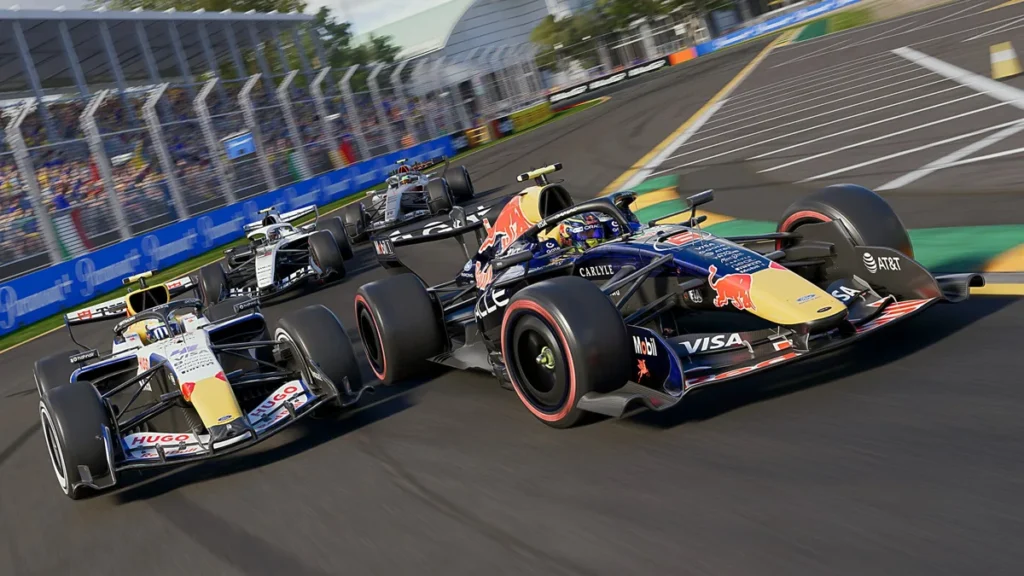
EA’s 2027 F1 Game, F1 25 Season Pack and the Future of Formula One Simulation
EA announced a revised release plan for its Formula One franchise on November 18, 2025. The company confirmed a paid 2026 expansion for F1 25 and stated that the next full game would arrive in 2027. The announcement described the future release as a more expansive experience with new ways to play, emphasizing authenticity and appeal to both established racing fans and newcomers. However, it did not provide detailed specifications for machine learning, autonomous energy deployment or a new strategy assistance system. The confirmed information therefore concerns the release plan and broad creative direction, while the possible implementations discussed here remain design proposals rather than announced features.
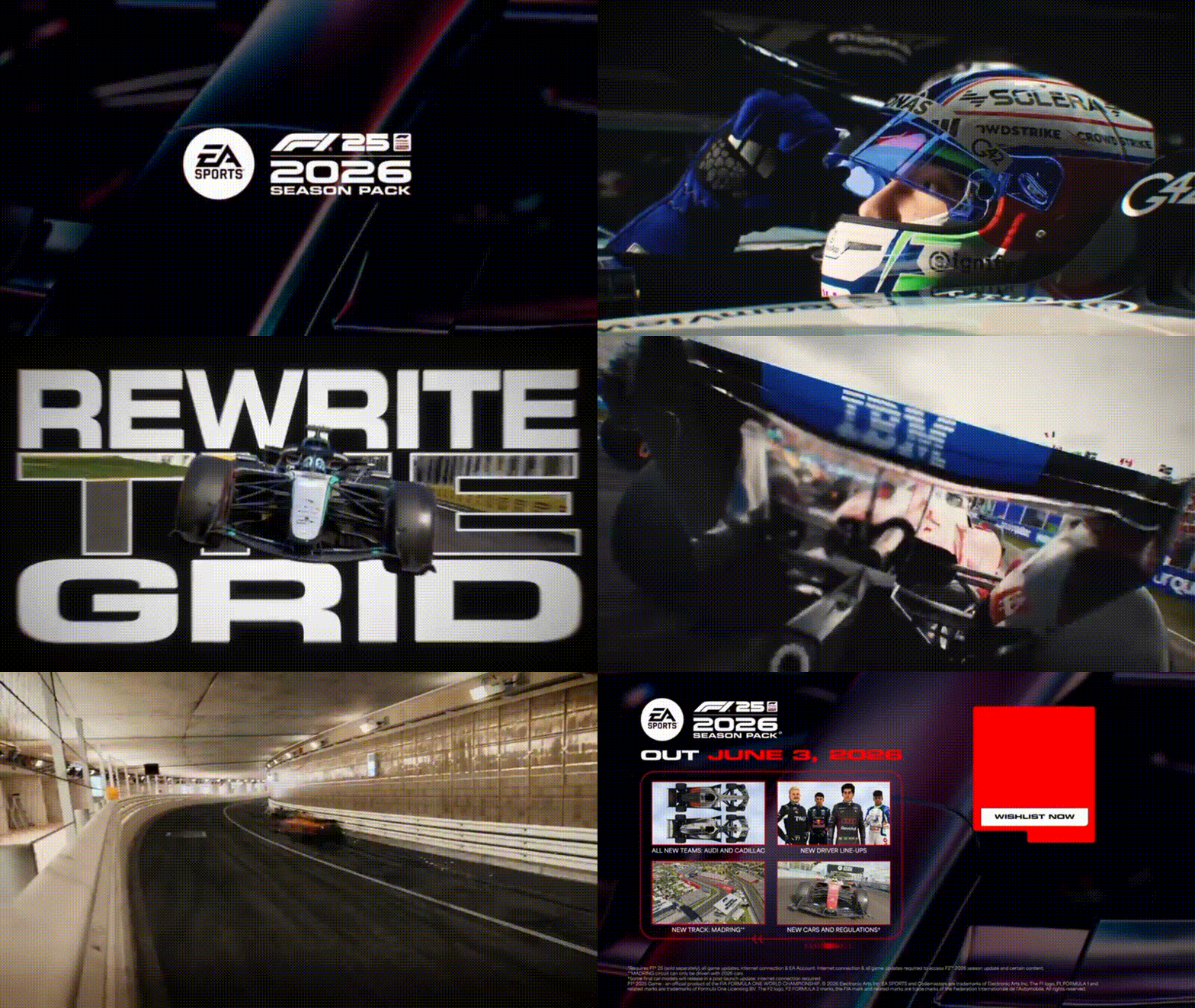
The distinction between the 2026 expansion and the planned 2027 title is important. The F1 25: 2026 Season Pack launched on June 3, 2026, for PlayStation 5, Xbox Series X|S and PC. Existing F1 25 owners can access the additional season through the expansion, while the 2026 Season Edition combines the base game with the new content. EA’s documentation also states that the updated career content requires a new save and that existing 2025 career saves do not transfer. The expansion therefore introduces the 2026 season within F1 25 rather than functioning as a separate annual release.
Postrelease updates demonstrate that the existing simulation has continued evolving. September’s version 1.25 patch introduced limited deployment Boost Mode in wet conditions and adjusted throttle requirements for Straight Mode and DRS operation. These changes concern documented updates to the current game rather than confirmed features of the next standalone entry. The 2027 release creates an opportunity for Codemasters to reconsider how modern energy systems are presented and controlled, but its eventual design should be judged through demonstrated gameplay rather than assumptions that it will either reproduce the expansion exactly or replace every existing mechanic.
The longer interval between standalone releases may encourage expectations about more substantial changes, but it does not establish how development resources have been allocated. EA’s broad description of a more expansive experience cannot independently confirm a new physics architecture, machine learning implementation or competitive assistance policy. The next detailed gameplay presentation will therefore be important for understanding how the car communicates energy states, which decisions remain manual and how optional assists affect the experience.
The regulatory environment will also influence the development of future Formula One simulations. In May 2026, the FIA announced proposals agreed in principle for 2027 involving an increase of approximately 50 kW in combustion engine power and a corresponding reduction in electrical deployment power. The FIA stated that further discussion was required before the final package could be decided. This illustrates why the next F1 game cannot be evaluated solely against the opening version of the 2026 regulations. Codemasters would need to account for confirmed regulatory developments while distinguishing implemented rules from proposals that remain subject to change.
The central design opportunity is to make Formula One’s increasingly complicated technology understandable through consistent controls and useful information. A successful simulation should allow players to recognize their car’s energy state, understand the consequences of deployment choices and identify why particular strategies succeeded or failed. These features would improve authenticity because they reproduce the decisions that matter in real racing rather than simply adding technical complexity.
Career modes could provide greater operational detail for players who enjoy managing the technical side of Formula One. Practice sessions might include structured exercises comparing deployment strategies, while virtual engineers could explain how changing track conditions affect energy recovery, tyre performance and pit timing. Players interested primarily in racing could rely on optional assistance, while experienced competitors could assume more direct responsibility for the same underlying systems. The important requirement is that these options remain consistent and that players understand what the automation is doing.
The design should also distinguish normal racing behavior from simulated technical problems. Resource conservation, changes in available power and strategic compromises can form part of ordinary gameplay when they follow understandable rules. Unexpected software failures are different because they introduce uncertainty that may conflict with player intentions. Optional reliability settings or dedicated scenarios could explore those situations without making unexplained interventions compulsory during standard competition.
Competitive multiplayer would benefit from similar clarity. Assistance rules should be communicated before events, and systems that materially affect performance should be managed consistently across participants. Players should be able to attribute results primarily to their decisions, execution and the car’s known limitations rather than hidden software characteristics. This is especially important when a game presents itself as a serious racing simulation, where predictable rules are essential to learning and improving.
The broader challenge concerns how much real Formula One complexity should be reproduced directly. Authenticity does not require every engineering process to operate in the same way as its real counterpart. Some technical details may be better represented through their effects on performance, while others become valuable only when the player can make meaningful decisions about them. The strongest simulation would preserve the relationship between preparation, judgment and consequences without overwhelming drivers with information they cannot reasonably use during a race.
Lando Norris’s criticism of unwanted battery deployment provides a useful example of why this balance matters. His concern was not simply that the car used sophisticated technology, but that its behavior conflicted with his intended strategy. A game reproducing similar energy management should give players enough information and authority to understand those decisions. If the car deploys energy automatically, the reason should be visible through its selected settings or subsequent telemetry. If a player chooses to conserve battery for a later opportunity, the system should make that objective meaningful within the limits of the simulation.
The future of Formula One gaming will increasingly depend on how successfully developers communicate the relationship between human decisions and automated systems. Machine learning may improve strategy recommendations or opponent behavior, while electronic controls can reproduce the complicated performance characteristics of modern cars. However, these technologies serve different purposes and should be evaluated according to the experience they create rather than the labels used to describe them.
For Codemasters, the strongest approach would be to build a simulation that rewards understanding. Players should benefit from learning how energy is recovered, recognizing when to attack and anticipating how their choices influence later sections of a race. Optional assistance can make those systems accessible, while advanced controls can provide additional depth for experienced players. As EA prepares its next full F1 release for 2027, the most important question is not whether every real world automated process will appear, but whether the game can reproduce modern Formula One’s strategic complexity while preserving the player’s ability to understand and influence the car.

Frequently Asked Questions (FAQs)
- What is Formula One’s AI problem?
Formula One’s AI problem concerns how predictive technology, automated electronic systems and computer assisted decisions influence racing strategy and driver control. Modern cars use sophisticated systems to manage functions such as energy deployment and recovery, while teams increasingly explore machine learning for analyzing data and supporting strategy. The central concern is whether drivers can understand and influence these systems when their behavior affects important decisions during a race. - Does machine learning control every Formula One car function?
No evidence in the reviewed sources establishes that every Formula One car function is controlled by machine learning. Automated electronic controls and machine learning models are different technologies. Cars can use programmed maps, targets and control software without relying on learned models for every decision. Determining whether a particular function uses machine learning requires specific information about its implementation rather than assuming that all automation is artificial intelligence. - Why did Lando Norris criticize battery deployment?
Lando Norris described battery deployment activating during his Japanese Grand Prix battle with Lewis Hamilton when he wanted to preserve energy for the following straight. Although the deployment helped him overtake, it disrupted his intended strategy and left him more vulnerable afterward. His criticism highlighted the difficulty drivers can experience when automated energy management produces outcomes that conflict with their plans during close racing. - What is super clipping in Formula One?
Super clipping is a form of energy harvesting that can occur while a Formula One driver remains at full throttle. Instead of all available power contributing continuously to propulsion, the system can recover electrical energy under the applicable operating conditions. This helps explain why full accelerator input does not always result in uninterrupted maximum performance. Its effects depend on the car’s energy management settings and the regulations governing deployment and recovery. - Should the next F1 game include automated energy management?
Optional automated energy management could provide a useful balance between realism and accessibility. Newer players could delegate routine functions while choosing broader priorities, such as conserving charge or preparing for an attack. Experienced racers could receive more detailed control over deployment decisions. The most important requirement is clear feedback so that players understand what the system is doing and how its behavior affects performance. - Is better racing game AI the same as machine learning?
No. Racing game AI generally refers to computer controlled opponents that make decisions about braking, overtaking, defending and responding to track conditions. Machine learning describes a method of developing behavior or predictions from data and experience. A racing game can feature improved AI opponents without necessarily using machine learning. Developers would need to identify the underlying technology before its use could be confirmed. - Has EA announced machine learning deployment for the 2027 game?
EA has confirmed that the next full Formula One game is planned for 2027, but the official announcement reviewed does not establish a specific machine learning deployment system. The company described a broader experience with new ways to play while emphasizing authenticity and accessibility. Detailed claims about autonomous battery management, learned driving behavior or new strategy assistants therefore remain speculative until EA provides further information. - Was there a standalone F1 26 release?
EA adopted a different release approach for 2026 by introducing the F1 25: 2026 Season Pack rather than launching a separate annual installment. The expansion became available on June 3, 2026, while the 2026 Season Edition combines the base game with the additional content. The next full franchise release is planned for 2027, making the expansion and future standalone game separate products. - Could automated strategy affect online fairness?
Yes. Automated strategy or energy management could influence competitive fairness if certain assistance settings provide faster reactions, more consistent execution or hidden performance advantages. Clear assistance rules, stable system behavior and transparent settings would help players understand the conditions of competition. Casual racing could allow broader assistance options, while organized championships might require standardized settings or separate categories for manual and assisted control. - Should realistic software failures be compulsory?
Compulsory software failures could undermine player confidence if they repeatedly interrupt racing without clear explanations or meaningful opportunities to respond. Optional reliability settings or dedicated scenarios would provide a better way to explore technical uncertainty for players who enjoy that aspect of simulation. Standard competitive modes would benefit from consistent behavior and a clear distinction between deliberately simulated failures, normal energy management and actual game defects.

Conclusion
Formula One’s AI problem presents Codemasters with an opportunity to balance authenticity, player control and accessibility. Realistic energy management can create meaningful tactical decisions, while clear feedback and optional assistance can help players understand deployment, recovery and attack strategies. EA has confirmed the 2026 expansion and a new full F1 game for 2027, but specific machine learning features remain unannounced. The ideal approach would preserve modern Formula One’s technical complexity while ensuring that driving skill, preparation and strategic judgment remain central to success.
Sources and Citations
- McLaren, April 15, 2026 : Provides Lando Norris and Oscar Piastri’s comments about battery deployment, unpredictable power delivery and the challenges of energy management. Norris specifically discusses situations where deployment behaviour reduces the driver’s control. Citation: Lando and Oscar on F1’s new era and their Championship ambitions. (McLaren) mclaren.com
- Formula One, technical explanations for the 2026 regulations : Explains energy recovery, the Boost Button, Overtake Mode and battery recharging. The terminology guide specifically describes selectable recharge maps and automated functions managed by the electronic control unit. Citation: The key terms for Formula 1’s new 2026 rules and All you need to know about F1’s new power units. (Formula One) formula1.com
- FIA, April 20 and May 8, 2026 : Documents adjustments to energy harvesting, deployment and safety for the 2026 season. The May statement records proposals agreed in principle for 2027, including changes to the balance between combustion and electrical power, subject to further discussion and approval. Citation: April regulatory refinements and May proposals for further regulatory changes. (FIA) Federation Internationale de l’Automobile
- Oracle, February 26, 2026 : Describes an AI strategy agent designed to work alongside Red Bull’s human engineers. Its intended functions include automating data collection, interpreting historical and live race information, and providing insights to support faster decisions. Citation: Oracle Red Bull Racing extends its technology partnership with Oracle. (Oracle) oracle.com
- Machine learning research, January 2025 : Two research papers examine tyre energy forecasting using historical telemetry and explainable reinforcement learning for tyre selection and pit stop strategy. They provide evidence for potential predictive and decision support applications in Formula One. Citation: Explainable Time Series Prediction of Tyre Energy in Formula One Race Strategy and Explainable Reinforcement Learning for Formula One Race Strategy. (arXiv) arxiv.org
- Electronic Arts, official announcements and patch notes : Confirms the F1 25 expansion covering the 2026 season and plans for the next full F1 game in 2027. Separate release information and patch notes document the Season Pack’s content and subsequent updates, including the 2026 F2 championship and revised car visuals. Citation: 2026 expansion and 2027 game announcement, F1 25: 2026 Season Pack reveal and Version 1.25 patch notes. (Electronic Arts) news.ea.com
Recommended
- Ryan Hurst Says Goodbye to Kratos With One Final Photo
- Conquest Character Breakdown: Origin, Age, Comics, Invincible Animated Series and More
- Unlocking Cinematic Power: The Best 5 Blender Camera Add-ons to Elevate Your Workflow
- Fable Director Says Hero Design Cycling Is the Character Creator
- Dune: Awakening Console Announcement Story Trailer Explained, PS5 & Xbox Release Date, Single-Player Mode, and Full Book One Story Details”
- Trine 6 Delayed to March 4, 2027 After Private Playtest Feedback
- How to Animate a Camera in Blender
- BLOODMOORED by Stormdrill: Unsettling Psychological Horror Game Full of Ghosts, Industrial Puzzles, and Terrifying Spirits
- Netflix Has Introduced a Standalone App Specifically Designed for Children’s Games: Everything to Know About Netflix Playground
- STALKER 2 Cost of Hope Trailer Breakdown: Story, Characters, Release Details & New Regions Explained



































































































