









In This Article (9 sections)
Who Is Laufey in God of War and Why Faye’s Dual Identity Matters
Laufey: also widely known as Faye in the God of War (2018) timeline—is one of the most important yet least physically present characters in the modern Norse saga of the franchise. Although she dies before the events of the game begin, her presence shapes nearly every major emotional and narrative direction taken by Kratos and Atreus.
She is first introduced indirectly through her ashes, which Kratos and Atreus carry to the highest peak in all realms in accordance with her final wish. What initially appears to be a simple farewell journey gradually becomes one of the most significant mythological revelations in the series: Faye was not only a mortal warrior, but also a Jötunn (Giant) and a key figure in shaping the future of Ragnarök itself. Her dual identity, Faye in life and Laufey among the Giants, forms the backbone of the hidden lore behind the rebooted Norse saga, revealing how deeply her influence extends beyond her physical absence and into the events that guide both Kratos and Atreus’ journey.
The revelation that Faye and Laufey are the same person is one of the most carefully constructed twists in the franchise. “Faye” is the name she used while living among humans, while “Laufey” represents her true identity within Giant society. This distinction is deliberate and reflects her choice to separate her mortal life from her Jötunn heritage, allowing her to live quietly among humans while concealing the full weight of her origins.
In Norse mythology, Laufey is also recognized as the mother of Loki, a parallel the game adapts through Atreus’ true identity. By adopting the name Faye, she distances herself from the political and mythological significance of being a Jötunn, yet she never fully abandons her heritage. Instead, she hides it strategically until the moment her understanding of prophecy and fate begins to unfold.
This dual naming structure reinforces one of the central themes of the God of War Ragnarök storyline: identity is shaped not only by bloodline, but also by choice, intention, and lived experience.

Faye’s Death in God of War (2018) and Ragnarök: Its Hidden Purpose and Narrative Impact
Faye’s death occurs before the events of God of War (2018), yet its timing appears deliberately precise. She passes away shortly after ensuring that Kratos and Atreus are set on their journey, with her ashes becoming the central catalyst for the entire narrative. In God of War Ragnarök, it becomes increasingly clear that her death was not random but part of a larger, intentional design shaped by her understanding of prophecy and fate. She intentionally withheld knowledge of her true identity, suggesting she was fully aware of the prophecy surrounding her family and chose to influence events from beyond her lifetime rather than intervene directly.
As players and Atreus uncover more of her legacy, the mystery deepens through several key realizations: she prepared Kratos emotionally for fatherhood, she trained Atreus indirectly through subtle teachings that only gain meaning later, and she marked the path across the realms using hidden Giant magic. These actions collectively suggest that her death was not an end, but a carefully designed narrative trigger intended to initiate the slow and inevitable unfolding of Ragnarök.
One of the most fascinating aspects of her role as a Jötunn is that she held knowledge of ancient prophecies tied to the end of the Norse realms, yet chose not to act through direct conflict like many of her kind. Instead, she focused on preserving Giant knowledge through hidden markings, protecting Atreus as a bridge between worlds, and guiding Kratos away from his destructive Greek-era instincts. Rather than engaging in open warfare with the Aesir gods, she relied on long-term strategy and subtle influence, suggesting she believed survival depended more on foresight and guidance than confrontation.
Her relationship with Kratos is built on mutual respect, shared trauma, and carefully maintained secrecy. Kratos is unaware of her true identity as Laufey, the prophecy surrounding their son, and the depth of her understanding of Norse fate cycles. Faye, however, knows that Kratos is destined to become a central figure in the unfolding prophecy and that Atreus carries immense cosmic significance. Despite this imbalance of knowledge, she avoids manipulating Kratos directly, instead guiding him in ways that allow him to grow into a more thoughtful and emotionally grounded father.
Santa Monica Studio’s Intent, Faye’s Hidden Mission, and the Legacy of the Jötunn Markings
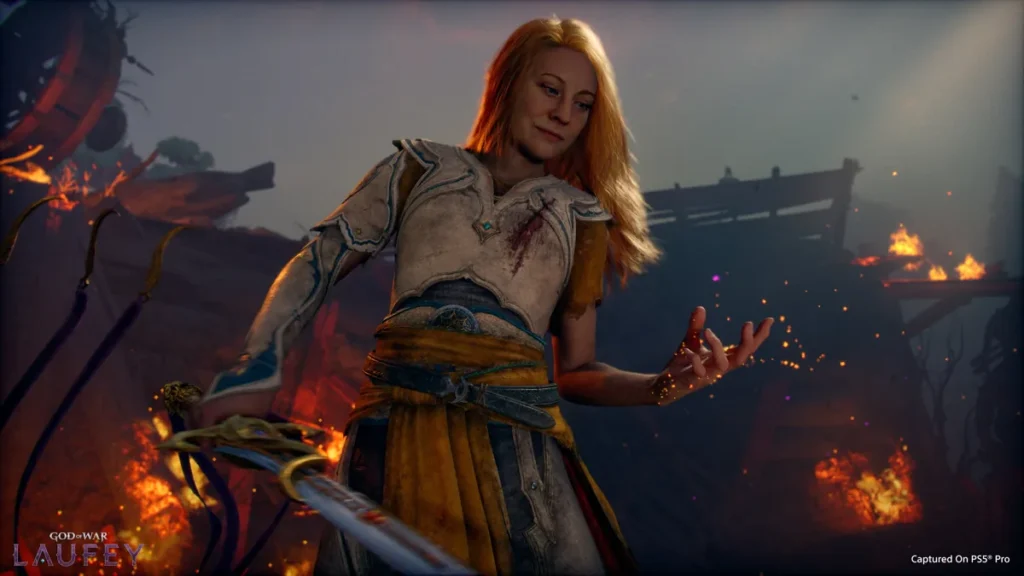
Developers at Santa Monica Studio have consistently described Faye as a “guardian of prophecy” rather than a passive background character. While not every detail is explicitly stated in-game, developer commentary and narrative discussions confirm that her true identity as Laufey was intentionally concealed to enhance the story’s emotional and thematic impact. The creators emphasized that players should initially underestimate her importance, that her absence should feel more powerful than her presence, and that the eventual reveal of her Giant identity should reframe the entire journey, particularly Kratos and Atreus’ understanding of her decisions.
As a member of the Jötnar, Laufey’s mission was shaped by her knowledge of ancient prophecy. Unlike many of her kind, she adopted a non-confrontational approach to influencing fate. Her efforts included preserving Giant knowledge through hidden markings, protecting Atreus as a bridge between worlds, and subtly guiding Kratos away from the destructive patterns of his past in Greece. This approach sets her apart from traditional depictions of Giants in mythology, reinforcing the idea that she believed survival depended on subtle guidance rather than open conflict.
The secrecy surrounding her identity remains one of the most debated aspects of the story, with several narrative explanations supporting her decision. Revealing her identity too early could have disrupted the timing of prophecy, which relies on certain events unfolding naturally to trigger Ragnarök. It also could have placed Atreus in immediate danger from Odin, Thor, and other Aesir gods seeking control over Giant lineage. Additionally, Faye may have wanted Kratos to form a genuine emotional bond with her, free from the influence of destiny or fear. Her concealment is therefore both protective and strategic, reinforcing the idea that knowledge itself can be dangerous within the God of War universe.
One of her most enduring legacies is the network of Jötunn markings scattered across the Nine Realms. These markings, visible only to Atreus due to his Giant heritage, serve multiple purposes: they document prophetic events, reveal hidden pathways, and preserve Giant history that was erased by the Aesir. As Atreus deciphers them, he uncovers a layered message left by his mother, effectively turning the markings into a posthumous communication system that allows Faye to continue guiding him even after her death.

Atreus’ True Heritage, Laufey’s Role in Prophecy, and the Journey Across the Realms
The revelation that Atreus is part Giant fundamentally reshapes the direction of both God of War (2018) and God of War Ragnarök. As the son of Laufey, he inherits not only physical traits but also a deeper metaphysical connection to prophecy itself. This heritage explains his ability to read Giant murals, his latent connection to shapeshifting abilities, and his central role in the prophecy of Loki. Through this lineage, Atreus becomes a bridge between mortals, gods, and Giants, positioning him as a key figure in the unfolding events of Ragnarök rather than a secondary companion.
Laufey’s role within prophecy is therefore not passive but foundational. She is positioned not just as a participant in fate, but as an early architect of the conditions that allow it to unfold. Her actions ensure that Kratos evolves into a changed and more controlled figure, that Atreus grows into his Giant identity, and that the prophecy of Loki is preserved rather than erased. Instead of attempting to prevent Ragnarök, she carefully shapes circumstances so that it occurs in a controlled and meaningful way, aligning destiny with her long-term vision for her family and the realms.
The journey to spread Faye’s ashes carries deep symbolic weight within this structure. It represents closure for Kratos, initiation of Atreus’ destiny, and a transition from ignorance to truth. Each realm visited during this journey reflects a different stage of emotional and narrative transformation, turning the act of carrying ashes into something far greater than mourning. It becomes a structured passage through revelation, where grief gradually gives way to understanding and acceptance of the truth behind Faye’s life and choices.

Developer Insights, Timeline of Laufey Before God of War (2018), and Fan Theories About Her Fate
Developers have described Faye as one of the most complex narrative constructs in the God of War series. She was intentionally designed as a “ghost character,” whose influence becomes more powerful after death than during her life. Narrative direction insights reveal that her character was built to subvert traditional expectations of maternal figures in games, that her backstory was layered to allow multiple interpretations, and that her Giant identity was planned from early stages of development. This storytelling approach ensures that her absence carries emotional and thematic weight comparable to, or even greater than, a playable character’s presence.
Before the events of God of War (2018), Laufey’s life can be understood in several key stages. She begins among the Jötnar as a keeper of prophecy, later separates from Giant society due to ideological differences, meets Kratos and chooses exile in Midgard, raises Atreus while concealing her true identity, and ultimately prepares for the inevitability of her death. Each stage reflects a growing detachment from her origins and a deeper commitment to shaping the future through indirect influence rather than direct intervention.
Fan theories surrounding Laufey’s fate further expand her mythos and ambiguity. Some suggest she may have transferred her consciousness into Giant magic constructs, others propose that her death is a deliberate illusion designed to trigger prophecy, and some believe she may still exist within hidden Giant realms or alternate timelines. While none of these theories are confirmed, they highlight the enduring mystery surrounding her character and reinforce her lasting impact on the narrative and fan interpretation of the series.

Frequently Asked Questions (FAQs)
- Why is Laufey considered so powerful narratively?
She is considered powerful narratively because, despite being absent for most of the story, her unseen influence shapes the entire structure of the Norse saga. Her actions before the events of the game determine the paths of Kratos, Atreus, and even the unfolding of Ragnarök itself. - Is Faye the same as Laufey in God of War?
Yes. Faye is the name she uses while living among mortals, while Laufey is her true identity as a member of the Giants (Jötnar). The game reveals this connection as a major lore twist, reframing her as a key mythological figure rather than just Kratos’ partner. - Why did Faye hide her identity?
She hid her identity primarily to protect Atreus and prevent external forces, especially the Aesir gods, from targeting him. By concealing her Giant heritage, she ensured that key prophecy events would unfold naturally without interference or premature intervention. - Was Faye aware of Ragnarök?
Yes, she had knowledge of prophecy tied to Ragnarök through her Giant lineage. While she did not know every detail, she understood enough to anticipate major events and subtly prepare her family for what was to come. - Did Kratos know Faye was Laufey?
No. Kratos was unaware of her true identity during her lifetime. He only discovers the truth after her death, when her Giant nature and influence become clearer through revelations in the story. - What is Atreus’ connection to Laufey?
Atreus is her son, and through her he inherits Giant blood. This lineage is what gives him unique abilities and connects him directly to the prophecy surrounding Loki and the future of the Nine Realms. - Why is Laufey important to the story?
Laufey is important because she indirectly shapes almost every major event in the Norse saga. Even though she is not physically present for most of the story, her decisions, planning, and hidden knowledge guide Kratos and Atreus’ entire journey. - Did Faye plan Kratos’ journey?
Yes, to a significant extent. While she did not control him directly, she created conditions that guided his path, ensuring he would grow emotionally and follow a journey that aligned with prophecy and Atreus’ destiny. - What are Jötunn markings?
Jötunn markings are hidden inscriptions left by Faye across the Nine Realms. These markings contain prophetic knowledge, lore from the Giants, and guidance that only Atreus can fully understand due to his heritage. - Is Laufey alive in God of War Ragnarök?
No confirmed version of Laufey appears alive in God of War Ragnarök. Her presence is felt through her legacy, memories, and the markings she left behind rather than through any direct return.
Conclusion
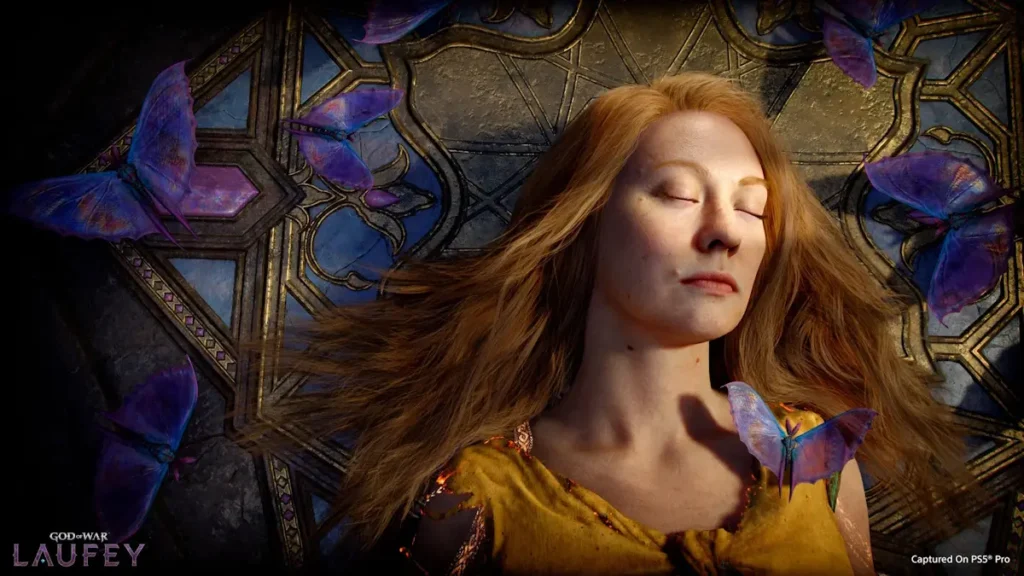
Laufey, known as Faye, stands as one of the most influential unseen characters in the God of War Ragnarök saga. Her hidden identity, strategic foresight, and emotional intelligence redefine how storytelling operates within the franchise. By concealing her true nature as a Giant, she ensures that both Kratos and Atreus evolve naturally into their destined roles. Her legacy is not defined by battle, but by precision, sacrifice, and long-term vision that ultimately shapes the fate of the Nine Realms.
Sources and Citations
- Santa Monica Studio developer commentary on God of War (2018) narrative development
https://blog.playstation.com/archive/2018/04/20/the-road-to-god-of-war/ - Santa Monica Studio official God of War development insights
https://sms.playstation.com/ - God of War (2018) in-game lore and Jötunn inscriptions reference
https://godofwar.fandom.com/wiki/J%C3%B6tnar - God of War (2018) lore archive and character information
https://godofwar.fandom.com/wiki/Faye - God of War Ragnarök story and character codex materials
https://www.playstation.com/en-us/games/god-of-war-ragnarok/ - God of War Ragnarök official story overview
https://www.playstation.com/en-us/games/god-of-war-ragnarok/story/ - Norse mythology adaptations referenced within the God of War universe
https://www.britannica.com/topic/Norse-mythology - Norse mythology reference materials for Jötnar and Laufey
https://www.worldhistory.org/Norse_Mythology/ - Official PlayStation narrative design discussions and character development interviews
https://blog.playstation.com/tag/god-of-war/ - PlayStation interview with Cory Barlog on God of War storytelling
https://blog.playstation.com/2018/04/13/cory-barlog-on-the-making-of-god-of-war/ - Community lore interpretations and fan analysis of Faye’s identity
https://www.reddit.com/r/GodofWar/ - Community documentation and analysis of Laufey/Faye theories
https://godofwar.fandom.com/wiki/Faye
Recommended
- PlayStation State of Play June 2, 2026: Full 60+ Minute Showcase, Gameplay Reveals, and Everything You Need to Know
- Unreal Engine vs Godot: Which Game Engine Is Best for Your Project?
- PlayStation Confirms Shutdown of Early PS5 Exclusive Destruction AllStars as Online Modes End
- Cairn Guide: Beginner and Advanced Climbing Tips for Mount Kami
- How to Create an AAA Cinematic Short Film in Unreal Engine 5 Using Move AI and Metahuman Animator
- How to Build an RPG Character Creator Using MetaHuman in Unreal Engine 5
- Supergirl Confirmed for Man of Tomorrow Explained
- How Did the Director of the Final Fantasy 7 Remake Trilogy Find Time to Beat His Next Game 40 Times? Naoki Hamaguchi Explains the “Over 40 Full Playthroughs” Claim
- The Boys Star Jack Quaid “Would Kill” To Be In A BioShock Adaptation — What He Said, Netflix Movie Updates, and Why Fans Want Him Cast
- Developers With Foreign Legal Entities May Be Allowed to Include Games in the Russian Software Registry: Requirements, VAT Benefits, and What Changes in 2026



































































































