









In This Article (9 sections)
What is ILL? Survival Horror Gameplay, Story Trailer, and Key Reveals
ILL is an upcoming first-person survival horror game that has gained attention for its disturbing visual direction, grounded physics-based combat, and extreme body horror. Developed as a narrative-driven experience, the game places players in a hostile environment overrun by monsters, where survival depends on careful resource management, environmental awareness, and improvised combat. The protagonist is not presented as a super-powered hero but as an ordinary survivor trapped in a collapsing world filled with grotesque entities, reinforcing the game’s focus on vulnerability, realism, and psychological discomfort.
Unlike traditional horror games that rely heavily on scripted scares, ILL is designed to generate fear through unpredictable enemy behavior, interactive environments, and realistic damage modeling. Encounters can escalate into chaotic and unpredictable violence as enemies respond dynamically and surrounding objects react with a convincing sense of weight. This systemic approach aims to blur the distinction between cinematic horror and interactive simulation, aligning the game with modern survival horror revivals while pushing further into physical realism and unsettling body horror.
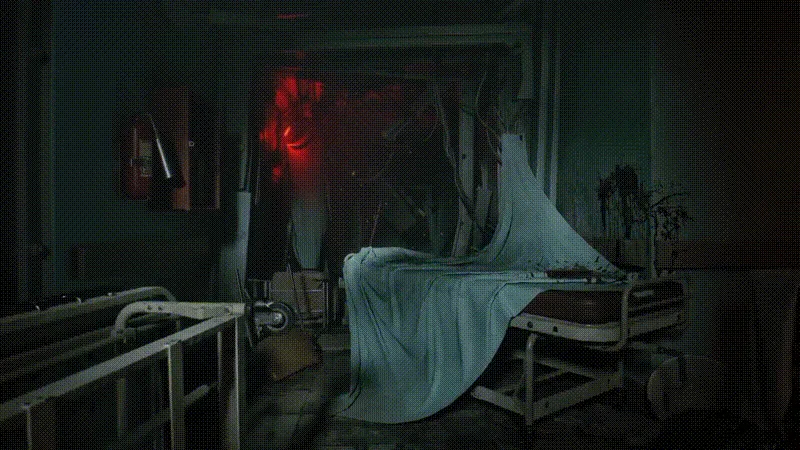
The official story trailer introduces a bleak industrial environment containing abandoned research structures, dimly lit corridors, and disturbing organic anomalies. Its pacing is deliberately slow and oppressive, prioritizing atmosphere and uncertainty over constant action. The trailer reveals several important elements:
- A remote research facility that appears to serve as the central setting
- Mutated creatures with unpredictable anatomical structures
- First-person gameplay built around extensive environmental interaction
- Audio logs and fragmented storytelling connected to an apparent failed scientific experiment
- A protagonist attempting to survive a collapsing containment scenario
Rather than presenting the story through a direct, linear explanation, the trailer relies on fragmented visual information. This suggests that players will uncover the events behind the facility, its experiments, and the containment failure through exploration, environmental details, and recorded material instead of lengthy exposition. The incomplete presentation also strengthens the mystery by withholding clear answers about the creatures and the circumstances surrounding the collapse.
Physical realism is one of the trailer’s most striking qualities. Objects move and react with visible weight, enemies appear to possess fully simulated bodies, and injuries are portrayed with visceral detail. Combined with the interactive environments, unpredictable threats, and grounded combat, these elements establish ILL as a high-fidelity horror simulation rather than a conventional scripted experience. Its central identity is built around making every encounter feel physically dangerous, narratively unsettling, and capable of developing in unexpected ways.

ILL Release Window, Survival Gameplay, and Monster-Infested Research Fortress Explained
ILL currently targets a release window around 2027, although an exact launch date has not been confirmed. The extended development timeline reflects the complexity of its advanced physics, animation blending, environmental interactivity, and high-fidelity visual presentation. The developers have positioned the game as a long-term project, prioritizing optimization and realism instead of following a rushed release schedule. Its ambitious systems require extensive testing, particularly for enemy AI behavior, environmental destruction, and the integration of narrative elements with gameplay. The 2027 window therefore provides additional time to refine the core mechanics, improve visual fidelity, and ensure that the game’s interactive systems function consistently. Further development updates, gameplay showcases, and possible closed testing phases may arrive before the targeted release period.
The gameplay is built around first-person survival horror, emphasizing immersion, vulnerability, and sustained tension. Players must navigate hostile industrial and biological environments while carefully managing ammunition, healing items, and other limited tools. Exploration takes place across interconnected areas, with real-time inventory management and resource scarcity forcing players to consider whether every item or confrontation is worth the potential cost. Physics-based object interaction allows the environment to become part of both exploration and survival, while stealth and avoidance provide alternatives to direct combat.
Core gameplay systems include:
- Exploration across interconnected industrial and biological environments
- Real-time inventory and resource-scarcity management
- Physics-based interaction with environmental objects
- Stealth and avoidance-focused encounters
- High-risk combat with limited survivability
Reckless engagement is discouraged because combat is intended to feel desperate rather than heroic. Players are expected to observe enemy behavior, identify environmental advantages, and avoid unnecessary confrontations whenever possible. Every encounter carries the risk of severe injury or significant resource depletion, reinforcing the idea that survival depends on preparation, awareness, and restraint rather than overwhelming firepower.
The story centers on a remote research fortress that has suffered a catastrophic failure. Once operated as a controlled scientific facility, it has become a breeding ground for biological anomalies and unknown entities. Environmental details point toward failed containment experiments involving unidentified organisms, military or corporate oversight of experimental research, rapid structural decay caused by internal contamination, and a complete loss of communication with the outside world. Blood-stained corridors, abandoned equipment, and malformed organic growths spreading across the walls reveal the progression of the disaster without relying entirely on direct exposition. The player’s journey appears to involve uncovering the truth behind the outbreak while surviving long enough to escape the facility or understand the origins of the catastrophe.

How Team Clout, ILL’s Aberrations, and Physics-Based Combat Shape Its Horror
ILL is being developed by Team Clout in collaboration with experienced developers associated with Mundfish. Team Clout serves as the project’s primary creative force, concentrating on artistic direction, horror design, environmental storytelling, and gameplay innovation. Its approach emphasizes realism, discomfort, and environments that communicate the story through their appearance and condition. The involvement of developers with additional industry experience contributes technical knowledge in areas such as rendering, engine optimization, and high-fidelity world-building. This collaborative structure combines the creative freedom of independent horror development with the technical ambition associated with larger productions, supporting a visually advanced and mechanically complex survival-horror experience.
The creatures are central to this vision. Rather than relying on traditional zombies or monsters with fixed and easily recognizable forms, ILL features grotesque biological aberrations that appear incomplete, asymmetrical, and unstable. Their bodies can deform dynamically during movement and combat, while organic mutations and irregular anatomy suggest the consequences of failed experiments. Environmental damage can affect their physical structures, and their aggressive, unpredictable behavior prevents encounters from following one consistent pattern. These creatures are not presented merely as obstacles placed between the player and the next area; they appear to be evolving threats connected to an outbreak that remains active, with mutation seemingly continuing as events unfold.
Key characteristics of the aberrations include:
- Dynamic body deformation during movement and combat
- Organic mutations associated with failed experiments
- Unstable anatomy that responds to environmental damage
- Aggressive and unpredictable behavioral patterns
Their psychological effect is strengthened by the game’s commitment to anatomical plausibility. Instead of presenting heavily stylized monsters, ILL uses detailed bodies, recognizable biological features, and unsettling physical reactions to make each creature feel disturbingly tangible. This realism supports the broader horror design by making encounters feel less like conventional battles against fictional enemies and more like desperate confrontations with living organisms that cannot be fully understood or predicted.
Combat follows the same emphasis on physical realism. Melee and ranged weapons are designed to feel heavy, impacts are simulated, and enemy damage is represented through detailed deformation and dismemberment. Limited ammunition discourages careless shooting, while slower and more deliberate weapon handling makes positioning, timing, and target selection essential. Players can also use environmental opportunities such as barrels, traps, and surrounding structures, allowing the combat space itself to become part of their survival strategy.
Key combat features include:
- Physics-driven melee and ranged weapon interactions
- Detailed enemy damage modeling
- Environmental combat opportunities involving barrels, traps, and structures
- Limited ammunition that encourages strategic engagement
- Slow and deliberate weapon handling
The dismemberment system is intended to function as more than a source of visual shock. Damage to specific body parts can alter an enemy’s mobility, behavior, and available attack patterns, allowing precision to influence how a confrontation develops. Players may therefore need to target particular limbs or vulnerable areas instead of simply dealing as much damage as possible. Combined with unpredictable creatures, scarce resources, environmental interactions, and weighty weapons, this approach creates a layered combat system in which observation, accuracy, and strategy are more important than speed or uncontrolled aggression.

ILL Graphics, Current-Generation Platforms, and Immersive Horror Design Explained
ILL stands out for its exceptionally realistic visual presentation, using advanced rendering techniques to reproduce lighting, material responses, environmental decay, and physical deformation with a high level of detail. Its graphical systems are designed to make locations, objects, and creatures feel tangible rather than merely decorative, strengthening the impression that the player is moving through a physically present and deteriorating world.
Key graphical features include:
- Photorealistic lighting and shadow systems
- High-detail environmental textures
- Advanced fluid and particle simulations
- Real-time deformation of objects and creatures
- Cinematic-quality animation blending
The focus on realism is not purely aesthetic. Visual clarity supports immersion and tension by making environmental details easier to recognize while giving every room, corridor, creature, and physical interaction a convincing sense of weight. Real-time deformation and detailed animation blending help objects and monsters react naturally to movement and damage, while advanced lighting, fluid effects, and particle simulations make the environments appear unstable and alive. Together, these systems create a horror experience that resembles a filmed simulation more closely than a conventional video game.
ILL is expected to launch on major current-generation platforms, including:
- PlayStation 5
- Xbox Series X|S
- PC
Focusing on current-generation hardware allows the game to make broader use of its advanced lighting, physics, artificial intelligence, and environmental systems without being restricted by older console hardware. No last-generation versions have been announced, likely because of the technical demands created by the game’s detailed rendering and simulation systems. As the release window approaches, performance optimization across the expected platforms will likely remain an important part of development.
These technical features support a horror style that combines graphic body horror, psychological tension, and environmental dread. Biological mutations and disfigurement provide the most visible form of terror, while claustrophobic industrial environments and a minimal interface help preserve immersion. Sound design emphasizes distant and unsettling audio cues, and the pacing remains deliberately slow before being interrupted by sudden moments of violence.
Key horror elements include:
- Graphic biological mutations and disfigurement
- Claustrophobic industrial environments
- A minimal user interface designed to strengthen immersion
- Distant and unsettling audio cues
- Slow pacing interrupted by sudden violence
The horror is therefore not limited to gore or disturbing creature designs. Players are repeatedly placed in uncertain situations where danger may not be immediately visible but still feels constantly present. By combining realistic graphics, physically responsive environments, restrained presentation, and sustained vulnerability, ILL follows an immersive horror approach in which anticipation and psychological discomfort are more important than continuous action.

ILL Trailer Clues, Half-Life and the Thing Influences, and Wishlist Details
A closer analysis of the ILL trailer reveals several subtle details that may point toward the game’s wider story. Repeated images of containment failures and sealed doors suggest that the research facility experienced a severe internal emergency, while fragmented scientific documents indicate that biological experimentation was taking place before the disaster. Signs of a rapid evacuation, visual inconsistencies associated with spreading contamination, and audio cues resembling distress signals or distorted communications further imply that the situation deteriorated quickly.
Notable clues shown in the trailer include:
- Repeated imagery of containment failures and sealed doors
- Fragmented scientific documents suggesting experimentation
- Environmental evidence of a rapid evacuation
- Visual inconsistencies implying the spread of biological contamination
- Audio cues that may represent distress signals or disrupted communications
Together, these details suggest that the facility may have been conducting unauthorized or high-risk biological experiments that eventually spiraled out of control. However, the trailer avoids providing a direct explanation of the incident. This lack of clear exposition indicates that ILL may rely heavily on environmental storytelling, fragmented evidence, and player interpretation to reveal what happened inside the facility.
The game also appears to draw inspiration from several works of science fiction and horror. Its atmospheric storytelling and focus on exploring a scientific facility invite comparisons to Half-Life, particularly in the way the environment appears to communicate the consequences of a failed experiment. The graphic biological mutations, isolation, and underlying sense of paranoia also resemble themes associated with The Thing. Combining these influences creates a hybrid experience centered on scientific exploration, physical transformation, and unpredictable horror escalation. However, ILL distinguishes itself through its greater emphasis on realism, particularly in its physics-based combat, detailed damage simulation, and real-time deformation systems.
ILL is not currently available for pre-order, although wishlist options are expected to appear on major digital distribution platforms closer to release. Players can follow future information through:
- Official trailer announcements
- Developer communication channels
- Gaming showcase events
- Platform store pages when they become available
Adding the game to a wishlist when store listings open may provide access to development news and release notifications as more information becomes available.

Frequently Asked Questions (FAQs)
- What is ILL about?
ILL is a survival-horror game set inside a research facility that has been overrun by biological anomalies and mutated creatures. The setting places the player in a hostile environment where the facility’s former purpose and the events behind its collapse form part of the wider mystery. Surviving the creatures and navigating the compromised research complex are central to the experience. - When will ILL be released?
The game is expected to launch around 2027, but an exact release date has not been confirmed. The current window provides only a general indication of when the project may become available, so the specific day and month remain unknown. - What kind of gameplay does ILL have?
It uses a first-person survival format built around exploration, resource management, and physics-based combat. Players must move through dangerous environments, manage the resources available to them, and respond to threats through combat systems that emphasize physical interaction. These elements combine to create an experience focused on vulnerability and survival rather than unrestricted action. - Is ILL an open-world game?
Current information points toward a structured environment made up of interconnected areas rather than a completely open world. This design would allow players to explore different parts of the research facility and move between connected locations while following a more controlled survival-horror structure. - What makes ILL different from other horror games?
Its defining features include realistic physics, advanced body horror, and immersive environmental storytelling. The physics systems are intended to make interactions and combat feel more grounded, while the body-horror presentation emphasizes disturbing biological mutations. Environmental storytelling allows the setting itself to communicate information about the facility and the events that occurred there. - Who is developing ILL?
Team Clout is the primary developer, with involvement from experienced developers associated with Mundfish. This combines Team Clout’s work on the project with additional experience connected to developers who have previously been associated with that studio. - What platforms will ILL be on?
The announced platforms are PlayStation 5, Xbox Series X|S, and PC. These are the platforms currently identified for the game, with no other versions included in the supplied information. - Does ILL have multiplayer?
No multiplayer features have been announced. Based on the available information, the game is expected to provide a single-player experience focused on individual exploration, survival, and encounters within the research facility. - What inspired ILL?
The game appears to draw inspiration from established survival-horror experiences and science-fiction horror themes. Its research-facility setting and environmental approach invite comparisons to Half-Life, while its biological mutations and unsettling creature designs resemble themes associated with The Thing. These comparisons describe apparent influences rather than confirmed direct adaptations. - Is there a trailer for ILL?
Yes, an official story trailer has been released. It presents the game’s overall tone, research-facility setting, and mutated enemies while providing an early look at the type of horror experience being developed.

Conclusion
ILL represents a new direction in survival horror gaming, combining realistic physics, disturbing body horror, and immersive environmental storytelling into a cohesive experience. With its 2027 release window, collaboration between experienced studios, and highly detailed presentation, it stands as one of the most anticipated horror titles in development. Its focus on vulnerability, unpredictability, and realism positions it as a major evolution in modern horror game design.
Sources and Citations
- ILL — Official Mundfish Game Page
- Mundfish’s official ILL page provides the game’s description, story premise, survival-horror mechanics, realistic physics, dismemberment system, trailers, screenshots, and development information.
- Mundfish — ILL Official Game Page
- Mundfish — Official Website
- The official Mundfish site provides studio information and its current project portfolio, including ILL, Atomic Heart, Atomic Heart 2, and The CUBE.
- Mundfish Official Website
- Mundfish — ILL Story Trailer Announcement
- Official Mundfish announcement confirming the 2027 release window and introducing the story trailer, advanced physics, grotesque monsters and visceral dismemberment system.
- Mundfish — ILL Releases in 2027 / Story Trailer
- Steam — Official ILL Game Page
- The official Steam listing provides the current game description and platform/store information. The official Steam Community feed also links to the June 2026 story trailer and confirms the 2027 release window.
- ILL on Steam
- PlayStation Blog — ILL Developer Q&A
- This is an excellent primary developer-interview source. Team Clout founders Maxim Verehin and Oleg Vdovenko discuss the game’s horror design, monsters, inspirations, combat, weapons, resource management, environmental interactions, puzzles and story.
- PlayStation Blog — ILL Developer Q&A
- PlayStation Blog — Bringing ILL to Life
- Team Clout co-founder Max Verehin provides behind-the-scenes information about motion-captured cutscenes, horror filmmaking techniques, performance capture, in-engine perspectives, animation and the game’s approach to maintaining player control during cinematic moments.
- PlayStation Blog — Bringing ILL to Life
- Team Clout — Official Patreon / Developer Updates
- Team Clout’s public developer posts provide historical development updates, including information about the team’s size, development progress, story, marketing strategy, trailers and the game’s crowdfunding/development history.
- Team Clout — Official Developer Updates
- ILL — Official Steam Community Announcements
- The official Steam Community feed contains developer announcements, including the June 2, 2026 story-trailer announcement and Team Clout’s behind-the-scenes development material.
- ILL Official Steam Community
- Insider Gaming — Team Clout Interview
- Independent interview coverage with the ILL development team discussing the game’s extreme visual design, body horror, violence and the reasons behind its approach to realism.
- Insider Gaming — ILL Team Interview
- PCGamesN — ILL Developer Interview
- Independent development coverage discussing the game’s development, story, inspirations, combat, physics and Team Clout’s approach to horror.
- PCGamesN — ILL Developer Interview
- Beebom — Team Clout Interview
- Independent interview with Team Clout founder Maxim Verehin covering ILL‘s body-horror direction, inspirations and development ambitions.
- Beebom — ILL Creator Interview
Recommendations
- Ark Developer Breaks Down Unreal Engine Upgrades and In-Game World Creator for ARK: Survival Ascended
- Crimson Moon Official Announcement Trailer (State of Play 2026): Community Reaction and Everything We Know
- Saving and Switching Blender Camera Angles with The View Keeper
- Backrooms Dominates the Box Office While the Mandalorian and Grogu Continues to Struggle
- How DREADMOOR Reached 200,000 Wishlists on Steam: Marketing Strategy, Viral Growth, and Indie Success Breakdown
- Silent Hill f Writers Read Up to 200 Books a Year During Development
- The Blood of Dawnwalker Puts a Dark Twist on a Typical RPG Prologue: Everything We Know About Its Grim Opening and Story Setup
- Resident Evil Remake Success Lets Capcom Fund More Games and Original Projects
- Toy Story Producer Reacts to Disney Live-Action Remake Rumors: Please God No
- Resident Evil Requiem free demo release date and availability



































































































