






In This Article (8 sections)
John Romero’s New Shooter Survives Microsoft Funding Cut with a New Publisher and Smaller Team
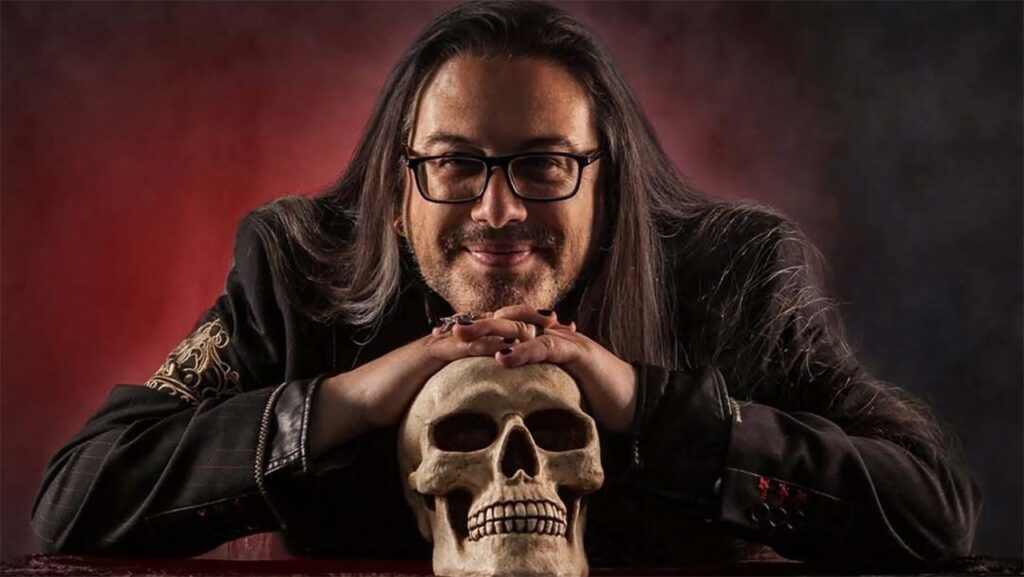
John Romero’s next shooter survived the collapse of its original Microsoft-backed production, but the project now in development is a redesign rather than the same game continuing with fewer people. Romero Games lost funding for the original unannounced shooter in July 2025, when Brenda Romero said a publishing partner had canceled financing for the project. Former employees and subsequent reporting connected that decision to Microsoft during a wider round of Xbox cuts.
The studio remained open, however, and said at the time that other publishers had expressed interest in helping it find a path forward. By Gamescom Asia x Thailand Game Show in October 2026, Romero confirmed that the studio had secured a new publisher and rebuilt around a project designed for its current resources.
Romero explained that the original production had required a team of roughly 110 people. Once funding disappeared and developers began leaving, restoring that version would have meant rebuilding both the financing and the workforce needed to finish it. The studio eventually fell to five people before bringing back ten former team leads, creating a current team of about 15 to 16 developers. Rather than stretch the original production over a much longer schedule, Romero Games redesigned the shooter around what that smaller group could realistically complete. That decision reduced the number of dependencies the team had to maintain while allowing it to preserve useful work from the canceled game.
The October 30, 2026 VGC interview confirmed that the new publishing partner exists but left its identity private. Romero said he contacted someone he already knew and reached an agreement, while also describing the publisher as willing to leave creative direction with the development team. The public material does not disclose the budget, financing milestones, launch plan, marketing responsibilities, quality assurance arrangements, or distribution terms. It also does not establish whether the new publisher had been among the companies that contacted Romero Games after the July 2025 cancellation. The confirmed point is that the redesigned shooter now has a publishing route and active development support.
The staffing recovery is meaningful but partial. Returning ten former leads gave Romero Games access to people who already understood the earlier project’s systems, assets, and production assumptions. That knowledge can help a small team decide which material is worth adapting and which pieces would create more work than they save. At the same time, the rebuilt studio remains far smaller than the group that worked on the canceled production. The new publishing deal improves the studio’s outlook without undoing the job losses caused by the original funding collapse.
Romero has also described a more direct role in development under the smaller structure. He said he is working in Unreal Editor and participating closely in design decisions, while the returning leads are experienced enough to work with relatively little hierarchy. For a project still being reshaped around exploration and combat, that can reduce the distance between discussing an idea and seeing it tested in a playable level. The smaller team still has to divide limited time among level design, combat, asset work, testing, optimization, and production support, but the project is now intentionally scoped around those constraints rather than fighting against them.
Reusing Characters, Weapons, Art, Code, and IP from the Canceled Shooter
Romero Games retained ownership of the original project’s name, intellectual property, art, graphics, and code, according to Romero. That ownership gave the studio a practical foundation for the redesigned shooter because it could examine work already completed and decide which parts still fit. Romero specifically named characters, weapons, art, and code among the material that could carry forward. The project therefore has genuine continuity with the canceled production even though its structure and scope have changed. It is more accurate to describe it as a redesigned shooter built from selected previous work than as a simple revival of the old game.
Reusing a finished asset does not eliminate all of the work surrounding it. A weapon model may already exist with animations, audio, effects, and basic firing logic, but its role can change if the new game uses different movement speeds, enemy spacing, or encounter design. A character model can retain its visual identity while requiring different behavior, dialogue, animations, or placement. Existing code can accelerate prototyping while still carrying assumptions about level loading, progression, or other systems that no longer belong in the redesigned project. The value of reuse depends on how closely the inherited material fits the new design.
This is where bringing former leads back becomes especially useful. A returning developer may remember why a system was built in a particular way, which parts can be detached cleanly, and where apparently reusable code depends on expensive infrastructure from the old production. That context is difficult to recover from files alone. A smaller team needs to make those decisions quickly because spending weeks adapting one legacy system can erase the time saved by reusing it. Romero’s description of the returning staff suggests that continuity of knowledge is as important as continuity of assets.
The redesign also changes how the team thinks about scope. Cutting a mode or system can remove several connected obligations at once, including interface work, balancing, testing, progression, and support code. The old project had been designed around a much larger organization, while the new shooter is being built around a team of roughly 15 to 16. That makes production choices part of the design itself. Romero has not disclosed which features were removed, which were retained, or how much of the previous project remains recognizable, so the public evidence supports only the broader conclusion that the team is selecting from existing work rather than carrying the original plan forward intact.
The studio also still owns the original project’s name, but Romero has not said whether the redesigned shooter will use it. Ownership preserves that option without confirming the final branding. The same distinction applies to the previous Xbox relationship. Microsoft’s funding history explains why the game appears in coverage as a canceled Xbox-backed shooter, but it does not establish the current platform plan. The new publisher, title, platform list, and release strategy remain separate decisions that have yet to be announced.
Breath of the Wild Inspiration, Exploration, and How Detours Could Shape the Shooter
The clearest public creative direction for Romero’s new shooter comes from his comparison with The Legend of Zelda: Breath of the Wild. Romero focused on the experience of setting out toward one destination, noticing something unexpected along the way, and deciding to investigate it. The appeal lies in the player making that choice rather than being told to follow a formal objective. Nintendo’s own presentation of Breath of the Wild uses a similar rhythm, with distant landmarks, towers, mountains, and terrain encouraging players to choose their own routes. Romero’s comments suggest that he wants to bring that sense of curiosity and spontaneous redirection into a shooter.
The comparison does not establish an open-world structure. The same idea can work in a large continuous landscape, several connected areas, or a compact level with multiple interlocking routes. What matters is that the environment gives the player enough information to notice possibilities and enough freedom to act on them. A doorway, ridge, bridge, damaged wall, or unusual light can function as an invitation to explore without interrupting the game with an explicit objective marker. The player decides whether the detour looks worthwhile.
In a shooter, that decision can affect combat before the first shot is fired. A direct route might place the player in front of an encounter, while an optional path could reveal a higher position, another entrance, useful supplies, or information about what lies ahead. The reward does not always need to be a weapon or collectible. It can be a better tactical angle, a changed encounter, a shortcut, or simply the satisfaction of discovering how parts of the level connect. That approach can make exploration meaningful even within a relatively compact production.
Allowing several approaches also creates design challenges. A fight entered from one predictable direction is easier to stage because the designer knows what the player is likely to see first. Multiple entrances mean enemies, cover, objectives, and navigation cues have to remain understandable from different angles. A route that gives a strong tactical advantage can be rewarding, but it can also make the encounter trivial if the rest of the design does not account for it. The practical question is how often player curiosity creates a better decision rather than confusion.
Romero’s history with Wolfenstein 3D, Doom, and Quake makes that interest in space particularly relevant. Classic shooters often connect combat and navigation closely, with room layout, alternate routes, and remembered locations affecting how the player handles an encounter. A familiar corridor can become useful when the player needs room to retreat or return to supplies. That provides a natural bridge to the exploration philosophy Romero admires in Breath of the Wild. The influence can be about how players discover and use space without requiring the new game to resemble Zelda in genre or overall structure.
The most revealing future footage will therefore be gameplay rather than a map-size comparison. A large world can still funnel players through fixed events, while a smaller level can support considerable freedom if paths reconnect and different approaches change what happens. A gameplay demonstration can show whether the player can notice something outside the planned route, reach it, and gain a meaningful consequence from that decision. That would provide stronger evidence of the Breath of the Wild influence than simply labeling the game open world.

Unreal Engine 5.8, Release Status, Platforms, and What Remains Unannounced
Romero Games’ redesigned shooter is actively in development, but the public reveal remains ahead. Adult Gamer reported that Romero identified Unreal Engine 5.8 as the version being used, while Romero separately told VGC that he was working directly in Unreal Editor. That gives some technical context for the production without revealing how the studio is using the engine’s specific rendering, streaming, animation, or platform features. The engine version also provides no reliable basis for predicting system requirements, resolution targets, or frame rates. Those results will depend on the game’s content and optimization work.
The current project still has no publicly announced title. Romero said the studio owns the name associated with the original production, but that only means the team can choose to retain it if it still fits the redesigned game. Coverage continues to identify the project through descriptions such as John Romero’s next shooter or Romero Games’ unannounced shooter. References to Xbox describe the history of the canceled funding arrangement, while references to Zelda describe the exploration influence. Neither supplies the official branding.
There is also no announced release date or release window as of November 3, 2026. The October Gamescom Asia update confirmed active development and a new publisher but did not attach a launch timetable. The same uncertainty applies to platforms. The earlier Microsoft relationship does not establish that the redesigned game will launch on Xbox, and Unreal Engine support for multiple platforms does not tell readers which versions the current publisher intends to fund and release. A studio or publisher announcement will be required before any platform list can be stated confidently.
The new publisher’s eventual reveal could answer several of those open questions at once. A formal announcement may identify the title, platforms, release strategy, and the commercial role the publisher intends to play. It could also provide a first trailer or gameplay footage that shows how much of the earlier production survived the redesign. Until then, the most reliable facts concern the production itself: the genre remains a shooter, the project has been rebuilt around approximately 15 to 16 developers, ten former leads have returned, a new publisher is attached, and characters, weapons, art, and code from the canceled game are being reused selectively.
The central design question remains how the smaller team translates Romero’s exploration philosophy into actual play. A trailer can establish visual identity and setting, but a gameplay demonstration can show whether players can leave the obvious route, discover something meaningful, and approach combat differently because they followed their curiosity. That is also where the redesigned scope will become easiest to judge. The project’s story so far is one of production recovery, but the eventual reveal will show whether the smaller structure has also produced a clearer and more focused game.
Frequently Asked Questions (FAQs)
- Was John Romero’s original Xbox-funded shooter canceled?
Yes. Romero Games said in July 2025 that funding for its original unannounced shooter had been withdrawn and that the project, in that form, was canceled. The studio did not simply restart the same production later with fewer people. Instead, Romero Games retained ownership of its work and redesigned a different shooter around the resources of a much smaller team. Some material from the canceled production, including art, code, characters, and weapons, is being reused where it still fits. The current game therefore has continuity with the earlier project without being the same production resumed unchanged. - Did Romero Games close after the funding cut?
No. Romero Games publicly said it remained open after losing the funding arrangement. The studio began looking for another publisher while also reducing staff and reassessing what kind of project it could realistically continue. Romero later said the company had fallen to just five people at its lowest point. From there, it rebuilt by bringing back experienced former leads and designing a smaller shooter around the team it had. The funding loss severely reduced the studio, but it did not end the company. - Who is the new publisher for John Romero’s shooter?
The new publisher has not been publicly identified. Romero said he contacted someone he already knew, and that existing relationship eventually led to an agreement. He has also said the publisher is allowing Romero Games to retain creative control over the project. However, the public interviews do not disclose the publisher’s name, budget, release strategy, marketing responsibilities, or other commercial terms. The confirmed fact is that a publishing agreement exists, while the identity of the company remains private. - Is John Romero’s new shooter an open-world game?
That has not been confirmed. Romero Games has not announced whether the shooter uses a continuous open world, connected regions, or more traditional individual levels. Romero’s comparison with The Legend of Zelda: Breath of the Wild is about player curiosity and the freedom to notice something interesting and change direction. That kind of exploration can work in a large open world, but it can also work inside compact levels with multiple routes and optional discoveries. Until the studio shows the game’s map structure, calling it open world would be speculation. - What did the shooter take from Zelda: Breath of the Wild?
Romero cited the feeling of choosing a destination, noticing something interesting on the way, and deciding to investigate it instead. The inspiration is therefore about how players discover opportunities and let curiosity interrupt their original plan. In a shooter, that could influence alternate routes, hidden spaces, tactical positions, or discoveries that change how an encounter begins. The comparison does not mean the new game will copy Zelda’s combat, progression, or overall world design. The clearest connection is the idea that exploration should emerge from what catches the player’s attention rather than from being told exactly where to go. - How many developers are making the new shooter?
Romero estimated the current team at around 15 to 16 people in October 2026. That is much smaller than the roughly 110-person group associated with the original production. He said the new shooter was deliberately designed around the smaller team rather than forcing the old scope onto fewer developers. The studio had dropped to five people before rebuilding. The current headcount therefore reflects a redesigned production model, not simply a reduced version of the original staffing plan. - Did Romero Games rehire any developers from the canceled project?
Yes. Romero said the studio brought back 10 former developers who had led different subteams on the earlier production. Their return gives the smaller team valuable knowledge about the assets, code, and systems being considered for reuse. A returning lead may already know why a particular system was built a certain way or which dependencies could make it expensive to adapt. That experience can save time when deciding what to keep and what to discard. The rehiring also helped rebuild Romero Games from its five-person low point to the current team of about 15 to 16. - Which engine is John Romero using for the new shooter?
Adult Gamer reported that Romero identified Unreal Engine 5.8 as the engine version being used for the project. Separately, Romero told VGC that he was working directly in Unreal Editor as part of the smaller team. That confirms Unreal as an active part of the production workflow and suggests Romero is personally involved in testing and shaping the game inside the editor. The engine version provides technical context, but it does not reveal system requirements, performance targets, or which Unreal features the studio is using. Those details remain undisclosed. - Does Romero Games own the original shooter’s assets?
According to Romero, yes. He said the studio owns the original project’s name, intellectual property, art, graphics, and code. That ownership is what allowed the team to examine the previous production and reuse selected material in the redesigned shooter. It does not mean every old asset will appear unchanged, because the new game has a different scope and may require different roles, balance, or environments. The importance of the ownership is that Romero Games had a foundation to build from rather than having to start completely from zero after the funding cut. - When and where will John Romero’s new shooter be released?
As of November 3, 2026, Romero Games had not announced a release date, release window, or platform lineup. The studio has confirmed active development and a new publishing agreement, but the formal product reveal has not yet happened. The earlier Microsoft funding relationship should not be used to assume the game will launch on Xbox because that arrangement belonged to the canceled production. The same applies to Unreal Engine support for multiple platforms, which does not reveal which systems the new publisher plans to support. A future studio or publisher announcement will be needed to confirm the title, launch timing, and platforms.

Conclusion
John Romero’s next shooter now has something the studio lacked after the July 2025 funding collapse: a production plan built around the team and resources it actually has. Romero Games retained characters, art, weapons, code, and other work from the canceled project, then reshaped that material into a shooter designed for roughly 15 to 16 developers rather than trying to preserve the original 110-person scope. Bringing back former leads also restored knowledge about how those systems and assets were built, which can make the difference between useful reuse and expensive rework. Romero’s description of the new publishing agreement adds another important piece by placing day-to-day creative control with the studio while the publisher provides the commercial path forward.
The strongest clue about the redesigned game’s identity is Romero’s comparison with The Legend of Zelda: Breath of the Wild. His interest is not simply in creating a larger map, but in giving players reasons to notice something unexpected, leave the obvious route, and discover a meaningful result from that choice. In a shooter, that philosophy could shape how players approach encounters, find alternate paths, uncover tactical advantages, or simply decide where to go next. The eventual gameplay reveal will show whether those detours are occasional bonuses or a defining part of the experience.
For now, the project is best understood as a focused rebuild rather than a resurrection of the canceled Xbox-backed game. The studio has a smaller team, a new publisher, reused production work, and a clearer design philosophy, but the title, publisher identity, platforms, release window, and world structure remain undisclosed as of November 3, 2026. The next reveal will therefore need to answer both creative and practical questions: what this shooter actually looks like in motion, how much freedom players have to follow their curiosity, and whether the smaller scope has helped Romero Games turn a difficult production setback into a more coherent game.
Sources and Citations
- October 30, 2026 – New publishing deal and studio restructuring
- Video Games Chronicle, October 30, 2026: Chris Scullion’s Gamescom Asia interview with John Romero is the central source for the new publishing agreement. Romero confirms that the previously cancelled Xbox-funded shooter has a new publisher, that some former employees have been rehired, and that the project has been redesigned for a smaller team. It also provides Romero’s comments on the studio retaining ownership of its original intellectual property. VGC
- Citation: Chris Scullion, Video Games Chronicle, October 30, 2026, John Romero Confirms His Axed Xbox Game Has a New Publisher and He’s Rehired Some Staff.
- PC Gamer, October 30, 2026: Reports the reduction from a production involving approximately 110 people to a redesigned project being developed by around 16. It explains that Romero is reworking the game to reuse as much of the cancelled project’s existing material as possible, rather than trying to complete the original large-scale production. PC Gamer
- Citation: Ted Litchfield, PC Gamer, October 30, 2026, Romero Games Has a New Publisher for the Game Xbox Abandoned, but Its 110-Person Team Is Now Just 16 Devs.
- tbreak, October 30, 2026: Summarizes the restructuring, including the reduction from 110 staff to five and the subsequent rehiring of 10 former sub-team leads. It also reports Romero’s comments about retaining ownership of the intellectual property, artwork, graphics, and code, while noting that the new publisher and game title have not been revealed. Tbreak Media UAE
- Citation: Mufaddal Fakhruddin, tbreak, October 30, 2026, John Romero’s Axed Xbox Shooter Finds a New Publisher, and 10 Staff Are Back.
- Game Developer, October 30, 2026: Covers the new publishing agreement and the project’s reduced scope. It is particularly useful for Romero’s comments about returning to hands-on game design, making decisions directly, and working in Unreal Editor rather than managing a production team of more than 100 people. Game Developer
- Citation: Imran Khan, Game Developer, October 30, 2026, John Romero’s Canceled Game Finds a New Publisher Amidst an Overall Scope Change.
- Adult Gamer, October 30, 2026: Discusses Romero’s description of exploration-driven gameplay, including the comparison to the unexpected discoveries and detours associated with The Legend of Zelda: Breath of the Wild. It also attributes the Unreal Engine 5.8 detail to Romero’s comments to IGN. Treat this as secondary reporting; the engine version should be cross-checked against the original interview before presenting it as a confirmed implementation detail. Adult Gamer
- Citation: Adult Gamer, October 30, 2026, John Romero’s New Shooter Has a Publisher and a Breath of the Wild Influence.
- October 30, 2026 – Exploration, gameplay direction, and engine
- Adult Gamer, October 30, 2026: Discusses Romero’s comparison between the game’s exploration and the unexpected discoveries in The Legend of Zelda: Breath of the Wild. It also reports that the project uses Unreal Engine 5.8, attributing that detail to Romero’s comments to IGN. This is secondary coverage, so the engine claim should ideally be checked against the original IGN interview. Adult Gamer
- Citation: Adult Gamer, October 30, 2026, John Romero’s New Shooter Has a Publisher and a Breath of the Wild Influence.
- July 2025 – Original cancellation and funding loss
- GamesRadar+, July 7, 2025: Documents Romero Games’ contemporaneous response to reports that the studio had closed. It confirms that funding for the project was withdrawn and the game was cancelled, while the studio maintained that it remained open and was evaluating approaches from interested publishers. This is important background for understanding the 2026 publishing deal. GamesRadar+
- Citation: GamesRadar+, July 7, 2025, “Romero Games Is Not Closed”: Studio Confirms Funding Loss but Says Publishers Have Expressed Interest.
- PC Games Insider, July 8, 2025: Reproduces Romero Games’ statement explaining that the project had lost funding and been cancelled, that the studio needed to reassess staffing, and that it had received interest from several publishers. It directly supports the studio’s position that it had not shut down. PC Games Insider
- Citation: Alex Forbes-Calvin, PC Games Insider, July 8, 2025, Romero Games Asserts It Has Not Closed.
- Epic Games – Unreal Engine 5.8 documentation
- Epic Games, Unreal Engine 5.8 Release Information: Official technical documentation confirming that Unreal Engine 5.8 became available on June 23, 2026. It outlines the engine’s world-building and terrain tools, real-time vegetation authoring, lighting improvements, character and animation workflows, and integrated AI-assisted development tools. This verifies the engine version’s availability, but does not independently prove which version Romero Games uses. Unreal Engine
- Citation: Epic Games, June 23, 2026, Unreal Engine 5.8 Is Now Available.
Recommendations
- The Duskbloods Closed Network Test Announced, But Release Date Remains a Mystery
- Jason Schreier Says The Last of Us Online Was a Major Naughty Dog Project, Not a Side Project
- Kingdom Hearts HD 1.5+2.5 ReMIX Hits #2 on US Steam Sellers After KH4 D23 Trailer
- Intergalactic by Naughty Dog: Rumors, Leaks, and What We Know About the Studio’s Potential Sci-Fi Project
- Thimbleweed Park 2 Fan Funding Explained: Ron Gilbert’s Sequel Returns in 2028
- Oblivion Remastered Switch 2 Video Shows FPS Drops
- Reverie in the Moonlight: November 19, 2026 Switch Launch and PC Availability
- Thick as Thieves Review: Plot, Cast, Ending Explained & Full Movie Breakdown (2009 Heist Thriller)
- Outbound: 8 Beginner Tips for Effective Outreach and Lead Generation
- Switch 2 Just Received A Massive Upgrade For Playing Switch 1 Games — Handheld Mode Boost Explained



































































































