






Thimbleweed Park 2 fan funding by an unnamed private investor has given Ron Gilbert and Terrible Toybox an unusual path back to one of modern adventure gaming’s most distinctive worlds. Production officially began in 2026, with the game currently targeting an early 2028 release. Instead of signing a conventional publishing agreement or returning to Kickstarter, Gilbert secured financing from a wealthy fan of the original Thimbleweed Park who wanted another game and was willing to fund its development.
Terrible Toybox will self-publish the project, allowing Gilbert and the returning development team to retain greater creative control. The arrangement is particularly notable because Gilbert had previously discussed how difficult it had become to obtain acceptable financing for unconventional games. Publishers reportedly showed interest, but the proposed financial terms did not make sense for a relatively small independent studio producing a niche point-and-click adventure.
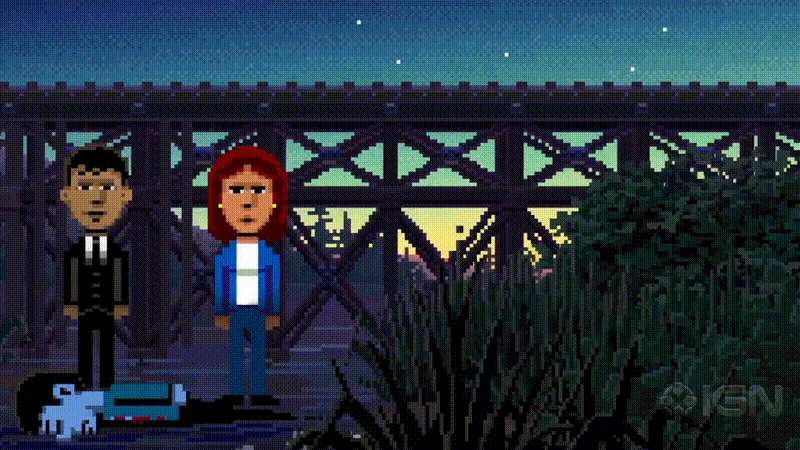
The new game will return to the strange town of Thimbleweed Park, where another dead body has been discovered. This time, the victim is at the Edmund Mansion, and Agents Ray and Reyes are involved in the investigation. Terrible Toybox describes the game as a point-and-click spoof of a classic whodunit in which everyone inside the mansion is a suspect—except, apparently, the butler.
Although its title contains the number two, Thimbleweed Park 2 is officially described as neither a traditional sequel nor a conventional prequel. It is instead being positioned as another strange story inside the same fictional world. Several original developers are returning, including Gary Winnick, David Fox, Mark Ferrari, Octavi Navarro, Robert Megone, and composer Steve Kirk.
In This Article (19 sections)
Thimbleweed Park 2 Fan Funding by a Private Investor Explained
Thimbleweed Park 2 fan funding differs from both conventional crowdfunding and standard publisher financing. One unnamed private investor is helping finance development, while Terrible Toybox intends to publish the finished game independently. The investor is reportedly a wealthy fan of adventure games and the original Thimbleweed Park rather than a traditional video game publisher.
Ron Gilbert explained in an August 2026 interview that the opportunity emerged through a personal connection. A friend told him about a wealthy outsider who enjoyed Thimbleweed Park and wanted another game. Gilbert was initially skeptical, partly because similar suggestions had reached him before without developing into serious financial offers. Nevertheless, he agreed to communicate with the potential investor.
After determining that the offer was genuine, Gilbert prepared a detailed production plan and a realistic budget. The investor accepted the proposal, creating a funding agreement that Gilbert considers substantially fairer than the publisher arrangements he had previously examined.
This does not mean the investor is simply donating money without expecting a return. The reported structure allows the investor to recover the initial investment relatively quickly if the game sells, after which revenue is divided under a more reasonable profit-sharing arrangement. Exact percentages, repayment provisions, ownership terms, and contractual details have not been publicly disclosed.
The funding model gives Terrible Toybox the resources needed to pay its developers properly while preserving its independence. It also avoids the complex public obligations associated with crowdfunding, such as reward tiers, stretch goals, frequent campaign promises, and thousands of individual backer relationships.

Why Ron Gilbert Is Making Thimbleweed Park 2
Ron Gilbert has continued thinking about adventure games even while working in other genres. Before formally announcing Thimbleweed Park 2, he revealed that he had prepared an early concept for another story in the setting. At that stage, however, the idea had not progressed into full production because adequate funding was unavailable.
Gilbert also had creative reservations. Thimbleweed Park and Return to Monkey Island both engaged deliberately with adventure-game nostalgia. Gilbert did not want to make another game solely because players remembered the genre fondly. He expressed interest in finding new ideas and experimenting with how adventure games could be structured rather than simply reproducing a familiar formula.
The circumstances changed once a credible investor offered acceptable financing. The original Thimbleweed Park also demonstrated lasting commercial interest. Gilbert has noted that the 2017 game continues to sell nearly a decade after its release, suggesting that well-made narrative adventures can produce a long revenue tail even if they do not generate the immediate sales of a mainstream blockbuster.
The opportunity therefore combined creative interest, evidence of an enduring audience, and a workable financial arrangement. Gilbert already had ideas for revisiting the world, and the investor provided the missing production capital.
The sequel also allows members of the original team to collaborate again. That continuity is important because Thimbleweed Park’s appeal came from more than its mechanics. Its identity depended on a particular mixture of writing, puzzle design, pixel art, music, mystery, absurdity, and self-aware humor.
How a Wealthy Fan Funded Thimbleweed Park 2
The origin of the deal sounds almost like a story from an independent film. Gilbert had encountered difficulty obtaining satisfactory publisher financing when a friend mentioned knowing a wealthy person who was a serious fan of the first game. The prospective investor was described as an outsider rather than a prominent figure in the game industry.
Gilbert eventually made contact and discovered that the interest was genuine. He then calculated what it would take to build Thimbleweed Park 2 over approximately two years without underpaying its team. He reportedly requested a little more than $1 million, establishing a budget above that of the original game.
The investor approved the plan. Public reporting has not identified the individual, and Gilbert has not revealed details that would allow fans to confirm the investor’s identity. Claims connecting the project to a famous actor, publisher, or known game-industry executive should therefore be treated as speculation unless Terrible Toybox provides confirmation.
The essential fact is that a private fan-backed investment replaced the role normally occupied by a publisher. Terrible Toybox received development financing but retained the ability to self-publish. The investor receives a financial interest in the game’s performance, while the developer avoids terms Gilbert believed would have placed an unreasonable share of the commercial risk on the studio.
It is an exceptional arrangement rather than an easily repeatable funding template. Most independent developers do not have access to wealthy fans capable of financing an entire production. In this case, Gilbert’s long career, the original game’s reputation, and the investor’s personal enthusiasm created a rare combination.
Thimbleweed Park 2 Release Date and Development Timeline
Terrible Toybox announced in July 2026 that production had begun and that Thimbleweed Park 2 was due in early 2028. This is a target rather than a guaranteed launch date. No exact day or month has been confirmed.
A roughly two-year production schedule aligns with Gilbert’s reported funding proposal. However, adventure games require extensive writing, puzzle iteration, artwork, animation, programming, voice production, testing, and localization. Puzzle-heavy games can be particularly difficult to schedule because individual changes may affect several connected sequences.
The original concept existed before formal production. Gilbert discussed having developed a preliminary design in an earlier interview, at one point considering whether the game might work as a prequel tentatively imagined as Thimbleweed Park Zero. The announced project is not being presented in those exact terms, demonstrating that the concept evolved before production began.
Terrible Toybox has also launched a development diary intended to give players behind-the-scenes information. That approach resembles the unusually transparent production coverage surrounding the first Thimbleweed Park, which included development posts and podcasts.
Until the team announces otherwise, early 2028 remains the most reliable release window. Any storefront date that supplies a specific day without confirmation from Terrible Toybox should be understood as a placeholder.
Is Thimbleweed Park 2 a Sequel or Prequel?
Terrible Toybox’s official answer is deliberately ambiguous: Thimbleweed Park 2 is “not really a sequel” and “not really a prequel.” It is described instead as more Thimbleweed Park and just as weird.
That wording is meaningful because the original game’s ending complicates a straightforward continuation. Thimbleweed Park ultimately reveals that its characters and town exist within a video game simulation. Several protagonists resolve personal storylines or confront the artificial nature of their reality. Continuing directly from that conclusion would require the new game either to reverse those outcomes, follow a significantly altered world, or use the original revelation as the foundation for another layer of metafiction.
Gilbert previously acknowledged that the ending had boxed him in creatively. A prequel was one possible solution because it could return to the town before the first game’s final revelations. The currently announced premise, however, has not been labeled a prequel.
The return of Ray and Reyes does not settle the question. They could appear before, after, alongside, or outside the original chronology. The phrase “or are they?” in the official description further suggests that their roles or identities may not be as simple as the initial murder investigation implies.
The safest interpretation is that the game revisits the setting and its characters without committing to ordinary chronological continuity. Its relationship with the first title may itself become part of the mystery.

Thimbleweed Park 2 Story, Setting, and Murder Mystery Details
The confirmed story begins with another body, this time at the Edmund Mansion. Agents Ray and Reyes return to investigate a collection of suspects inside the building. Terrible Toybox characterizes the scenario as a point-and-click parody of a classic whodunit.
The official synopsis promises that every person in the mansion is a suspect and that the detectives will confront the murderer—if players can find the culprit. It also reveals one comic anti-spoiler: the butler did not do it. By the end of the night, players are expected to have more questions than answers.
The Edmund Mansion gives the new story a direct connection to the family at the heart of the original game. Chuck Edmund controlled PillowTronics, dominated the local economy, and exerted an enormous influence over both the town and his relatives. Delores Edmund, her father Franklin, and the wider Edmund family history were all essential to the first game’s mystery.
A mansion is also an ideal environment for a classic adventure game. It can contain locked rooms, secret passages, family records, mechanical devices, suspicious residents, misleading clues, and puzzles that gradually open new areas. The whodunit structure provides a clear initial objective while leaving room for the narrative to expand into the town’s more surreal mythology.
Terrible Toybox has not disclosed the victim’s identity, the full suspect list, the murderer’s motive, or the event’s placement in the timeline. Those details are likely being protected because discovering them forms the central experience.
Thimbleweed Park 2 Returning Characters and New Locations
Agents Angela Ray and Antonio Reyes are the only returning characters explicitly named in the initial story description. In the first game, they arrived as federal agents assigned to investigate a body found near the town. Both carried hidden agendas, and their outwardly professional partnership concealed personal motivations.
Their return creates immediate narrative questions. Ray and Reyes completed markedly different arcs, and the first game’s ending destabilized the reality surrounding them. The sequel’s promotional language openly questions whether they have returned in the way players expect.
The Edmund Mansion is the principal confirmed location. Although the Edmund family was central to the original story, this new murder site creates an opportunity to explore areas and history that were previously unseen. The mansion may contain familiar visual references, but Terrible Toybox has not yet published a complete location list.
Other residents such as Delores, Franklin, Ransome the Clown, Willie T. Wino, Sheriff-a-Reno, and the Pigeon Brothers remain associated with the setting, but their appearances should not be treated as confirmed unless the studio names or shows them.
The return of Gary Winnick, Mark Ferrari, and Octavi Navarro increases the likelihood of strong visual continuity. It does not, by itself, confirm the return of every character or location they helped create. The sequel could mix recognizable places with substantial new environments built around the mansion mystery.
Terrible Toybox’s Plans for Thimbleweed Park 2
Terrible Toybox plans to develop and self-publish Thimbleweed Park 2 with financial support from the private investor. Self-publishing gives the studio greater control over production, marketing, release decisions, storefront relationships, and the long-term management of the game.
Ron Gilbert remains the central creative figure, but the project is also a reunion. Gary Winnick, David Fox, Mark Ferrari, Octavi Navarro, and Robert Megone are among the original contributors confirmed to be returning. Composer Steve Kirk will again handle the music. Additional participants may be announced as development advances.
The studio also intends to document development through a public diary. This should give interested players a closer look at design decisions without requiring Terrible Toybox to operate another Kickstarter campaign. Development posts can discuss artwork, puzzles, programming, sound, and production milestones while preserving major story secrets.
The project’s public description indicates that it will remain a point-and-click adventure rather than becoming the radically different 3D experiment Gilbert had previously discussed in broader conversations about the genre. Nevertheless, the team can still introduce structural, interface, accessibility, and puzzle-design improvements within that format.
The current production plan covers an early 2028 launch. The precise scope, voice cast, localization options, price, system requirements, and edition structure have not yet been finalized publicly.
Why Ron Gilbert Rejected Traditional Publisher Deals
Gilbert’s objection was not simply that publishers wanted to earn money. A publisher financing development reasonably expects to recover its investment and receive a share of the revenue. The dispute concerned how much risk developers carried and how long they might have to wait before participating meaningfully in the game’s success.
According to Gilbert’s explanation, some proposed arrangements allowed a publisher to recoup significantly more than the original development advance before the developer received a meaningful revenue share. A game could therefore sell well enough to recover its production cost while still providing little profit to the people who created it.
That structure is especially problematic for a niche game. A mainstream release may have enough commercial upside to overcome aggressive recoupment terms. A traditional point-and-click adventure generally serves a smaller audience, making a balanced agreement essential.
Gilbert has also criticized a publishing environment in which financial formulas and market comparisons can outweigh creative judgment. An unusual game may struggle to fit a publisher’s projections even when it has an identifiable, loyal audience.
The private investor offered a more acceptable arrangement. The investor can recover the initial funding, but the subsequent revenue split is reportedly more reasonable. Terrible Toybox also remains the publisher, preserving independence and reducing the danger that an outside company will reshape the project to satisfy market calculations.

Why Thimbleweed Park 2 Is Not Using Kickstarter
The original Thimbleweed Park emerged from a successful Kickstarter campaign launched in November 2014. The campaign requested $375,000 and ultimately raised $626,250 from 15,623 backers. That public support demonstrated strong demand for a new adventure inspired by the design traditions of Maniac Mansion and classic Lucasfilm Games releases.
Despite that success, Gilbert did not want to repeat the process for Thimbleweed Park 2. He has argued that Kickstarter is no longer as dependable for video game financing as it was during the crowdfunding boom. The platform can still support some projects, but nostalgia, creator recognition, and a strong concept do not guarantee sufficient funding.
Crowdfunding also creates substantial administrative work. A campaign requires promotional videos, reward planning, pledge management, continuous public updates, stretch-goal decisions, and the fulfillment of physical or digital incentives. Those tasks consume time that could otherwise go into development.
A second campaign would also transfer financial uncertainty to fans before production. By contrast, one investor has supplied the required capital through a private agreement. Terrible Toybox can communicate openly through its development diary without tying each design decision to campaign promises.
The decision does not represent hostility toward the original backers. Their support helped establish the franchise. It reflects Gilbert’s assessment that private investment is now a more practical and predictable way to finance this particular game.
How Much Will Thimbleweed Park 2 Cost to Develop?
Terrible Toybox has not released an exact audited budget. Gilbert reportedly asked the private investor for a little more than $1 million to fund roughly two years of production. He described the proposal as realistic and emphasized the importance of paying the people working on the game properly.
Public reports also indicate that the budget is higher than the amount spent on the original Thimbleweed Park. This distinction is important because the first game’s Kickstarter total was not necessarily identical to its final development cost. Crowdfunding revenue can be reduced by platform fees, payment-processing expenses, taxes, reward fulfillment, and other obligations, while additional investment or post-campaign revenue may increase the resources available.
Production costs have also changed since the first game entered development in 2015. Salaries, contract rates, software, hardware, localization, quality assurance, voice recording, marketing, and business expenses have generally increased. A budget only slightly above $1 million remains modest for a multi-platform commercial game developed over two years.
The private arrangement appears intended to cover full production rather than merely provide seed money. Nevertheless, unforeseen requirements could change the final expenditure. Additional platform work, expanded localization, delayed production, or a larger-than-planned scope could increase costs.
Until Gilbert or Terrible Toybox publishes a precise figure, “a little over $1 million” is the most responsible description rather than an exact total.
Thimbleweed Park 2 Gameplay and Point-and-Click Features
Thimbleweed Park 2 is officially described as a point-and-click adventure and a spoof of a traditional whodunit. Players will investigate a murder at the Edmund Mansion, encounter suspects, search for clues, and ultimately attempt to identify and confront the killer.
The original Thimbleweed Park used a verb-based interface inspired by late-1980s Lucasfilm adventure games. Players selected actions, combined objects, explored dialogue trees, managed inventories, and switched among several playable characters. Its interconnected puzzles sometimes required one character to prepare an object or situation for another.
Terrible Toybox has not yet confirmed exactly which interface elements will return. It would therefore be premature to state that the sequel will reproduce the same verb list, number of playable characters, difficulty modes, or hint system without changes.
The official point-and-click designation nevertheless confirms the project’s broad identity. It will not abandon adventure gameplay for action combat or become the three-dimensional experimental project Gilbert had once considered in hypothetical discussions.
The mansion premise may support a more concentrated mystery structure. Interviewing suspects, comparing testimony, discovering contradictions, and unlocking restricted rooms could all fit naturally, although these specific systems have not been formally detailed.
Gilbert’s previous comments about wanting adventure games to feel fresh suggest that the team may refine the formula. Innovation could appear through puzzle structure, narrative perspective, character switching, investigative mechanics, or metafiction rather than through a complete genre change.
Will Thimbleweed Park 2 Keep the Original Pixel-Art Style?
Available promotional material and reporting indicate that Thimbleweed Park 2 will retain pixel art. The returning art team also strongly supports visual continuity. Mark Ferrari, Gary Winnick, and Octavi Navarro were instrumental in defining the original game’s detailed retro environments, character designs, color work, and animation.
The first game’s pixel art was not simply a low-cost substitute for modern graphics. It was an intentional aesthetic designed to evoke an undiscovered adventure game from 1987 while using modern production capabilities. Its environments contained richer lighting, color, animation, and detail than the hardware of that period could have delivered.
Gilbert has previously resisted the idea that pixel art must mean technological stagnation. He has explained that classic developers used the best tools available to them rather than deliberately pursuing a primitive look. Consequently, the sequel may preserve the original aesthetic while improving its production pipeline and presentation.
No evidence currently suggests a transition to realistic 3D graphics or the illustrated style used in Return to Monkey Island. The announced imagery, returning artists, and official descriptions all point toward another pixel-art adventure.
The exact resolution, animation process, lighting techniques, aspect-ratio support, and graphical options remain unknown. Fans can reasonably expect visual continuity, but they should not assume that every technical limitation or design convention from the 2017 game will return unchanged.

Thimbleweed Park 2 Platforms and PC Release Expectations
Terrible Toybox has confirmed plans for Thimbleweed Park 2 on Windows, macOS, and Linux through Steam and GOG. The Steam page is already available for wishlisting, allowing the studio to measure interest and inform users when major announcements are published.
Ron Gilbert’s development information also identifies Nintendo Switch, Xbox, and PlayStation as planned platforms. Specific console models have not been detailed publicly. Because the game is scheduled for 2028, platform plans could evolve with hardware availability, certification requirements, and market conditions.
No mobile release has been announced. The original Thimbleweed Park eventually reached iOS and Android in addition to computers and consoles, but that history does not guarantee equivalent ports for the new game.
A simultaneous launch across every platform has not been confirmed either. Small studios sometimes release on computers first and complete console certification afterward. Terrible Toybox may be able to coordinate a broad launch, but players should wait for a formal release plan.
System requirements are unlikely to be demanding compared with graphically intensive 3D games, but official specifications are not yet available. Linux support is particularly notable because native versions are less common than Windows releases, and it reflects the platform coverage offered by the original game.
Everything We Know About Thimbleweed Park 2 So Far
Thimbleweed Park 2 entered production in 2026 at Terrible Toybox and is targeting early 2028. The studio will self-publish with financing supplied by an unnamed private investor who is a wealthy fan of the original game and adventure games more broadly.
The production budget is reportedly a little above $1 million and covers approximately two years of development. The arrangement is an investment rather than a public crowdfunding campaign. Gilbert considers its recoupment and revenue-sharing terms more equitable than the conventional publishing offers he had examined.
Ron Gilbert is leading the project, with Gary Winnick, David Fox, Mark Ferrari, Octavi Navarro, Robert Megone, composer Steve Kirk, and other original contributors returning. The collaboration gives the sequel considerable creative continuity.
The story begins with a body at the Edmund Mansion. Agents Ray and Reyes are back to investigate, although the official wording raises questions about what their return actually means. The premise parodies a traditional country-house whodunit in which everyone is a suspect, and the butler is specifically excluded as the murderer.
Terrible Toybox describes the game as neither a conventional sequel nor a prequel. It will be another strange story in the same world, probably using the setting’s metafictional nature to complicate its relationship with the first game.
Pixel art, point-and-click gameplay, mystery, puzzles, and comedy are all expected to remain central. Confirmed computer platforms include Windows, macOS, and Linux through Steam and GOG. Switch, Xbox, and PlayStation versions are also planned. No final price, exact release date, complete cast, voice lineup, localization list, or detailed gameplay demonstration has been announced.
Frequently Asked Questions (FAQs)
- Is Thimbleweed Park 2 officially in development?
Yes. Ron Gilbert announced in July 2026 that Terrible Toybox had started production on Thimbleweed Park 2. The project is being developed with support from several members of the original team. - Who is funding Thimbleweed Park 2?
An unnamed wealthy fan of the original Thimbleweed Park is privately financing the project. The individual’s identity has not been disclosed, and unverified claims naming a famous investor should be treated as speculation. - Is the private investor giving Terrible Toybox the money as a gift?
The available information describes an investment agreement, not a gift. The investor is expected to recover the initial financing if the game generates sufficient revenue, after which revenue will be divided according to undisclosed terms. - When will Thimbleweed Park 2 be released?
Terrible Toybox is targeting early 2028. An exact release date has not been announced, and the current window could change as development continues. - Is Thimbleweed Park 2 a direct sequel?
Not in the conventional sense. Terrible Toybox says it is neither really a sequel nor really a prequel. It returns to the same world and characters but may not follow a straightforward chronology. - What is the story of Thimbleweed Park 2?
A body is discovered at the Edmund Mansion, bringing Agents Ray and Reyes into another investigation. Everyone in the mansion is presented as a suspect, although the official synopsis reveals that the butler is not the murderer. - Will Thimbleweed Park 2 use pixel art?
Yes, the announced presentation and returning art team indicate that the game will retain the pixel-art identity associated with the original Thimbleweed Park. - Which members of the original development team are returning?
Confirmed returning contributors include Gary Winnick, David Fox, Mark Ferrari, Octavi Navarro, Robert Megone, and composer Steve Kirk. Ron Gilbert is again leading the project through Terrible Toybox. - Why did Terrible Toybox not use Kickstarter again?
Gilbert did not believe another Kickstarter was the best financing route. He has described game crowdfunding as less dependable than it once was, and private investment lets the studio avoid campaign administration while securing the required production budget. - Which platforms will receive Thimbleweed Park 2?
Windows, macOS, and Linux releases are planned through Steam and GOG. Terrible Toybox has also named Nintendo Switch, Xbox, and PlayStation as intended platforms, although specific console versions and launch timing have not been finalized publicly.

Conclusion
Thimbleweed Park 2 fan funding represents an unusual but potentially important solution to a familiar independent-development problem. Ron Gilbert had a recognizable property, an experienced returning team, and evidence that the original game still attracted buyers, yet conventional publishing terms did not provide an acceptable balance of risk and reward. Kickstarter was no longer his preferred option, leaving the project without a practical source of financing.
A wealthy fan’s private investment changed that situation. The agreement reportedly supplies a little more than $1 million for approximately two years of development while allowing Terrible Toybox to self-publish. The investor can recover the funding and share in the game’s success, while the developers gain fairer terms and the ability to work without surrendering creative control to a traditional publisher.
The resulting project is scheduled for early 2028 and brings much of the original team back together. Its new murder at the Edmund Mansion, the return of Agents Ray and Reyes, and its deliberately uncertain status as neither sequel nor prequel establish a familiar but potentially unpredictable premise.
Important questions remain unanswered. Terrible Toybox has not revealed the victim, full cast, exact timeline, complete gameplay structure, price, voice actors, localization plans, or final release date. What has been confirmed is enough to establish the project’s identity: another pixel-art point-and-click mystery built by many of the people responsible for the original, financed by a fan who wanted to see Thimbleweed Park return.
Sources and Citation
- Ron Gilbert, “Thimbleweed Park 2,” Grumpy Gamer, July 30, 2026.
https://www.grumpygamer.com/twp2_announce/ - Terrible Toybox, Official Studio Website.
https://terribletoybox.com/ - Valve, “Thimbleweed Park 2,” Steam Store.
https://store.steampowered.com/app/4932120/Thimbleweed_Park_2/ - PC Gamer, “Thimbleweed Park 2 Is ‘Not Really a Sequel, Not Really a Prequel,’ but It Is Finally Happening,” July 2026.
https://www.pcgamer.com/games/adventure/thimbleweed-park-2-is-not-really-a-sequel-not-really-a-prequel-but-it-is-finally-happening/ - PC Gamer, “Thimbleweed Park 2 Is Happening Because Ron Gilbert’s Friend Knows a Rich Guy Who’s a Big Fan of the Original and Wanted More,” August 2026.
https://www.pcgamer.com/games/adventure/thimbleweed-park-2-is-happening-because-ron-gilberts-friend-knows-a-rich-guy-whos-a-big-fan-of-the-original-and-wanted-more/ - Game Informer, “Thimbleweed Park 2 Announced, Launching in 2028,” July 30, 2026.
https://gameinformer.com/2026/07/30/thimbleweed-park-2-announced-launching-in-2028 - GamingOnLinux, “Adventure Game Thimbleweed Park 2 Announced,” August 3, 2026.
https://www.gamingonlinux.com/2026/08/adventure-game-thimbleweed-park-2-announced/ - RPGFan, “Thimbleweed Park 2 Brings Mystery, Murder, and Adventure in 2028,” August 4, 2026.
https://www.rpgfan.com/2026/08/04/thimbleweed-park-2-2028/ - Kotaku, “Monkey Island Creator’s Next Game Is Funded by a Rich Guy Because He Was Tired of Bad Publisher Deals,” August 2026.
https://kotaku.com/monkey-island-creators-next-game-is-funded-by-a-rich-guy-because-he-was-tired-of-bad-publisher-deals-2000724533 - GamesRadar+, “I Never Stop Thinking About Adventure Games,” September 10, 2025.
https://www.gamesradar.com/games/adventure/i-never-stop-thinking-about-adventure-games-monkey-island-legend-ron-gilbert-says-but-as-his-roguelike-nears-release-he-doesnt-want-to-make-another-point-and-click-simply-for-nostalgic-reasons/
Recommendations
- Pickmon Game: Release Date, Steam Details, Gameplay, Creatures, and the Pickmos Name Change Explained
- Fears to Fathom Scratch Creek Walkthrough: Complete Co-Op Story and Ending Guide
- Designing Blender Hair for Stylized and Realistic Characters: Fantasy, Sci-Fi, Historical, Modern, and Cartoon Styles
- Wolverine’s Latest Defeat Has Major Consequences for the Iconic X-Man (Wolverine #19 Breakdown)
- AI Memory Crisis: Phison CEO Reportedly Warns Electronics Manufacturers Will “Exit Product Lines” by End of 2026
- Avatar: the Last Airbender Cast on Finding Toph and Bringing Ba Sing Se to Life (behind-the-Scenes Insights)
- EVE Online Cradle of War Expansion Makes the Game Safer for New Players
- Freelance and Indie Commercial License
- HYPERyuki Snowboard Syndicate Gameplay Trailer Explained
- Japan Asks the US Government to Stop Using Anime and Gaming IPs in Political Content



































































































