






In This Article (19 sections)
What is Rune Dice? Full Overview of the Tactical Deck-Building Roguelite
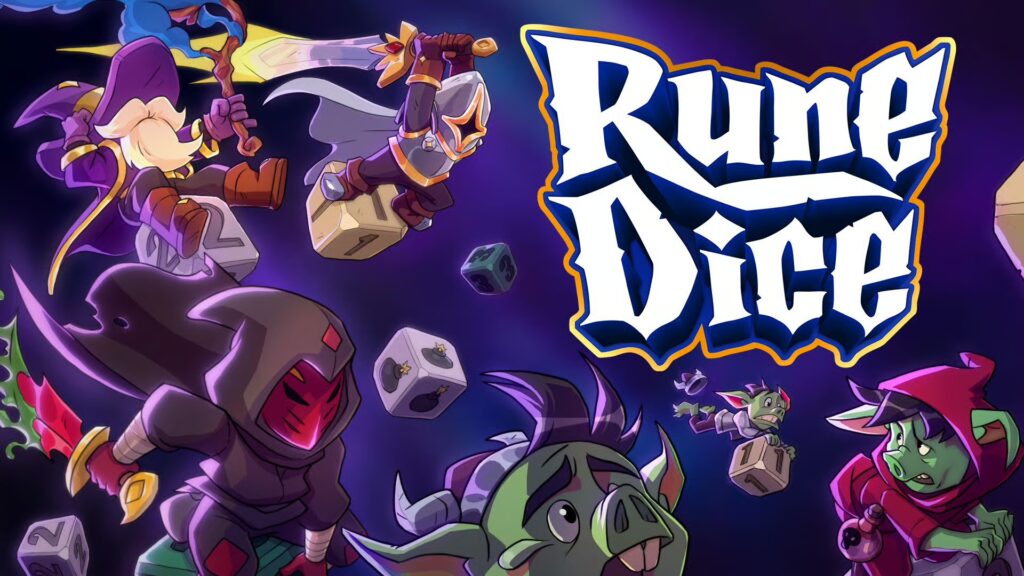
Rune Dice is a tactical deck-building roguelite structured around fast decision-making, randomized outcomes, and highly replayable short-session gameplay loops. At its core, the game blends traditional deck-building mechanics with dice-based probability systems, creating a hybrid strategy experience where both preparation and in-run adaptability matter equally.
Unlike conventional deck-builders that rely solely on card draws, Rune Dice replaces or supplements cards with customizable dice pools. Each die face represents a different ability, modifier, or combat effect. This introduces a layered system where probability, synergy, and positioning all influence success.
The roguelite structure ensures that every run is procedurally generated, including enemy encounters, rewards, relic drops, and map branching paths. This design forces players to continuously adapt rather than rely on static builds. Progression is persistent through unlockable classes, dice types, relic expansions, and meta-upgrades that enhance future runs.
Overall, Rune Dice positions itself as a hybrid strategy game that rewards both mathematical thinking and improvisational combat planning.
Rune Dice Gameplay Explained: How Dice Throwing Combat Works
The core gameplay loop of Rune Dice revolves around turn-based dice throwing combat. Each turn, players roll a set of customized dice that determine available actions such as attacks, shields, buffs, debuffs, and resource generation.
Each die face corresponds to a specific combat effect. For example:
- Sword icon: direct damage
- Shield icon: block or defense
- Rune icon: magic or elemental effect
- Chain icon: combo trigger or reroll
Players are not simply at the mercy of randomness; they actively influence outcomes through dice loadout construction, reroll mechanics, and timing-based modifiers.
Combat is structured into phases:
- Preparation Phase: select dice, activate relics, and trigger pre-roll buffs
- Roll Phase: dice are thrown into a physical or simulated arena
- Resolution Phase: effects are triggered based on results and positioning
- Combo Phase: chained effects resolve and amplify outcomes
This system makes every turn a micro-puzzle where probability management is just as important as tactical execution.
Rune Dice Short Play Sessions: Why Runs Are Designed to Be Quick and Replayable
One of Rune Dice’s defining features is its emphasis on short play sessions. Each run is designed to last between 10 to 30 minutes, making it ideal for quick, repeatable gameplay cycles.
This structure is achieved through:
- Compact roguelite maps with fewer but more impactful encounters
- High-intensity combat encounters with minimal downtime
- Rapid reward scaling that accelerates progression per run
- Streamlined UI and decision points to reduce friction
The short-session design ensures that failure never feels overly punishing. Instead, each run becomes an experiment in strategy refinement. Players are encouraged to test new dice builds, explore different class synergies, and experiment with relic combinations without committing to long gameplay sessions.
This structure significantly enhances replayability, as players can engage in multiple runs within a single sitting, each producing unique outcomes.
Rune Dice Release Date, Platforms, and Developer Information
Rune Dice is typically positioned within modern indie roguelite development cycles, often associated with early access or iterative release models. Games of this design commonly launch on PC platforms first, particularly through digital storefronts focused on indie titles.
Expected platform availability includes:
- PC (primary platform for early access and updates)
- Potential console ports depending on success and optimization
- Steam Deck compatibility due to short-session design alignment
Development teams behind games like Rune Dice usually consist of small to mid-sized indie studios specializing in procedural systems, modular combat design, and replay-driven mechanics. The development philosophy prioritizes balance tuning, content expansion, and community-driven iteration.
Post-launch development typically focuses on:
- Adding new dice sets and relics
- Expanding class diversity
- Introducing challenge modes
- Balancing RNG systems for fairness
Rune Dice Dice Fusion System Explained: How Chain Reactions Work
The Dice Fusion System is one of Rune Dice’s most distinctive mechanics. It allows players to combine dice outcomes into enhanced or transformed effects, creating chain reactions that significantly increase combat depth.
When specific dice combinations appear during a roll, fusion triggers may activate. For example:
- Two elemental dice may merge into a higher-tier elemental burst
- Matching symbols across dice may trigger amplified damage
- Sequential rolls may unlock escalating combo chains
Fusion is influenced by:
- Dice adjacency in the roll field
- Relic modifiers that enhance synergy probability
- Class-specific passive bonuses
- Rune upgrades that alter fusion thresholds
This system transforms randomness into structured potential. Instead of viewing dice rolls as isolated events, players begin to interpret them as interconnected systems capable of producing exponential outcomes.

Rune Dice Deck-Building Mechanics: How to Build the Best Dice Loadout
Deck-building in Rune Dice revolves around constructing a balanced dice pool rather than a traditional card deck. Each dice loadout defines a player’s strategic identity.
Key loadout considerations include:
- Damage consistency vs burst potential
- Defensive stability vs aggressive scaling
- Utility dice vs raw power dice ratios
- Synergy compatibility between dice types
Players can customize dice by:
- Replacing faces with upgraded symbols
- Enhancing probability distribution
- Infusing elemental attributes
- Adding conditional triggers
A strong build typically focuses on synergy rather than raw strength. For example, a fire-based build may rely on burn stacking dice combined with fusion triggers that amplify elemental spread.
Effective deck-building requires long-term planning, as adding one powerful die may disrupt existing synergies.
Rune Dice Classes Guide: All 8 Hero Classes and Their Differences
Rune Dice features multiple hero classes, each designed with unique dice interactions and combat identities. The eight archetypes generally include:
- The Warrior: High damage, low randomness dependency
- The Mystic: Elemental synergy and rune amplification
- The Alchemist: Status effects and transformation dice
- The Guardian: Defensive scaling and shield conversion
- The Rogue: High crit chance and reroll manipulation
- The Summoner: External dice summons and passive effects
- The Chronomancer: Turn manipulation and replay mechanics
- The Berserker: Risk-reward scaling and volatility boosts
Each class modifies how dice behave, ensuring that identical dice pools can produce drastically different outcomes depending on the chosen hero.
This diversity encourages experimentation and long-term mastery across multiple playstyles.
Rune Dice Best Strategies for Beginners to Win Early Runs
New players benefit from focusing on consistency over complexity. Early success in Rune Dice depends on stabilizing damage and defense before experimenting with advanced fusion systems.
Recommended beginner strategies include:
- Prioritize balanced dice pools with both offense and defense
- Avoid over-specialization in early runs
- Focus on relics that increase reroll reliability
- Learn enemy attack patterns before optimizing builds
- Use simple synergy combinations instead of complex chains
Beginners should also avoid over-investing in RNG-heavy mechanics until they understand probability distribution and encounter scaling.

Rune Dice Relics and Runes System: How Synergies Change Every Run
Relics and runes act as permanent modifiers during each run, fundamentally altering gameplay dynamics. Relics provide passive bonuses, while runes modify core mechanics such as dice behavior or fusion rules.
Examples include:
- Increasing roll frequency of specific dice faces
- Enhancing elemental damage scaling
- Modifying enemy weakness detection
- Altering reroll costs or availability
The synergy between relics and runes is what makes each run unique. Even identical classes can perform entirely differently depending on which modifiers are obtained early.
This system ensures no two runs feel structurally identical.
Rune Dice Physics-Based Gameplay: How Dice Movement Impacts Strategy
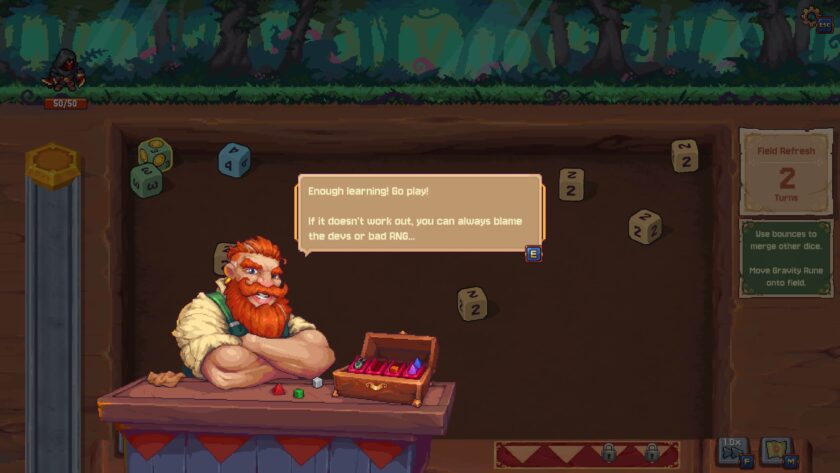
Rune Dice incorporates physics-based elements into dice rolling, meaning that movement, bounce behavior, and spatial interaction can influence outcomes.
Key mechanics include:
- Dice momentum affecting final resting faces
- Collision-based reroll triggers
- Environmental modifiers altering roll trajectory
- Arena-based hazards that interact with dice positioning
This adds an extra layer of unpredictability, where spatial awareness and timing become strategic tools rather than purely aesthetic elements.
Players who learn to manipulate dice positioning gain a subtle but significant advantage.
Rune Dice Combat System: How Damage, Effects, and Combos Work
Combat in Rune Dice is built around layered systems of damage calculation and effect stacking. Damage is rarely linear; instead, it scales through multipliers, status effects, and fusion chains.
Core mechanics include:
- Base damage from dice faces
- Status effects such as burn, poison, and stun
- Combo multipliers triggered by sequential rolls
- Elemental advantage systems
Combos are central to maximizing output. A well-timed chain reaction can turn moderate rolls into overwhelming damage spikes.
Understanding how effects stack is essential for advanced play.

Rune Dice Boss Fights Explained: How to Survive Challenging Encounters
Boss encounters in Rune Dice serve as skill checks that test build efficiency and adaptability. Unlike standard enemies, bosses introduce mechanics that disrupt predictable strategies.
Common boss mechanics include:
- Dice suppression fields
- Forced rerolls or corrupted dice faces
- Multi-phase combat transitions
- Adaptive resistance scaling
Success requires understanding both the boss pattern and your own build limitations. Flexibility is often more important than raw power in these encounters.
Rune Dice Tips and Tricks: How to Improve Your Win Rate Quickly
Improving performance in Rune Dice requires both mechanical understanding and strategic discipline.
Key tips include:
- Always maintain at least one defensive dice option
- Learn when to reroll versus accept outcomes
- Stack synergy effects early rather than late
- Track probability distribution across dice pools
- Prioritize relics that stabilize randomness
Efficiency comes from reducing unnecessary risk while maximizing controlled outcomes.
Rune Dice Replayability: Why Every Run Feels Different
Replayability is one of Rune Dice’s strongest design pillars. Each run introduces new combinations of dice, relics, enemies, and map layouts.
Replayability factors include:
- Procedural generation of encounters
- Randomized dice pool upgrades
- Class-specific variation in mechanics
- Multiple synergy pathways per build
- Expanding unlockable content pool
Because systems interact dynamically, even familiar setups produce new outcomes over time.
Rune Dice Difficulty Curve: is it Beginner Friendly or Hardcore?
Rune Dice features a gradually increasing difficulty curve designed to onboard new players while still challenging experienced strategists.
Early stages focus on:
- Basic dice mechanics
- Simple enemy patterns
- Limited synergy systems
Mid-game introduces:
- Fusion mechanics
- Complex relic interactions
- Multi-enemy encounters
Late-game emphasizes:
- High RNG pressure
- Advanced boss mechanics
- Precision-based synergy execution
The game is accessible at the surface level but becomes deeply complex at higher tiers of play.
Frequently Asked Questions (FAQs)
- Is Rune Dice luck-based or skill-based?
It is a hybrid system where luck influences outcomes but skill determines how effectively randomness is controlled. - Can you control dice results?
Yes, through rerolls, loadout design, relic effects, and fusion mechanics. - How long is a typical run?
Most runs last between 10 and 30 minutes. - Are all classes equally strong?
Yes, but they excel in different strategies and situations. - What is the most important mechanic for beginners?
Consistency in dice loadout building. - Does Rune Dice have multiplayer?
Design typically focuses on single-player roguelite structure, though variants may include challenge sharing systems. - What is dice fusion?
A system that combines dice outcomes into stronger chained effects. - Is the game hard to learn?
Easy to start, but difficult to master. - Do relics stack?
Yes, multiple relics can combine for powerful synergies. - What makes each run different?
Procedural generation and randomized synergy systems.

Conclusion
Rune Dice represents a modern evolution of roguelite deck-building design by merging probability-driven dice mechanics with structured synergy systems. Its short-session format, layered combat systems, and deep replayability loop create a strategy experience that continuously evolves with each run. The combination of physics-based dice interactions, fusion mechanics, and class diversity ensures that mastery is achieved through both experimentation and analytical thinking rather than repetition alone.
Sources and Citations
- Game Design Principles From Roguelite Structure Research (Procedural Generation, Replay Loops)
https://www.gdcvault.com/play/1027116/Designing-Roguelikes-and-Roguelites
https://www.gamedeveloper.com/design/the-key-elements-of-successful-roguelike-design
https://journal.transformativeworks.org/index.php/twc/article/view/1884
Citation: Roguelite design research commonly focuses on procedural generation, meta-progression systems, replayability loops, and player-driven adaptation across repeated runs. - Deck-Building System Frameworks Commonly Analyzed in Strategy Game Design Literature
https://boardgamegeek.com/boardgamemechanic/2664/deck-bag-and-pool-building
https://www.gamedeveloper.com/design/the-psychology-of-deck-building-games
https://www.researchgate.net/publication/375347219_Game_Design_Patterns_in_Deckbuilding_Games
Citation: Deck-building frameworks emphasize resource cycling, strategic card acquisition, long-term planning, and emergent player decision-making through evolving card pools. - Probability and RNG Balancing Concepts in Interactive Game Systems
https://www.gdcvault.com/play/1023856/Balancing-Randomness-in-Game-Design
https://gamebalanceconcepts.wordpress.com/2010/07/28/level-5-probability-and-randomness
https://www.researchgate.net/publication/220686446_Designing_and_Evaluating_Randomness_in_Games
Citation: RNG balancing research explores fairness, perceived randomness, risk-reward systems, probability weighting, and player agency within chance-based mechanics. - GDC-Style Design Discussions on Emergent Gameplay and Synergy Systems
https://www.gdcvault.com/play/1025762/Engineering-Emergence-Designing-Systems-That
https://www.gdcvault.com/play/1028003/Building-Deep-Gameplay-Through-Systemic
https://www.gamedeveloper.com/design/emergent-gameplay-and-systemic-design-principles
Citation: Emergent gameplay discussions focus on interconnected systems that generate unexpected strategies, synergistic interactions, and player-created solutions. - Physics-Based Interaction Models in Simulation-Driven Game Mechanics
https://www.gdcvault.com/play/1020434/Physics-for-Game-Programmers
https://developer.nvidia.com/physx-sdk
https://www.sciencedirect.com/topics/computer-science/physics-engine
Citation: Physics-driven gameplay systems rely on collision modeling, force simulation, object interactions, and emergent outcomes created by dynamic environments. - Academic Discussions on Player Retention in Short-Session Mobile and Indie Game Design
https://www.sciencedirect.com/science/article/pii/S0747563219302602
https://dl.acm.org/doi/10.1145/3411764.3445677
https://www.researchgate.net/publication/352130344_Player_Retention_in_Mobile_Games
Citation: Retention studies highlight progression pacing, reward scheduling, session length optimization, and habit-forming gameplay loops as key engagement drivers. - Industry Analysis of Hybrid Card-and-Dice Combat Systems in Modern Indie Games
https://www.gamedeveloper.com/design/designing-hybrid-card-and-dice-systems
https://www.rockpapershotgun.com/the-rise-of-deckbuilding-roguelikes
https://www.pcgamer.com/best-deckbuilding-games-on-pc
Citation: Hybrid card-and-dice combat systems combine strategic deck construction with probability-driven outcomes, creating layered decision-making and high replay value in modern indie game design.
Recommended
- Where to Find and How to Make 3D Hair Assets for Games and Anime Characters Using Blender and Unity
- PlayStation 3 Just Got An Update: PS3 System Software 4.93 Patch Notes, Download, and What Changed
- Nobody Wants to Die Noir Retrofuturistic Detective Game: Trailer, Reviews & Player Feedback
- How do you change the render resolution of a Blender camera?
- Samsung Brings Glasses-Free 3D Gaming and HDR10+ to GDC 2026: Odyssey 3D Monitor, 120+ Supported Games, and New Studio Partnerships
- Apple Arcade Just Got Two Indie Gems: DREDGE+ and Unpacking+ Arrive on iPhone, iPad, Mac, and Apple TV
- Star City: for All Mankind’s Soviet Spin-Off Explores Cold War Space Race Alternate History
- MSI Next-Gen Monitor with Triple Mode 4K, 1440P, 1080P Explained
- President Trump Is Now Posting Animal Crossing AI-Slop: What Happened, Where It Came From, and Why People Are Mad
- Can You Use Perspective and Orthographic Cameras in Blender?



































































































