









In This Article (7 sections)
Why Sonic Adventure Was One of the Hardest Sonic Games to Develop
Sonic Adventure remains one of the most challenging projects in the history of Sega’s Sonic the Hedgehog franchise. Although the original 1998 Dreamcast game is remembered as a major breakthrough in three dimensional platforming, its development involved technical limitations, abandoned ideas, demanding schedules and extensive experimentation. During Sonic’s 35th anniversary celebrations in 2026, Sonic Team veterans Takashi Iizuka, Jun Senoue and Kazuyuki Hoshino reflected on the difficulties of transforming Sega’s iconic character into a fully three dimensional gaming experience. Their comments, reported by Kotaku on October 6, 2026, revealed how the developers struggled to establish gameplay systems while simultaneously producing the environments, characters and additional features needed for an ambitious new Sonic adventure.
Takashi Iizuka, who directed Sonic Adventure and later became head of Sonic Team, identified the original game as one of his most memorable development experiences. However, he recalled its production as exceptionally difficult rather than particularly enjoyable. Unlike Sonic Adventure 2, which benefited from established movement systems and development knowledge, the original required Sonic Team to discover how Sonic’s traditional speed and momentum could function in unfamiliar environments.
During a separate June 2026 interview with Video Games Chronicle, Iizuka explained that the developers were still determining how Sonic should look, move and interact with the world while production was underway. This uncertainty made the project especially demanding because the team was developing the fundamental principles of three dimensional Sonic gameplay without an established formula.
The original Sonic games relied on carefully structured movement through environments where players could generally anticipate the direction of travel. Hills, slopes, springs, loops, enemies and platforms worked together to create momentum within a predictable side scrolling perspective. Moving into three dimensions introduced greater freedom but also complicated the relationship between movement, camera positioning, obstacles and level construction. Players could approach hazards from different directions, explore unfamiliar spaces and lose track of their intended routes. Sonic’s exceptional speed made these issues more difficult because the game needed to remain understandable while the character moved rapidly across complex environments.
The camera became especially important. In traditional Sonic games, the side scrolling presentation made the surrounding environment relatively easy to interpret. In three dimensions, the camera needed to follow Sonic while preserving visibility of approaching hazards and alternative paths. Developers also had to ensure that movement remained responsive when players changed direction, jumped between platforms or attacked enemies. Mechanics such as the Homing Attack helped address some of these challenges by making airborne interactions more manageable, but the broader task was determining how to make fast movement entertaining without sacrificing control.
One of the most revealing experiments involved an early three dimensional version of Green Hill Zone. Introduced in the original 1991 Sonic the Hedgehog, Green Hill Zone was a natural starting point because its hills, loops and recognizable scenery had helped establish the franchise’s identity. Sonic Team attempted to recreate the environment in 3D, expecting that the familiar design might provide a useful foundation. However, Iizuka recalled that simply running around the recreated stage was not particularly enjoyable. The experiment demonstrated that a recognizable Sonic environment could not automatically retain its original appeal when transferred into a space with additional movement possibilities.
The problem was not simply visual presentation. Green Hill Zone’s original gameplay depended on carefully arranged terrain, momentum, obstacles and player reactions. In three dimensions, these relationships changed because players could approach the same structures from multiple directions. Sonic Team therefore needed to develop environments specifically designed around the strengths of 3D movement rather than directly converting traditional stages. The developers began experimenting with guided routes, open areas, speed control, camera placement and interactive features that could preserve excitement while giving players greater freedom.
The major challenges behind Sonic Adventure included:
- Three dimensional movement: Sonic’s traditional speed and momentum needed to remain responsive in environments with greater directional freedom.
- Camera systems: Developers had to keep Sonic visible while providing enough information for players to anticipate hazards during fast movement.
- Level design: Stages needed to balance guided action sequences with exploration and alternative routes.
- Gameplay experimentation: Early concepts, including the Green Hill Zone experiment, demonstrated that familiar designs did not automatically work in 3D.
- Multiple playable characters: Six characters required distinct controls, objectives, animations and gameplay systems.
- Interconnected storytelling: Separate character campaigns introduced additional dialogue, cinematic sequences and narrative coordination.
- Dreamcast technology: Sonic Team needed to understand unfamiliar hardware while developing an important console showcase.
- Additional gameplay systems: Adventure fields, the Chao Garden and other features expanded the project’s scope.
- Audio production: Extensive music and voice acting created additional responsibilities for the development team.
- Production management: Completed environments sometimes required reconstruction as the team established better design standards.
Trial and error became central to the development process. Sonic Team tested different approaches to movement, environmental design and gameplay pacing, frequently discovering that visually impressive concepts did not necessarily produce satisfying experiences. A stage could look attractive but feel confusing at high speed, while a control system that worked during isolated testing might become unreliable in larger environments. These discoveries forced developers to revise their work repeatedly rather than follow a fixed production formula.
Historical interviews with producer Yuji Naka demonstrate how extensive the revisions became. Developers initially pursued ambitious ideas for large Dreamcast environments without fully understanding the hardware’s practical capabilities or the standards required for enjoyable 3D gameplay. Some completed stages were discarded, while others underwent substantial reconstruction. Naka recalled that work on Lost World helped establish a clearer benchmark for the game’s level design, prompting developers to reconsider earlier environments that no longer met their improved expectations.
The development team also gathered feedback from Sega employees and consumers, including testing involving American players. This process revealed that some mechanics experienced Sonic fans considered obvious were unfamiliar to newcomers. For example, certain testers did not immediately understand how rings protected Sonic or how basic attacks functioned. Developers responded by improving explanations and adjusting elements of the experience, demonstrating that the transition into 3D also required reconsidering accessibility.
The extraordinary workload added to the pressure. According to Jun Senoue, development began in 1997, with Sonic Adventure eventually releasing in Japan on December 23, 1998. During this demanding period, Sonic Team was creating multiple character campaigns, large environments, music, voice performances, cinematic storytelling and the Chao Garden while refining fundamental gameplay mechanics. Yuji Naka recalled more than 100 people working within the broader production environment, making coordination particularly challenging. Individual specialists were often concentrated on their own responsibilities, and the scale of the project made it difficult for everyone to understand how the completed game would function until its different components came together.
The approaching release date intensified these difficulties. Historical interviews indicate that Naka had concerns about whether the team could finish the game on schedule, particularly as extensive revisions continued. Sonic Adventure ultimately reached its planned Japanese release, but completing it required substantial collaboration and an intense final production effort. Its development became memorable not because of one isolated obstacle, but because Sonic Team was creating an unfamiliar type of game while managing technical uncertainty and an unusually large amount of content.
Iizuka’s comparison with Sonic Adventure 2 illustrates why the original project was so demanding. By the time the sequel entered development, the team already possessed practical experience with three dimensional movement, camera systems, character animation and stage construction. Although Sonic Adventure 2 introduced its own challenges, the developers could refine existing principles rather than establish everything from the beginning. Iizuka consequently remembered the sequel as a more enjoyable production experience.
Sonic Adventure’s reputation as one of the hardest Sonic games to develop reflects the personal experiences of its creators rather than an objective ranking of every project in the franchise. Iizuka has also identified Sonic Frontiers as an exceptionally difficult development in another retrospective account. Nevertheless, the original Dreamcast title remains a defining example of how creative reinvention can require years of experimentation, technical learning and difficult production decisions before a successful gameplay formula emerges.

Sonic Adventure Dreamcast Development, Six Playable Characters, Level Design and Soundtrack
The Sega Dreamcast played a crucial role in shaping Sonic Adventure’s ambitions and development challenges. Before the Dreamcast became the project’s primary platform, Sonic Team had explored three dimensional Sonic concepts during the Sega Saturn era. The studio had also gained experience with 3D presentation through NiGHTS into Dreams, released in 1996, but that game’s approach differed from the unrestricted movement envisioned for Sonic Adventure. The Dreamcast offered more powerful hardware for detailed polygonal characters, expansive environments, cinematic presentation and complex gameplay systems, making it possible to pursue a more ambitious interpretation of Sonic.
However, access to improved hardware did not automatically simplify development. Sonic Team needed to learn the Dreamcast’s capabilities while constructing environments designed to demonstrate the console’s potential. Developers initially imagined enormous stages, but practical experimentation revealed that size alone did not guarantee enjoyable gameplay. As the team became more familiar with the technology, it established clearer standards for stage construction and revised earlier work accordingly. The Dreamcast also supported additional features through its Visual Memory Unit, or VMU, which contributed to Chao functionality, while connectivity features enabled downloadable content and online elements.
Sonic Adventure became one of the Dreamcast’s defining releases because it demonstrated the console’s capacity for expansive action stages, detailed character animation and cinematic storytelling. Yet these achievements required the developers to coordinate hardware experimentation with the demands of creating a major Sonic game. The result was both a technical showcase and a complicated production that pushed Sonic Team beyond its previous experience.
One of the largest contributors to the workload was the decision to include six playable characters, each with an individual campaign and distinct gameplay mechanics. Rather than simply offering different characters with minor variations in speed, Sonic Team created substantially different experiences connected through a shared storyline involving Dr. Eggman, Chaos and the Master Emerald.
The playable campaigns included:
- Sonic the Hedgehog: Focused on fast movement, platforming, momentum and traditional action stages.
- Miles “Tails” Prower: Introduced racing objectives that required players to reach destinations before competing characters.
- Knuckles the Echidna: Emphasized exploration and searching environments for scattered Master Emerald fragments.
- Amy Rose: Featured escape sequences and pursuit challenges involving the robot ZERO.
- Big the Cat: Introduced fishing gameplay centered on finding and catching his companion Froggy.
- E-102 Gamma: Used shooting mechanics, enemy targeting and time management during combat focused missions.
Each character required suitable controls, objectives, animations, enemy interactions and environmental layouts. Stages designed around Sonic’s speed did not necessarily function well for Knuckles’ exploration or Amy’s slower movement. Gamma needed environments that supported targeting and combat, while Big’s fishing activities demanded a completely different approach to gameplay. These variations increased the difficulty of maintaining consistent quality and pacing across the experience.
The separate campaigns also created additional storytelling responsibilities. Players encountered important events from different perspectives, gradually understanding how the characters’ experiences connected to the larger conflict. This required extensive dialogue, cutscenes, character interactions and coordination between narrative development and level design. Jun Senoue specifically identified the six character stories as a major reason Sonic Adventure demanded more work than previous projects.
The Chao Garden added another substantial system. Unlike conventional action stages, the Chao Garden allowed players to raise virtual creatures, influence their development and return to activities separate from the main adventure. This required additional programming, animations, interactions and progression mechanics. Its connection with the Dreamcast’s VMU also expanded the experience beyond ordinary platforming, contributing to the game’s distinctive identity while increasing production complexity.
Level design remained one of the most demanding aspects of development because Sonic Team needed stages that made fast movement exciting without overwhelming players. Traditional platformers often provide enough time to examine obstacles, but Sonic Adventure required environments that could be crossed rapidly. Too many hazards could interrupt momentum, while overly simple routes risked making the experience visually impressive but mechanically uninteresting. The developers therefore experimented with guided pathways, broad spaces, vertical movement, environmental hazards and cinematic sequences.
Several action stages demonstrate the approaches Sonic Team developed:
- Emerald Coast: Combined coastal environments with guided platforming, rapid movement and the memorable sequence involving a pursuing whale.
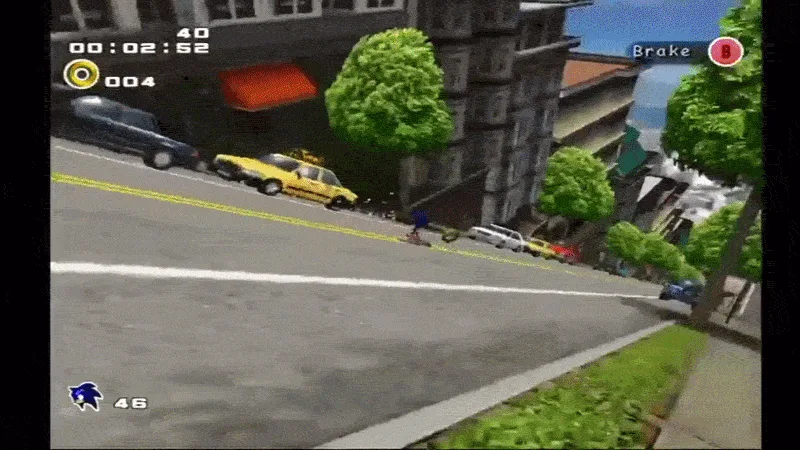
- Speed Highway: Used elevated city routes, dramatic vertical movement and a descent along a skyscraper to emphasize Sonic’s speed.
- Windy Valley: Featured varied terrain and movement sequences that combined momentum with environmental spectacle.
- Red Mountain: Introduced platforming challenges, environmental hazards and changes in terrain.
- Lost World: Helped establish clearer design standards that influenced revisions to earlier stages.
The significance of Lost World extends beyond its appearance in the finished game. According to historical interviews, Sonic Team developed a better understanding of what its stages should accomplish while working on that environment. Earlier levels were subsequently reconsidered, with some requiring extensive reconstruction. Kazuyuki Hoshino recalled the frustration of discarding previously completed design work, but he also recognized that the experience provided valuable knowledge for future development.
The game also introduced adventure fields such as Station Square, Mystic Ruins and the Egg Carrier. These explorable environments connected action stages while allowing players to interact with characters and discover story events. Their inclusion gave Sonic Adventure a broader sense of place, but they introduced additional challenges involving navigation, pacing and environmental design. Sonic Team needed to make exploration understandable without losing the speed and excitement associated with the series.
Music production was another demanding responsibility. Jun Senoue, who worked as a composer and sound director, recalled that Sonic Adventure required an unprecedented amount of audio material. The soundtrack combined energetic rock, electronic compositions, environmental music and character themes, helping establish distinct identities for the game’s locations and playable characters. Voice acting introduced further complexity because the developers needed to coordinate performances with cinematic sequences and character interactions. Senoue explained that managing voice related production was unfamiliar to him at the time.
The soundtrack included several recognizable compositions:
- Open Your Heart: The game’s central vocal theme, associated with its dramatic conflict and cinematic presentation.
- It Doesn’t Matter: Sonic’s character theme, reflecting his confident personality.
- Believe in Myself: Tails’ character theme, supporting his individual storyline.
- Unknown from M.E.: Knuckles’ character theme, connected to his search for the Master Emerald.
- Adventure field music: Environmental compositions created for locations such as Station Square and Mystic Ruins.
- Action stage music: Tracks supporting individual levels and their distinctive environments.
- Cinematic music: Compositions accompanying important story events and dramatic encounters.
Historical interviews reveal that Open Your Heart underwent repeated revisions as the game’s visual presentation developed. Senoue reportedly rewrote the composition nine times before settling on its final direction, demonstrating how changes in one department could affect work in another. Music was not produced independently of the game. It needed to evolve alongside character presentation, stage construction and cinematic storytelling.
Kazuyuki Hoshino’s historical observations also reveal the pressure created by Sonic Adventure’s visual ambitions. He recalled the excitement of allowing Sonic to move quickly through enormous environments, but achieving that experience required repeated adjustments. Completed designs sometimes had to be abandoned when they no longer supported the gameplay standards Sonic Team was developing. These revisions were frustrating, yet they helped establish knowledge that could benefit later Dreamcast projects.
The production’s difficulty therefore extended beyond programming Sonic’s movement. Sonic Team was coordinating multiple gameplay systems, different character campaigns, detailed environments, voice performances, musical arrangements and new hardware capabilities within a demanding schedule. Each feature contributed to the game’s identity, but every addition also required implementation, testing and integration with the larger experience.
Despite the challenges, Sonic Adventure established several characteristics that became associated with modern Sonic games. Its cinematic storytelling, distinctive character designs, expanded environments, energetic soundtrack and varied gameplay helped move the franchise beyond its traditional two dimensional foundations. The resulting experience was not universally perfect, particularly in areas involving camera behavior and control, but its influence extended far beyond the Dreamcast generation.

How Sonic Adventure Influenced Sonic Frontiers, Sonic Generations and the Future of Sonic Games
Sonic Adventure transformed the Sonic the Hedgehog franchise by establishing many of the movement, storytelling and presentation principles that influenced later three dimensional releases. Before the Dreamcast game, Sonic was primarily associated with two dimensional platforming, but Sonic Adventure demonstrated that the character could support a larger action adventure featuring cinematic sequences, multiple playable perspectives and varied environments. Its redesigned character proportions also helped establish the modern visual identity of Sonic and his supporting cast, while its interconnected narrative introduced a more elaborate approach to storytelling.
Sonic Adventure 2 continued several of these ideas when it launched in 2001. The sequel retained cinematic presentation and multiple playable characters but organized its story around Hero and Dark campaigns. It also expanded the Chao system and refined aspects of three dimensional movement. Because Sonic Team already possessed experience from the original game, developers could focus more heavily on improving established mechanics rather than discovering a new foundation.
Later releases explored different approaches to the central challenge of making Sonic’s speed enjoyable in three dimensions. Sonic Heroes introduced team based gameplay that combined complementary character abilities, while Sonic Unleashed, Sonic Colors, Sonic Generations and Sonic Forces developed different interpretations of fast movement and guided level design. Several of these games combined two dimensional sections with three dimensional gameplay, while others emphasized boosting, cinematic action and carefully structured routes. Although they did not reproduce Sonic Adventure’s formula exactly, they continued addressing questions about movement, camera control and environmental design that emerged during the Dreamcast era.
The comparison with Sonic Frontiers is particularly important because Takashi Iizuka directly connected its development challenges with those experienced during Sonic Adventure. Released in November 2022, Sonic Frontiers introduced expansive open zone environments containing enemies, puzzles, challenges and exploration opportunities. Rather than following one predetermined route through traditional action stages, players could move across large spaces and choose how to approach different activities. This created a new design problem: how could Sonic Team preserve the excitement of high speed movement when players were no longer guided through carefully constructed pathways?
Iizuka explained during the 2026 anniversary discussion that the basic concept behind Sonic Frontiers was established relatively early. However, the developers struggled to determine what players should actually do within the open environments. Simply filling large areas with challenges did not automatically create enjoyable gameplay, and Sonic’s movement needed to remain engaging even without the direction provided by conventional stages. According to Iizuka, the team only established a convincing solution around the middle of development.
Sega’s official development interview provides additional context. Sonic Frontiers reportedly took approximately five years to develop and required extensive experimentation with puzzles, movement systems and environmental activities. The developers also modified the Hedgehog Engine to support the open zone structure. Like Sonic Adventure, the project began with a creative ambition that was easier to describe than to implement. Both games required Sonic Team to discover a suitable gameplay formula while production was already underway.
The similarities between Sonic Adventure and Sonic Frontiers include:
- Fundamental design uncertainty: Both projects introduced unfamiliar gameplay structures without a complete formula established in advance.
- Movement challenges: Sonic Adventure focused on adapting traditional speed to 3D, while Sonic Frontiers explored movement across expansive environments.
- Environmental experimentation: Developers needed to determine how different spaces could support enjoyable gameplay.
- Repeated revisions: Both projects involved testing ideas and modifying systems that did not initially work as intended.
- Technology development: The Dreamcast influenced Sonic Adventure, while Sonic Frontiers required changes to the Hedgehog Engine.
- Player freedom: Each game challenged Sonic Team to reconsider the balance between guided progression and exploration.
- Long term influence: Both introduced ideas that could shape later approaches to Sonic gameplay.
However, the two projects faced different technological conditions and production requirements. Sonic Adventure introduced the franchise’s major transition into fully three dimensional action, while Sonic Frontiers expanded an already established 3D formula into more open environments. Iizuka has identified Sonic Frontiers as his most difficult development experience in one retrospective account, reinforcing that Sonic Adventure should not be treated as the undisputed hardest project across every generation of the series.
Sonic Generations provides a contrasting example because its development challenges centered on reinterpreting established material rather than inventing an entirely new gameplay foundation. Released in 2011 to celebrate Sonic’s 20th anniversary, the game brought together Classic Sonic and Modern Sonic. Classic Sonic emphasized traditional side scrolling platforming, while Modern Sonic used faster three dimensional movement and boosting mechanics associated with later games.
This structure required developers to balance two distinct gameplay identities while revisiting recognizable environments such as Green Hill, Chemical Plant and City Escape. The stages needed to preserve the visual and gameplay characteristics that made their original versions memorable while offering experiences suited to the newer game’s movement systems. Although Sonic Team could draw upon decades of development knowledge, representing different eras of the franchise within one cohesive game still demanded considerable refinement.
Jun Senoue identified the soundtrack as one of Sonic Generations’ particularly challenging elements. The anniversary concept required the team to revisit familiar music from throughout Sonic’s history, preserving recognizable melodies while updating their arrangements for modern gameplay and presentation. This differed from Sonic Adventure, where the developers were establishing a new musical identity rather than reinterpreting an extensive collection of existing compositions. Sonic Generations therefore demonstrated that even games built upon familiar mechanics can present difficult creative responsibilities.
The contrast between these projects illustrates how Sonic Team’s development challenges have evolved. Sonic Adventure demanded fundamental experimentation with three dimensional gameplay, Sonic Generations required careful reinterpretation of established ideas, and Sonic Frontiers challenged the studio to create enjoyable high speed movement within expansive environments. Each project required a different balance between innovation, familiarity and technical execution.
Sonic Adventure’s development history provides several lessons for the future of the franchise:
- Technology alone cannot solve gameplay problems: More powerful hardware enables new possibilities, but developers must still determine whether those possibilities are enjoyable.
- Experimentation is essential: Unsuccessful concepts should be tested and revised rather than preserved simply because substantial work has already been completed.
- Speed requires careful design: Camera behavior, controls and environmental structure must support fast movement without making gameplay confusing.
- Creative freedom needs direction: Larger environments are not automatically more entertaining unless movement and activities provide meaningful rewards.
- Production scope affects quality: Additional characters, systems and stories increase workload and require effective coordination.
- Testing improves accessibility: Feedback from newcomers can reveal problems that experienced developers or longtime fans may overlook.
- Established systems benefit sequels: Lessons learned during difficult productions can make later projects more manageable.
- Familiar material creates different challenges: Anniversary games must balance nostalgia with updated mechanics and presentation.
- Innovation carries risks: Major changes can require additional development time, abandoned work and substantial technical revisions.
- Franchise identity remains important: New gameplay structures must preserve the qualities that make Sonic recognizable.
These lessons show why future Sonic games may continue experimenting with different forms of movement and level design. The series has explored structured action stages, team based mechanics, boosting systems, cinematic storytelling and open zone environments. Each approach interprets Sonic’s established identity differently, but speed, momentum, expressive characters, memorable music and distinctive environments remain important connections between generations.
Future projects may build upon open zone gameplay, return to more traditional stages or introduce another major structure. However, Sonic Adventure’s development suggests that successful innovation depends on identifying what makes the central experience enjoyable before expanding its scope. Larger environments, more characters or additional activities cannot automatically compensate for unresolved gameplay problems. Sonic Team’s experience demonstrates the importance of testing movement systems and environmental interactions before committing extensive resources to supporting content.
The history also shows that difficult production does not necessarily prevent a game from becoming influential, although development pressure should not be considered beneficial in itself. Sonic Adventure required major revisions, discarded ideas and intensive collaboration, yet the finished game established foundations that shaped the franchise for decades. The important achievement was not the difficulty of production but the ability to transform experimentation into a recognizable and lasting gameplay experience.
As Sonic the Hedgehog moves beyond its 35th anniversary in 2026, Sonic Adventure remains an example of how creative ambition can change an established franchise. Its developers began without complete answers to the questions surrounding three dimensional gameplay, but their experimentation established ideas that later Sonic titles could refine or reinterpret. The experiences of Sonic Frontiers and Sonic Generations demonstrate that new challenges continue to emerge as technology, audience expectations and gameplay structures evolve. Understanding Sonic Adventure’s development therefore provides valuable insight into both Sega’s history and the creative decisions that may influence the franchise’s future.

Frequently Asked Questions (FAQs)
- Why was Sonic Adventure the hardest Sonic game to develop?
Sonic Adventure was considered one of the most difficult Sonic projects because Sonic Team had to establish an entirely new approach to fast three dimensional gameplay. The developers lacked an existing formula for translating Sonic’s traditional speed, momentum and platforming into environments with greater movement freedom. They also had to create six playable campaigns, the Chao Garden, cinematic storytelling, voice acting and extensive music while learning the Dreamcast’s capabilities. These responsibilities required repeated experimentation, discarded ideas and significant coordination, making the project unusually demanding. - What did Takashi Iizuka say about Sonic Adventure’s development?
During Sonic’s 35th anniversary discussions in 2026, Takashi Iizuka explained that Sonic Adventure left a particularly strong impression on him because of his direct involvement in designing the game. However, he remembered its development as exceptionally difficult rather than especially enjoyable. The team struggled to determine how Sonic’s movement and gameplay should function in three dimensions and needed to discover effective solutions through experimentation. Iizuka contrasted the experience with Sonic Adventure 2, which he considered more enjoyable to develop because the original had established important foundations. - Why did Sonic Team’s early 3D Green Hill Zone prototype fail?
The early Green Hill Zone experiment failed to produce sufficiently enjoyable gameplay because simply recreating the recognizable environment in three dimensions did not preserve the original stage’s appeal. Sonic’s movement depended on carefully arranged slopes, obstacles and pathways, but those relationships changed when players could approach the environment from additional directions. According to Iizuka, running through the recreated stage was not particularly entertaining. The experience demonstrated that Sonic Team needed to design new environments specifically around three dimensional movement rather than directly converting familiar levels. - When did Sonic Adventure development begin?
Sonic Adventure development began in 1997, according to Jun Senoue’s recollections during the 2026 anniversary discussion. Early work was associated with Sega’s Saturn era before the Dreamcast became the game’s primary platform. Sonic Team then developed the movement systems, environments, six character campaigns and additional features while learning the console’s capabilities. The game was released in Japan on December 23, 1998, following a demanding production period involving extensive revisions and a difficult final schedule. - How many playable characters are in Sonic Adventure?
Sonic Adventure features six main playable characters: Sonic the Hedgehog, Tails, Knuckles the Echidna, Amy Rose, Big the Cat and E-102 Gamma. Each has an individual campaign with different gameplay mechanics. Sonic focuses on speed and platforming, Tails participates in races, Knuckles searches for Master Emerald fragments, Amy avoids pursuing enemies, Big uses fishing mechanics and Gamma features shooting gameplay. The different systems increased development complexity because each character required suitable controls, animations, objectives and environmental interactions. - How did the Sega Dreamcast affect Sonic Adventure?
The Dreamcast provided Sonic Team with more powerful hardware for detailed three dimensional environments, improved character animation, cinematic storytelling and expansive action stages. It also supported additional features such as Chao functionality involving the Visual Memory Unit. However, the developers needed to learn the hardware while making the game, which led to substantial revisions and discarded environments. The Dreamcast enabled Sonic Adventure’s ambitious presentation, but adapting to its capabilities also became one of the project’s central technical challenges. - Was Sonic Adventure 2 easier to develop than Sonic Adventure?
Takashi Iizuka described Sonic Adventure 2 as more enjoyable to develop than the original Sonic Adventure. The sequel benefited from movement systems, camera techniques, stage design principles and development experience established during the first game. Sonic Team could therefore refine existing ideas rather than determine how three dimensional Sonic gameplay should function from the beginning. This did not mean the sequel lacked challenges, but its production started with a considerably clearer foundation. - Why was Sonic Frontiers compared to Sonic Adventure?
Sonic Frontiers was compared to Sonic Adventure because both projects introduced gameplay structures that Sonic Team initially struggled to make enjoyable. Sonic Adventure required developers to establish fast movement within three dimensional stages, while Sonic Frontiers challenged them to make expansive open zone environments entertaining without fixed progression routes. Iizuka explained that the team only found a satisfactory direction for Sonic Frontiers around the middle of development. Both games demonstrate how major creative changes can require extensive experimentation before their central mechanics become effective. - What made Sonic Generations difficult to develop?
Sonic Generations presented challenges involving the combination of Classic Sonic and Modern Sonic gameplay, alongside the recreation of memorable locations from different periods of the franchise. Developers needed to preserve the identity of familiar stages while adapting them to updated movement systems and visual presentation. Jun Senoue also highlighted the difficulty of rearranging recognizable Sonic music for the anniversary release. Unlike Sonic Adventure, which required the creation of a new three dimensional gameplay foundation, Sonic Generations focused on balancing established traditions with modern expectations. - Will future Sonic games follow the Sonic Adventure formula?
Sega has not confirmed that future Sonic games will follow Sonic Adventure’s exact gameplay formula. Since the Dreamcast era, the franchise has explored different approaches, including boost focused action, combinations of traditional and three dimensional platforming, and the open zone structure of Sonic Frontiers. Sonic Adventure remains influential because it established important principles involving movement, camera systems, cinematic presentation and character variety. Future games may continue developing these ideas while introducing new gameplay structures rather than directly reproducing the original experience.

Conclusion
Sonic Adventure remains one of the most challenging and influential projects in Sonic the Hedgehog history. During the franchise’s 35th anniversary in 2026, Takashi Iizuka, Jun Senoue and Kazuyuki Hoshino reflected on the difficulties of bringing Sonic into three dimensions, including an unsuccessful Green Hill Zone experiment that demonstrated why traditional level designs required substantial changes.
Development became increasingly demanding as Sonic Team introduced six playable character campaigns, expansive environments, the Chao Garden, voice acting and an ambitious soundtrack. The Sega Dreamcast enabled these innovations, but learning its capabilities required repeated experimentation, discarded designs and extensive collaboration.
Despite these challenges, Sonic Adventure established foundations that shaped the franchise for decades. Its influence remains visible in Sonic Frontiers, which presented similar difficulties when introducing expansive open environments. Ultimately, the game’s development demonstrates that successful innovation requires more than advanced technology. It depends on experimentation, thoughtful design and understanding what makes Sonic’s gameplay enjoyable.
Sources and Citations
- Kotaku, October 6, 2026 : Explores Sonic Adventure’s difficult development. Kotaku
Citation: Sonic Adventure Devs Explain Why It Was The Hardest Game In The Series To Make. (Kotaku). - Video Games Chronicle, June 23, 2026 : Interviews Takashi Iizuka about Sonic’s 35th anniversary, his memories of developing Sonic Adventure, and the responsibility of directing a game whose design was still taking shape during production. Also discusses the franchise’s evolution and collaborations with independent developers. VGC
Citation: Happy 35th, Sonic: Sonic Team boss on anniversary plans and how Mania inspired new indie collab. (Video Games Chronicle). - Shmuplations, Sonic Adventure Developer Interview : Provides translated interviews originally published in Dreamcast Magazine, covering production deadlines, the scale of the development team, and the challenges of learning the Dreamcast’s capabilities. Includes developers’ accounts of discarded stage designs and extensive revisions as the game’s direction became clearer. shmuplations.com –
Citation: Sonic Adventure Developer Interview. (Shmuplations). - SEGA Corporation, Sonic Frontiers Developer Interview : Presents firsthand accounts from the game’s design, art, and programming teams about developing open zone gameplay. Explains how prototypes, engine changes, revised puzzles, and player feedback helped the developers preserve Sonic’s movement and action within expansive environments. 株式会社セガ
Citation: Sonic Frontiers Developer Interview. (SEGA Corporation). - Sonic City, September 30, 2026 : Covers Takashi Iizuka’s reflections on the difficulties of developing Sonic Frontiers, particularly the challenge of making large, freely explorable spaces entertaining. Discusses how the team continued searching for a workable gameplay approach until approximately midway through production. Sonic City
Citation: Takashi Iizuka Says Sonic Frontiers Was His Most Difficult Sonic Development, Team Had No “Right Answer” Until Midway Through Production. (Sonic City). - Kicks & Grips, October 6, 2026 : Summarizes Sonic Team’s recollections of Sonic Adventure’s demanding production, including the uncertainty surrounding its 3D gameplay and the workload created by multiple character stories, Chao systems, music, and voice acting. Also compares these challenges with those encountered during Sonic Frontiers. Kicks & Grips
Citation: Sonic Team Reflects on Why Sonic Adventure Was Its Toughest Project. (Kicks & Grips). - Shmuplations, The Story of Sonic Team, 1997 : Translates a January 1997 Sega Magazine interview with Naoto Oshima and Yuji Naka about their early careers and the creation of the original Sonic the Hedgehog. Additional design commentary provides historical context for Sonic Team’s creative philosophy and the development of the Mega Drive games. shmuplations.com –
Citation: The Story of Sonic Team: 1997 Developer Interview. (Shmuplations).
Recommendations
- Emil J’s Godot Water Shader Tutorial: Gerstner Waves and Dynamic Jacobian Foam
- Unreal Engine 5.7 MetaHuman Creator: Comprehensive Guide to New Features, Updates, and Community Insights
- Sega Wants Virtua Fighter Crossroads to Be More than Just Another Fighting Game: Story Mode, New Direction, and Gameplay Overhaul Explained
- Winnie the Pooh Voice Actor Jim Cummings Unhappy Over Disney Legends Snub
- Fortnite Mastery Monday Guide for July 20: Start Time, Bonuses, and Sprite XP
- Elden Ring on Switch 2 Shows Big Improvements After Months of Performance Adjustment
- Xbox Project Helix: A Family of Devices Amid Rising Memory Costs
- Ray Gunn: Sam Rockwell, Scarlett Johansson and Tom Waits Join Brad Bird’s Animated Sci-Fi Noir Film – Cast, Plot, Release Date & Everything We Know
- Hamlet: 13 Movies Based on Shakespeare’s Greatest Tragedy Ranked from Classic to Modern Adaptations
- Resonance: A Plague Tale Legacy Day-One on Game Pass August 27, 2026. Release Date, Gameplay and What to Expect



































































































