










In This Article (9 sections)
SpiritVale Overview, Setting, and Core MMORPG Design
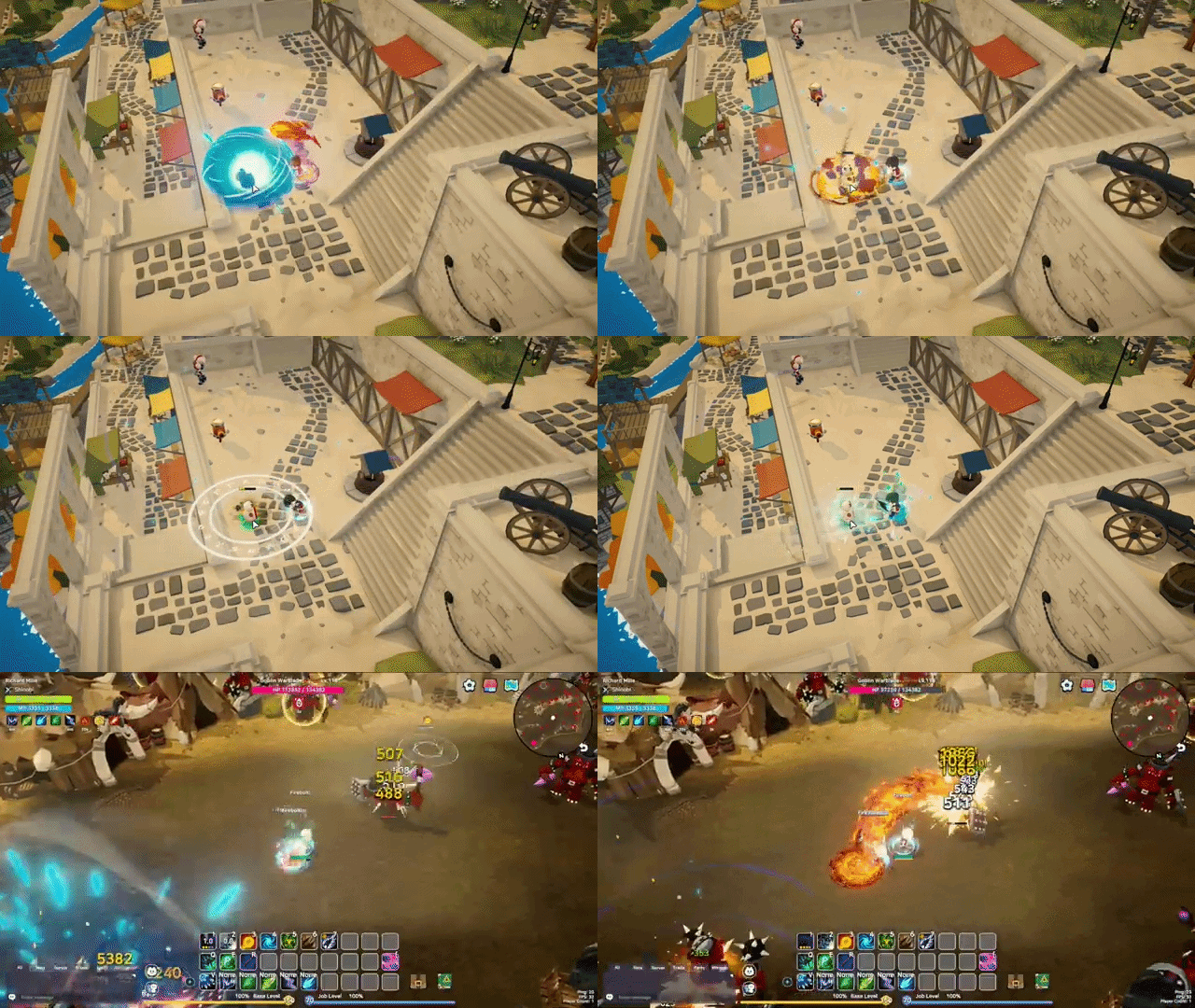
SpiritVale is a class-based action MMORPG developed and published by Baikun Interactive, built around the idea of combining a classic online role-playing structure with modern real-time combat. It is preparing to enter Steam Early Access with a feature set that includes cooperative exploration, world bosses, loot hunting, crafting, trading, PvE encounters, and arena-based PvP. Rather than relying on slower tab-target systems, the game emphasizes active movement, positioning, and skill usage to create a more immediate combat experience.
The game is set in Nevaris, a fractured fantasy world shaped by decay and unstable magic. Players explore varied environments while fighting corrupted creatures, gathering materials, and uncovering fragments of a broken history. The world design supports long-term progression through more than 30 maps, over 230 monsters, and more than 20 bosses, alongside a wide range of equipment, cards, and artifact sets. Each region contributes to progression by offering unique enemies, resources, and build opportunities, encouraging players to revisit locations for farming, crafting materials, or rare drops.
Character development is central to the experience. Players begin with one of seven base classes and gradually expand their capabilities through skill trees, advanced jobs, equipment, cards, artifacts, and gems. The system allows two characters of the same class to perform very differently depending on build choices, equipment combinations, and intended roles within a party. This layered progression extends beyond simple leveling and supports experimentation across multiple playstyles.
SpiritVale also places strong emphasis on social systems and community-driven evolution. Features such as party play, direct trading, and vending stalls are already included, while Early Access is intended to refine balance, pacing, user interface, and onboarding through player feedback. The design draws visible inspiration from classic MMORPGs through its job progression, monster grinding, rare drops, and player economy, while its action combat and flexible builds aim to make the experience more accessible to a modern audience.

SpiritVale Gameplay Loop, Progression Systems, and Exploration
SpiritVale’s gameplay follows a familiar MMORPG loop but adapts it into a more active format. Players explore regions, defeat enemies, collect experience and loot, refine their builds, and gradually move into more challenging areas. Real-time movement and ability usage make combat more engaging than a purely rotation-based system, while positioning and timing influence success in both solo and group encounters. This means progression is not only about gaining stronger gear, but also about learning enemy patterns, managing cooldowns, and understanding when to attack, reposition, or support allies.
Enemy encounters are a consistent source of progression. Monsters drop equipment, cards, materials, and other resources that feed into crafting, trading, and build optimization. Farming specific enemies becomes meaningful because particular monsters may provide rare cards, crafting materials, or equipment pieces that support specialized builds. This creates a loop where repeated encounters remain valuable rather than purely routine, especially for players trying to complete a set, improve a certain stat, or gather materials for upgrades and trade.
Character progression is built on multiple interconnected systems. Skill trees allow players to choose active abilities and passive bonuses that define their role, while equipment provides core statistical improvements. Cards and artifact sets introduce additional layers of customization, letting players strengthen specific playstyles or build around certain effects. Gems, upgrades, and crafting further expand build possibilities, giving players several ways to improve beyond simple leveling. Because players are not required to unlock or use every available ability, each build reflects deliberate choices rather than a fixed progression path.
Exploration plays a direct role in progression. Different biomes such as forests, deserts, caves, sanctums, and underwater areas introduce distinct enemies, resources, and equipment combinations. Builds that perform well in one region may require adjustments in another, especially if enemies use different attack types, resistances, or movement patterns. Lower-level areas can remain relevant due to rare drops, crafting materials, or valuable cards, ensuring that the world continues to feel active and interconnected instead of becoming obsolete once players move into higher-level zones.
SpiritVale Classes, Advanced Jobs, and Build Diversity
SpiritVale features seven base classes that support different combat roles and playstyles:
- Acolyte
- Mage
- Summoner
- Knight
- Warrior
- Scout
- Rogue
Each class provides a foundation that can be expanded through advanced jobs, including Priest, Wizard, Necromancer, Paladin, Berserker, Gunslinger, Shinobi, and Weaver. These specializations deepen class identity and allow players to refine their preferred role within both solo and group content. Rather than making every character follow the same path, advanced jobs appear designed to push classes toward more specific strengths, such as stronger healing, heavier defense, burst damage, ranged pressure, or companion-focused play.
The Acolyte focuses on healing, support, and group sustainability, making it valuable in extended encounters where survival matters as much as damage. Mage offers ranged magical damage and area control, rewarding careful positioning and good timing. Summoner introduces a companion-based approach, allowing players to influence combat indirectly through summoned allies. Knight emphasizes durability and defensive positioning, while Warrior provides a more aggressive melee style focused on direct damage and close-range pressure.
Scout represents ranged physical combat, offering mobility and distance-based attacks, while Rogue is built around speed, critical strikes, and precise execution. Each class can be customized through skills, equipment, cards, and artifacts, meaning that even players using the same base class can develop significantly different builds. One player may lean into survivability and utility, while another may prioritize damage, mobility, farming efficiency, or boss-specific performance.
Build diversity is reinforced by ongoing balance changes. Development updates have already shown adjustments to class abilities, passive distribution, and status effects to ensure clearer class identities. Because these systems continue to evolve, no single class or build is permanently dominant. Players are encouraged to choose playstyles that remain enjoyable rather than relying only on temporary balance advantages, especially during Early Access, where tuning and progression systems may continue to shift based on feedback.

Combat Systems, PvE Content, and Cooperative Play
SpiritVale uses real-time, action-based combat that prioritizes movement, positioning, and coordination instead of static ability rotations. Players actively navigate the battlefield, react to enemy behavior, and combine abilities with party members to create stronger openings or recover from dangerous situations. This gives each class a clearer physical role during encounters, whether that means holding space near the front line, attacking safely from range, interrupting enemies, healing allies, or providing support effects at the right moment.
Cooperative play becomes especially important during boss encounters, where individual gear is not always enough to guarantee success. Bosses use themed mechanics and attack patterns that require coordination, timing, and role awareness, so players need to understand when to spread out, group together, avoid hazards, or focus on specific targets. Even well-equipped groups can struggle without proper positioning or teamwork, reinforcing the importance of party composition and communication rather than simple stat progression.
The PvE structure includes more than 230 monsters and over 20 bosses, along with world bosses and dungeon content. This gives players a broad range of enemies to farm, study, and build around, especially if certain monsters provide valuable drops, cards, or crafting materials. Some bosses require specific summoning conditions, encouraging players to gather resources and organize groups before initiating encounters. World bosses create shared experiences where multiple players may cooperate or compete within the same space, adding a more social and unpredictable layer to PvE progression.
To support fair encounters, systems have been introduced to protect boss summoners and their parties during the early stages of fights. This helps reduce the chance of outside players immediately disrupting or stealing the encounter after another group has spent time preparing it. Development efforts have also focused on reducing extreme damage spikes and instant recovery, promoting more balanced and cooperative gameplay. As Early Access continues, boss mechanics, rewards, and encounter design are expected to evolve, with the goal of giving each boss a distinct identity rather than making them feel like stronger versions of standard enemies.
Economy, Platforms, Development Roadmap, and Classic MMORPG Influences
SpiritVale includes a player-driven economy built around crafting, trading, and vending. Players can gather materials, craft items such as headgear using biome-specific resources, and upgrade equipment to improve performance. Items gained through combat can be traded directly or sold through vending stalls, allowing players to participate in a shared marketplace instead of relying only on NPC shops or fixed progression rewards. This structure encourages players to treat resources, rare drops, and crafted goods as part of the wider game loop.
Economic activity is shaped by specialization. Some players may focus on boss farming for rare drops, while others concentrate on gathering materials, crafting useful equipment, or analyzing market trends to buy and sell more effectively. This creates interdependence between different playstyles, where combat-focused players, crafters, gatherers, and traders all contribute to the same system. The developer has stated that gameplay-affecting pay-to-win purchases are not planned, with monetization focused on cosmetics and optional convenience features, though these systems will continue to be monitored as they are implemented.
The game is currently confirmed for Windows PC via Steam. Minimum requirements include Windows 10, an Intel Core i5 or equivalent processor, 4 GB of RAM, a GTX 660 or Radeon HD 7870, DirectX 11, and 4 GB of storage. Recommended specifications include an Intel Core i7 and a GTX 1060 or better. While the requirements are relatively modest, performance may vary depending on server conditions, crowded areas, world boss activity, and the number of effects appearing during large encounters. Controller and Steam Deck support are planned but may not be fully implemented at the start of Early Access.
SpiritVale openly draws inspiration from classic MMORPGs, particularly in its job progression, card system, monster farming, and player economy. These influences give it a familiar foundation for players who enjoy older online RPGs built around grinding, trading, party play, and long-term character growth. However, it distinguishes itself through real-time combat, modern build flexibility, and an evolving development model shaped by community feedback. The roadmap includes additional classes, expanded skill trees, new regions and dungeons, improved interface and onboarding systems, and ongoing balance adjustments. Early Access is expected to last between six and twelve months, during which player feedback will play a central role in refining the final experience.

Frequently Asked Questions (FAQs)
- Is SpiritVale inspired by Ragnarok Online?
Yes, SpiritVale draws clear inspiration from classic MMORPGs such as Ragnarok Online, particularly in its job system, card mechanics, monster farming, and player economy. It differs by using real-time combat and modern progression systems within its own original world. - What type of game is SpiritVale?
SpiritVale is a class-based action MMORPG that blends real-time combat with traditional online role-playing systems. It includes cooperative party play, character progression through skills and equipment, loot hunting, crafting, trading, exploration, boss encounters, and PvP activities. The design combines classic MMORPG structure with more active combat mechanics. - When will SpiritVale enter Early Access?
SpiritVale is scheduled to enter Steam Early Access on July 15, 2026. This phase is intended to refine gameplay systems, balance, and overall presentation through player feedback rather than serving as a fully finished release. - Which platforms support SpiritVale?
SpiritVale is officially confirmed for Windows PC through Steam. There has been no official announcement regarding versions for consoles, mobile devices, or other platforms at this time. - How many classes are available in SpiritVale?
The game currently features seven base classes: Acolyte, Mage, Summoner, Knight, Warrior, Scout, and Rogue. Each class supports different combat roles and can be developed further through customization systems. - What advanced classes are confirmed?
Confirmed advanced specializations include Priest, Wizard, Necromancer, Paladin, Berserker, Gunslinger, Shinobi, and Weaver. These roles expand the capabilities of base classes and provide more focused playstyles. - Is SpiritVale free to play?
The earlier demo was available for free, but the Early Access version is planned as a buy-to-play title priced at approximately $15 in the United States. It does not require a subscription, though regional pricing may vary. - Is SpiritVale pay to win?
The developer has stated that gameplay-affecting pay-to-win systems are not planned. Monetization is expected to focus on cosmetic items and optional convenience features, though players should still observe how these systems are implemented over time. - Does SpiritVale support cooperative multiplayer?
Yes, the game includes a party system that allows players to explore regions, farm enemies, and fight bosses together. Cooperative play is especially important in more difficult encounters where coordination improves success. - Does SpiritVale have PvP?
Yes, the game includes arena-based PvP and event-style activities where players can compete against others. These modes provide an alternative to PvE progression and allow for competitive gameplay.

Conclusion
SpiritVale class-based action MMORPG inspired by classic role-playing games is one of the more distinctive indie MMORPG projects scheduled for 2026. Rather than abandoning the systems that made early online role-playing games memorable, it modernizes them through real-time combat, flexible skill trees, advanced class specializations, community-guided development, and broader build customization.
Its seven base classes, advanced jobs, hundreds of equipment items, extensive card collection, artifact sets, crafting systems, player economy, party combat, varied maps, and boss encounters create a strong foundation for long-term progression. The world of Nevaris is structured around exploration and repeated discovery, giving players reasons to revisit maps, hunt specific monsters, experiment with equipment, and cooperate with others.
The Early Access status remains important. SpiritVale will launch as a developing game, not a finished version 1.0. Balance changes, incomplete presentation features, placeholder boss behavior, evolving interfaces, and limited controller support may affect the initial experience. At the same time, players who participate early will have a direct opportunity to influence class balance, boss design, world pacing, onboarding, and future content.
For MMORPG fans who value meaningful classes, rare drops, shared economies, monster cards, merchant stalls, cooperative boss battles, and the social rhythm of classic online worlds, SpiritVale has considerable potential. Its success will depend on server stability, consistent updates, careful economic management, balanced monetization, and the developer’s ability to turn a promising foundation into a sustainable long-term MMORPG.
Sources and Citations
- Official SpiritVale Steam Store Page
- Official SpiritVale Steam Community Announcements
- Official SpiritVale Release-Date Announcement
- Official SpiritVale Kickstarter Announcement
- Official SpiritVale Demo Steam Listing
- Massively Overpowered, SpiritVale Is an Adorable Free-to-Play Indie MMO From an Australian Solo Dev
- Official SpiritVale Information Page
Recommendations
- Marathon Update 1.0.6.2 Adds One Free Cryo Archive Sponsored Kit each Week: How it Works and Where to Claim It
- New Dawn of War 4 Adeptus Mechanicus Trailer Breakdown, Reaction, and Hidden Details Explained
- How to Animate Metahuman in Unreal Engine 5: The Ultimate Step-by-Step Guide to Bringing Digital Characters to Life
- Crimson Desert: How to Get and Tame a Raptor Mount
- Outersloth Announces Its Financial Partnership With Game Developers: Funding Model, Revenue Share, and Indie Support
- Dragon’s Dogma 2: Dark Arisen Guide: New Region, Dungeon Challenges, and Gameplay Changes
- All Pokémon Starters by Generation: Full List of Every First Partner Pokémon (Gen 1–Gen 9)
- Riot Games Downsizing the 2XKO Development Team: February 2026 Layoffs, Official Update, and What’s Next
- Monster Hunter Outlanders Preview: Hands-on Impressions and What to Expect
- Marathon Game New Blueprint Explained: How Bungie Plans to Expand the Player Base



































































































