









In the first weekend of May 2026, a niche theater-etiquette complaint turned into a bigger story about fan behavior, celebrity access, and the collapse of basic live-performance boundaries. Isa Briones said on Instagram that audience members were shouting The Pitt references at her during performances of Just In Time, including a line about finishing charts just before she was about to sing. Media coverage followed quickly on May 3 and May 4, and the story spread because it was not framed as a harmless burst of enthusiasm, but as a repeat disruption during a live Broadway show.
The context matters. Briones is not doing a convention appearance or a fan Q&A. She is performing in Just In Time, a Broadway musical with intimate, immersive staging, and she has been playing Connie Francis in the production since April 1, 2026. At the same time, The Pitt has become one of the year’s biggest streaming dramas: it was renewed for a third season in January 2026, and Nielsen ranked it No. 1 overall for the week of March 30 to April 5, 2026, with 1.163 billion minutes viewed. A hit TV series, a highly visible actor, and a live theater environment created the exact conditions in which fandom excitement could tip into entitlement.
The Pitt Fandom Heckling a Star on Broadway: What Happened
What happened was straightforward, even if some fans tried to flatten it into “just joking around.” Briones said audience members at recent performances of Just In Time had been yelling TV references at her while she was onstage, and multiple reports noted that this was not the first time she had publicly objected to it. The latest complaint came from an Instagram Story posted on May 2, 2026; earlier coverage also pointed back to an April incident in which someone shouted “Dr. Santos” at her during the show. In other words, this was not one isolated misunderstanding. It was a pattern of people treating a live performance like an interactive fan encounter.
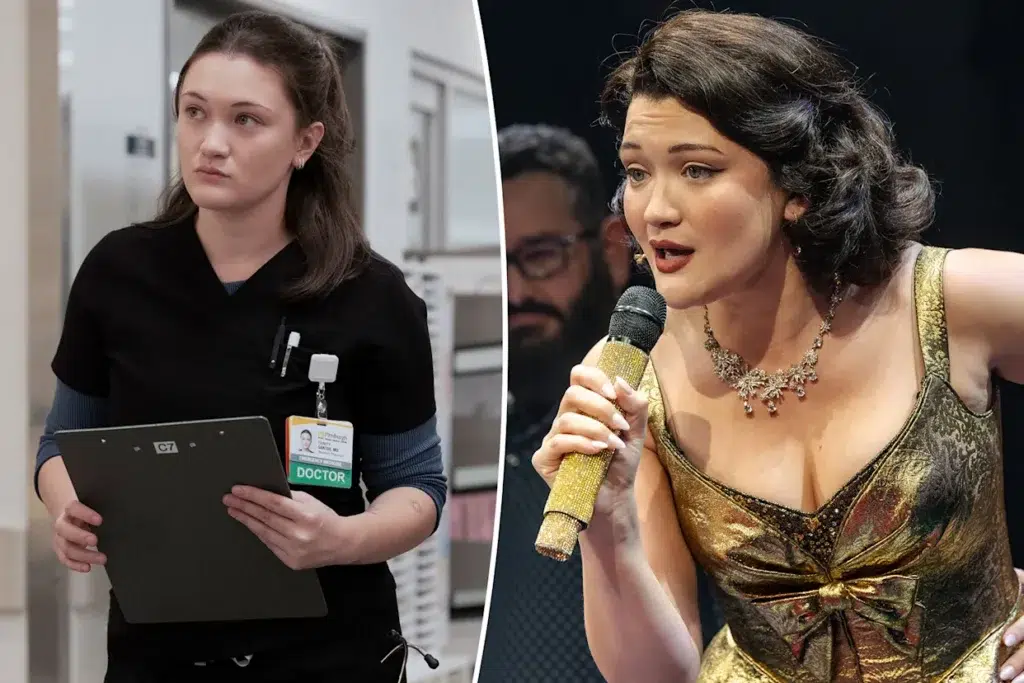
Isa Briones Calls Out Fans Yelling “The Pitt” References During a Broadway Show
Briones’s response was sharp because the behavior crossed a basic professional boundary. Search results for the Variety report show her saying, “Once again, Broadway is not a circus,” and Entertainment Weekly described the incident as the second time she had to remind fans not to yell out The Pitt references during the show. Her language made clear that this was not about being overly sensitive to fan recognition; it was about fans refusing to respect the distinction between actor, character, and performance space.
What Fans Were Shouting at Isa Briones During “Just in Time”
The most widely reported line shouted at Briones was, “When are you going to finish your charts?” Kotaku reported that she identified that exact remark as having been yelled before she sang “Who’s Sorry Now?,” and several other outlets tied it to her character Dr. Trinity Santos’s charting storyline on The Pitt. Coverage of the earlier April incident also says someone shouted “Dr. Santos” at her during the performance. Both remarks did the same thing: they overwrote the live role she was playing in the room and replaced it with the TV identity fans wanted to interact with instead.
Which Broadway Show is Isa Briones In? “Just in Time” Cast and Role Explained
Briones is currently in Just In Time, the Broadway musical about the life and music of Bobby Darin. The official cast page identifies Briones as Connie Francis, and the show’s official website currently bills Jeremy Jordan alongside her. Playbill reported on March 11, 2026, that Briones would begin performances on April 1 at Circle in the Square Theatre, and the production is described by official sources as an immersive nightclub-style musical developed and directed by Alex Timbers. That matters because the show’s closeness and intimacy may make some audience members feel unusually near the performer, but it does not change the fact that the event is still a scripted Broadway performance.
Why Yelling at Actors During Broadway Performances is Considered Heckling
In practical terms, yelling at a performer during a scripted stage production is heckling because it is an unsolicited interruption that redirects attention away from the show and onto the audience member. Broadway Direct’s current etiquette guide says talking should be kept to a bare minimum during performances, while its guidance on musicals says audiences should not sing along unless the production explicitly invites participation. In that context, yelling a TV in-joke at a performer before a song is not “engagement.” It is an intrusive attempt to force the actor to acknowledge the audience member’s reference in real time.

Broadway Theater Etiquette: What Audiences Should Never Do
Broadway etiquette is not mysterious, and official or industry-facing guidance is consistent on the basics. Broadway Direct says patrons should arrive early, be seated before the lights go down, silence and put away cell phones, keep talking to a minimum, and avoid singing along unless invited; Playbill’s etiquette guidance similarly warns against photography and recording during performances. TDF’s theater-etiquette guide also frames live performance as a shared space that depends on audience restraint. The core rule is simple: do not add yourself to the performance unless the production explicitly asks you to.
How Broadway Performers Handle Audience Disruptions and Shout-Outs
Broadway performers usually try to keep the show moving while front-of-house staff deal with the disruption, rather than turning every disturbance into a direct confrontation. A Hollywood Reporter snippet about audience behavior refers to the expectation that a house manager or usher will locate the disruptive person, and scholarship on theater labor notes that stage managers help prepare casts for disruptions and maintain a safe performance environment.
But when the interruption becomes impossible to ignore, productions sometimes stop the show or tighten enforcement: recently, Cynthia Erivo paused a West End performance of Dracula after spotting an audience member filming, while older high-profile examples include Keira Knightley’s production adding security after an audience disturbance and Patti LuPone directly confronting phone use in the theater. The pattern is clear: mild disruptions are usually absorbed until staff can intervene; serious ones can halt the event or trigger stronger enforcement.
Why Stage Door Culture is Different from Interrupting a Live Performance
Stage door culture exists after the performance, not inside it, and that difference is everything. Playbill’s stage-door guide emphasizes that stage dooring is a privilege, not a right; performers are not paid for that time, tickets do not include access, and fans are expected to wait patiently, avoid shoving, and never initiate physical contact. Broadway Direct likewise notes that autographs, if they happen at all, occur after the show and depend on time, production practice, and performer comfort. So there is a legitimate outlet for fan excitement, but it is post-show, optional, and managed. Interrupting the performance itself is the opposite of that arrangement.
Isa Briones Instagram Response to Disruptive Fans: “Broadway is Not a Circus”
Briones’s Instagram response landed because it was unusually direct and morally precise. Coverage preserving the now-expired Story quotes her saying, “Once again, Broadway is not a circus,” and Entertainment Weekly also surfaced language from her earlier April message telling people not to talk to performers while they are onstage and reminding the offending audience member that she was not Dr. Santos, and not even Connie Francis, but Isa Briones, one of the actors in the show. That framing matters. She was not merely asking fans to tone it down. She was reasserting the actor’s right to remain a person rather than a public toy for fandom references.
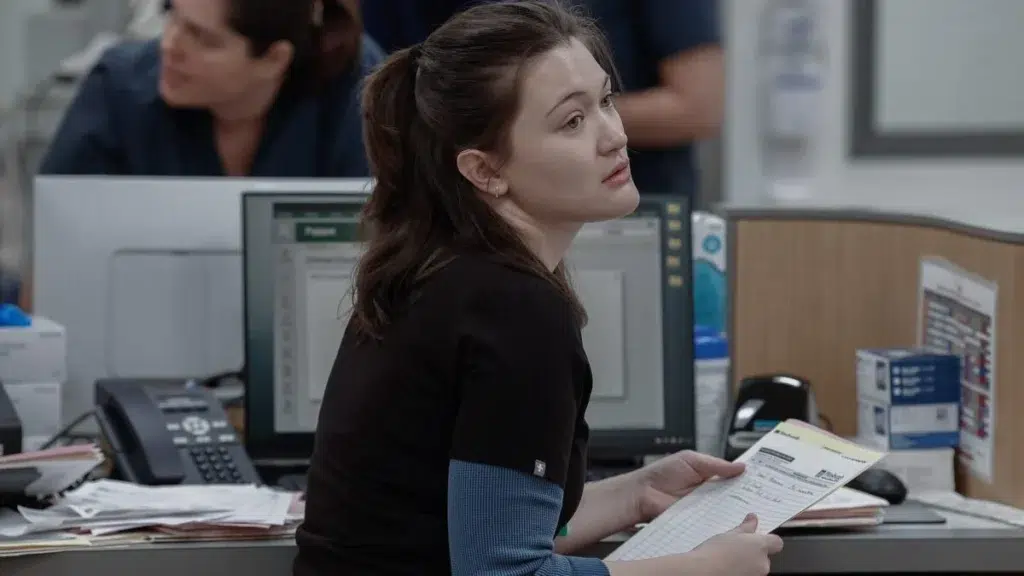
The Pitt Star Isa Briones Broadway Backlash: What the Internet is Saying
The visible online reaction leaned strongly in Briones’s favor, even if no one can honestly quantify the full internet. Public Reddit threads linked to Variety coverage were full of commenters calling the behavior disrespectful and embarrassing, while fan discussions in The Pitt communities used the incident to argue that some corners of the fandom had become too intense and too comfortable ignoring social boundaries. Entertainment writers also broadened the incident into a critique of theatergoers acting as if a Broadway venue were an extension of their living room or group chat. The broad direction of the backlash was clear: the hecklers were not defended as enthusiastic fans, but condemned as people who had mistaken access for permission.
Did Variety Report on Isa Briones Being Heckled on Broadway?
Yes. Search results show that Variety published an article on May 3, 2026, under the headline “The Pitt Star Isa Briones Calls Out Fans For Screaming at Her During Broadway Show: ‘F, ing Disrespectful.’” The result also confirms the incident had broken out beyond fan spaces and into mainstream entertainment trade coverage, which is one reason the story escalated so quickly.
Kotaku Reaction to the Pitt Fans Heckling Isa Briones on Broadway
Kotaku’s reaction was especially blunt and useful because it named the larger problem. In a May 4, 2026 article, Kenneth Shepard argued that the moment represented a new low for The Pitt fandom and described it as parasocial weirdness spilling out of internet spaces and into the real world. That framing is important because it shifts attention away from one rude audience member and toward the system that can normalize this kind of behavior: fandoms built around constant commentary, instant reaction, and the fantasy of personal closeness to performers.
How TV Fandom Behavior Changes Live Theater Audiences
Modern TV fandom encourages habits that do not map cleanly onto live theater. Research on social TV comments has found that real-time audience commentary can become a form of symbolic parasocial interaction with media figures, and scholarship on theater fandom notes that screen actors and celebrities often bring their fandoms with them into playhouses and stages.
At the same time, social platforms increasingly reward formats built around audience interaction, including viral stand-up “crowd work” clips, which can blur people’s sense of what kinds of participation belong in which venues. One plausible result is that some fans now arrive at live events primed for interruption, callback, or acknowledgement, even when the format in front of them still depends on concentration and controlled silence.

The Pitt Popularity and Parasocial Fandom: Why Boundaries Are Breaking Down
The scale of The Pitt’s popularity helps explain why this boundary failure happened now. The show was renewed for a third season before its second season debuted, and Nielsen’s chart shows it reached 1.163 billion minutes viewed during the week of March 30 to April 5, 2026. Vanity Fair has already described the series as spawning an obsessive fandom and, in a separate April 2026 piece, linked recent The Pitt-adjacent incidents to the wider rise of toxic fandoms across pop culture.
Parasocial-relationship research defines these bonds as one-sided relationships in which audiences invest time, emotion, and attention in a media figure who does not know them personally. In 2026, that dynamic is intensified by always-on fandom ecosystems and year-round digital engagement, including entertainment-industry strategies that explicitly encourage deeper fan connection between releases. None of that automatically produces bad behavior, but it does lower the psychological barrier between admiration and entitlement if fans do not police themselves.
What this Incident Means for Fandom Behavior at Live Events in 2026
This incident suggests that in 2026, venues can no longer assume audiences understand the difference between participatory fandom and respectful attendance. Reporting on audience behavior in recent years has repeatedly described a “Netflix mindset” inside theaters, where some people treat the space as if it were casual, private, and endlessly interruptible; the fact that Cynthia Erivo had to stop a 2026 stage performance over filming shows those pressures have not gone away. The Briones incident fits that same pattern, except with fandom recognition rather than a phone camera as the disruptive force.
The deeper lesson is that modern fandom is now transmedia by default. A streaming hit creates intense emotional investment online; then that energy follows the actor into Broadway, stage doors, press junkets, and other real-world settings. The answer is not to demonize fandom. It is to restore format-specific boundaries. Online discussion can be loud. Stage-door gratitude can be warm. Applause in the theater can be enthusiastic. But the performance itself is not a space for audience improvisation unless the production explicitly invites it. Briones’s frustration resonated because she was defending not celebrity ego, but the minimum conditions under which live art can still function.
Frequently Asked Questions (FAQs)
- Was Isa Briones heckled during a Broadway performance of Just In Time?
Public reporting indicates yes, in the practical sense that audience members shouted unsolicited The Pitt references at her during the show, and Briones herself described the behavior as disrespectful to both performers and fellow audience members. Coverage also makes clear this was not the first time she had to address it. - What exactly did fans shout at Isa Briones during the musical?
The best-attested remarks were “When are you going to finish your charts?” and, in an earlier incident, “Dr. Santos.” Both were references to her The Pitt character rather than the role she was playing onstage in Just In Time. - Which character does Isa Briones play in Just In Time?
Official production materials identify Briones as playing Connie Francis in the Broadway musical Just In Time, which tells the story of Bobby Darin in an immersive nightclub-style format. - Why is shouting at an actor during a Broadway show considered heckling?
Because Broadway etiquette expects audience members to watch rather than verbally insert themselves into the performance unless participation is invited. Broadway Direct specifically advises keeping talking to a minimum and not singing along unless the production calls for it. - Did Isa Briones address disruptive audience behavior more than once?
Yes. Current coverage says the May 2026 Instagram Story was the second time she had publicly corrected fans, following an April 2026 post after someone shouted “Dr. Santos” during a performance. - Did Variety and Kotaku both cover the story?
Yes. Variety published a May 3, 2026 report on Briones calling out fans for screaming during the Broadway show, and Kotaku followed with a May 4 commentary piece that treated the incident as a broader fandom problem. - Is stage dooring the correct place for fans to interact with Broadway actors?
It is the accepted post-show space for that kind of interaction, but even then it is optional and not guaranteed. Playbill’s guidance is explicit that stage dooring is a privilege, not a right, and that fans should be patient, polite, and never entitled to an autograph, photo, or conversation. - Why are people calling this a parasocial fandom issue?
Because parasocial relationships are one-sided emotional attachments to media figures, and the behavior here reflected fans acting as though their familiarity with Briones’s TV character entitled them to interrupt her live work. Academic and cultural sources alike connect fan intimacy, real-time commentary, and social-media participation to this kind of boundary confusion. - How do Broadway productions usually respond to disruptions?
Typically, actors try to continue while ushers, house managers, and front-of-house staff intervene. In more serious situations, productions may pause the show or increase enforcement, as seen in recent reporting on performances interrupted by filming or other disruptive conduct. - What is the main takeaway from this incident for live events in 2026?
The takeaway is that fandom energy now moves across platforms and into physical venues, but venue rules do not disappear when fandom enters the room. Audience participation is format-specific, and Broadway still depends on restraint, attention, and respect for the performers and the surrounding crowd.

Conclusion
The Isa Briones incident matters because it exposed a boundary that should have been obvious. A fan recognizing an actor from a hit TV show is normal. Yelling a character reference at that actor in the middle of a Broadway performance is not fandom at its most passionate; it is fandom at its least disciplined. The entire force of Briones’s response came from insisting on a distinction that current culture is increasingly bad at preserving: the distinction between access and ownership, between recognition and permission, between cheering for an artist and interrupting her work.
Seen more broadly, this was a small but revealing case study in live-event fan culture in 2026. Streaming hits now produce always-on communities, and those communities often carry their habits into physical spaces. But theater remains a medium built on timing, concentration, and shared attention. That is why the right response to this story is not to ask whether the fans meant well. It is to recognize that meaning well is irrelevant when the effect is to break the basic contract of live performance. Applaud loudly. Wait at the stage door if the production allows it. Talk online afterward. But when the actor is onstage, the job of the audience is to let the work happen.
Sources and Citations
- Playbill — Isa Briones to Play Connie Francis in Just in Time on Broadway
https://playbill.com/article/isa-briones-to-play-connie-francis-in-just-in-time-on-broadway - Just In Time official cast page
https://justintimebroadway.com/cast - Broadway.org — Just In Time
https://www.broadway.org/shows/just-in-time - Warner Bros. Discovery — The Pitt Season 3 Renewal
https://press.wbd.com/us/media-release/hbo-max/pitt/hbo-max-renews-pitt-third-season-ahead-season-two-debut - Nielsen Top 10 — March 30 to April 5, 2026
https://www.nielsen.com/data-center/top-ten/ - Broadway Direct — Theatre Etiquette
https://broadwaydirect.com/theater-etiquette-dos-donts-attending-broadway/ - Playbill — How to Navigate the Broadway Stage Door
https://playbill.com/article/how-to-navigate-the-broadway-stage-door - Variety — Isa Briones Calls Out Fans
https://variety.com/2026/tv/news/the-pitt-isa-briones-calls-out-fans-screaming-broadway-1236736405/ - Kotaku — The Pitt Fans Heckle One Of Its Stars On Broadway
https://kotaku.com/pitt-just-in-time-broadway-trinity-santos-isa-briones-2000692929 - Entertainment Weekly — Isa Briones tells fans to stop yelling
https://ew.com/the-pitt-star-isa-briones-demands-fans-quit-yelling-out-during-broadway-show-11964896 - The Guardian — Isa Briones Broadway fan behavior report
https://www.theguardian.com/tv-and-radio/2026/may/04/pitt-star-isa-briones-broadway-fans-disrespectful - ScienceDirect — Social TV viewers’ parasocial interactions
https://www.sciencedirect.com/science/article/pii/S2590291121000255 - Vanity Fair — Rise of Toxic Fandoms
https://www.vanityfair.com/hollywood/story/the-pitt-heated-rivalry-toxic-fans - The Guardian — Cynthia Erivo interrupts Dracula performance
https://www.theguardian.com/stage/2026/apr/29/cynthia-erivo-dracula-theatre-audience-member-camera-wicked - Forbes — Does Broadway Need To Enforce Theater Etiquette?
https://www.forbes.com/sites/emmakershaw/2026/01/21/does-broadway-need-to-enforce-theater-etiquette/
Recommended
- How to Create Stylized Low-Poly 3D Scenes in Unity (URP, Shader Graph, Lighting & Post-Processing)
- SOL Shogunate: Official “The World of SOL Shogunate” Developer Diary Everything We Know About the Space-Samurai Action RPG
- House of the Dragon Season 3 Trailer Breakdown: Expect Many Major Deaths Ahead and Full Targaryen War Explained
- Netflix’s New Shark Horror Movie Thrash Starring Bridgerton’s Phoebe Dynevor Is Surprisingly Watchable Despite Mixed Reviews
- AdonisFX 2.0 Brings Full Support for Houdini: Features, Pricing, and Workflow Benefits
- Elden Ring Movie’s Popcorn Bucket Should Be Iron Fist Alexander, Fans Declare (A24’s Alex Garland Adaptation)
- Family Guy Stewie Spinoff Series Greenlit for 2 Seasons: Release Date, Plot, Cast, and Everything We Know
- What is the View Keeper?
- Devil May Cry: Complete Guide to the Iconic Action Franchise, Characters, and Latest Updates