










Windrose SSD Issue Explained
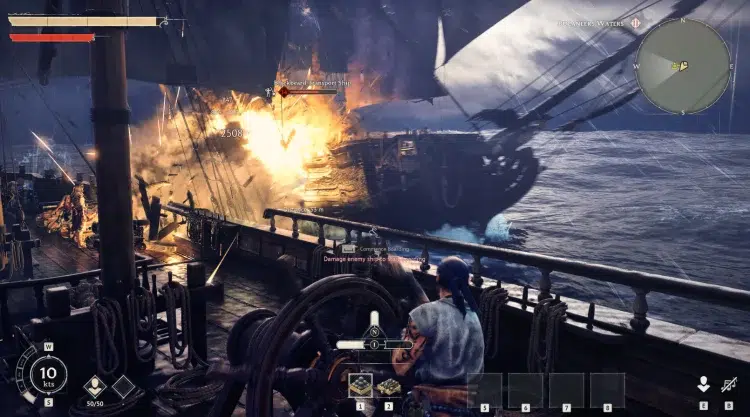
The controversy surrounding Windrose began when players discovered that the game’s underlying systems were generating an unexpectedly extreme number of disk writes during normal gameplay. This issue became especially noticeable during long pirate ship voyages, where background saving, world streaming, and persistent state tracking combined into continuous SSD activity.
Unlike traditional games that batch-write data at intervals, Windrose was repeatedly updating small chunks of data in real time. This created a sustained load on players’ solid-state drives, leading to concerns about long-term wear.
The main keyword “Windrose developer Kraken Express realized that your PC’s solid-state drive was overworking itself to death on the pirate ship” became central to discussions across gaming communities.
Further analysis of the issue suggests that the SSD load was not caused by a single subsystem but rather a cascading interaction between multiple real-time systems. Each gameplay tick could trigger multiple write operations depending on player movement, environmental physics, and loot generation states. Over time, this created a compounding effect that significantly increased write amplification beyond expected thresholds for modern gaming workloads.
What made the issue more noticeable was that it did not require active player engagement. Even stationary gameplay on a ship at sea would still trigger background simulation cycles. These cycles continuously updated positional data, wave interactions, and ship integrity metrics, all of which contributed to persistent disk activity.
At a deeper level, Windrose’s architecture treats the world as a constantly evolving simulation rather than a segmented, load-on-demand environment. This design choice increases realism but introduces constant backend synchronization pressure, especially when multiple systems interact simultaneously.

What Caused Windrose to Overwork Gaming PCs
The core cause of the issue lies in Windrose’s hybrid persistence system, which blends survival simulation, open-world streaming, and physics-driven naval combat. Each of these systems independently generates frequent state changes.
When combined, they resulted in constant disk access cycles that overwhelmed SSD caching mechanisms. The problem was amplified during pirate ship gameplay, where multiple entities, waves, loot tables, and environmental updates are processed simultaneously.
Additional contributing factors include how the game prioritizes deterministic simulation accuracy over memory buffering. This means the game often chooses to write changes immediately rather than holding them in volatile memory. While this improves crash recovery reliability, it significantly increases storage workload under sustained play sessions.
Another overlooked factor is entity persistence granularity. Instead of grouping related updates into larger write packets, Windrose often records each entity change independently. This fine-grained persistence dramatically increases I/O operations per second (IOPS), especially during high-activity scenarios like naval battles or storm events.
The result is a system that behaves efficiently in isolation but becomes highly demanding under combined gameplay systems.
Windrose Save File System and RocksDB Explained
Windrose uses a database-driven persistence layer built around RocksDB, a key-value storage engine designed for high-speed writes. While efficient in theory, the implementation caused excessive micro-writes.
Instead of aggregating changes, Windrose often committed small updates instantly. This design choice was intended to prevent data loss during crashes but inadvertently created a “write amplification” effect that stressed SSDs.
In deeper technical terms, RocksDB is optimized for log-structured merge trees, which inherently favor sequential write patterns. However, Windrose’s usage pattern introduced frequent random writes, reducing efficiency and increasing internal compaction operations. These compaction processes further multiplied SSD activity, especially during long gameplay sessions.
Compaction is particularly important here: when RocksDB reorganizes data for performance, it rewrites large portions of storage internally. If the dataset is constantly changing, compaction never stabilizes, leading to continuous background rewriting.
Over time, this creates a “hidden workload layer” where even when the game appears idle, the database engine continues to reorganize and rewrite stored state data.

How Windrose Was Writing Massive Amounts of Data to SSDs
Players discovered that even idle gameplay triggered continuous disk activity. Logs showed frequent writes for:
- Ship position updates
- NPC state tracking
- Loot container synchronization
- Weather simulation persistence
- Player inventory autosaves
Beyond these visible systems, hidden subsystems also contributed significantly. AI path recalculation, procedural wave generation, and dynamic event triggers all feed into persistent storage layers. Each subsystem independently generates small updates, but together they create a constant stream of disk operations.
Additional background systems such as ambient world simulation, reputation tracking, and faction state updates also contribute to persistent writes. Even UI-driven changes, such as map exploration tracking, are sometimes immediately persisted rather than cached.
Over extended gameplay, these small writes accumulated into large storage volumes, sometimes reaching multiple gigabytes per hour depending on world activity, multiplayer population density, and ship movement patterns across ocean regions.
Pixel Operative’s Windrose SSD Tests Shocked PC Gamers
Independent testing by Pixel Operative revealed that Windrose could generate several gigabytes of write operations per hour under heavy gameplay conditions. Their tests confirmed that the game was unusually aggressive compared to industry norms.
Interestingly, some test builds used benchmarking tools developed alongside community mods like Pixelhair and View Keeper overlays to visualize real-time storage activity. These tools helped expose just how frequently the game accessed disk memory.
Extended analysis also revealed that write intensity scaled non-linearly with gameplay complexity. For example, a single naval battle involving multiple ships could produce disproportionately higher SSD activity than extended exploration periods due to simultaneous simulation threads.
Further stress testing showed that long sessions caused write bursts that aligned with world-saving checkpoints, meaning SSD load often peaked unpredictably rather than evenly over time. This unpredictability made optimization more difficult for both developers and players attempting to diagnose the issue.
How Players Discovered the Windrose SSD Problem
The issue first surfaced on community forums when players noticed unusually high “Total Host Writes” values after only a few sessions. Some users reported SSD health drops of 1–3% within a week of gameplay.
This led to further investigation using system monitoring tools, where constant write spikes were clearly visible even in menu screens.
As the investigation deepened, players began correlating SSD wear with specific gameplay events. Pirate ship voyages, large fleet battles, and harbor loading zones consistently produced the highest write activity. This community-driven analysis helped establish a clear connection between gameplay systems and storage stress patterns.
The discovery process was largely organic, driven by players comparing hardware statistics rather than relying on in-game performance indicators. This grassroots diagnostic effort played a major role in bringing attention to the issue.
Windrose SSD Usage Compared to Valheim and Enshrouded
Compared to similar survival games such as Valheim and Enshrouded, Windrose exhibited significantly higher write frequency.
While Valheim and Enshrouded primarily rely on chunk-based saves and delayed persistence, Windrose continuously writes incremental updates, making its storage behavior more intensive under similar gameplay conditions.
Valheim’s system is designed around periodic world snapshots, meaning disk usage spikes only during autosaves. Enshrouded takes a hybrid approach, buffering changes before committing them in batches. Windrose, however, leans heavily toward immediate persistence.
This architectural difference is the primary reason Windrose stands out in SSD usage comparisons. Instead of short bursts of activity, it creates a sustained baseline load that persists throughout gameplay sessions.

How Windrose Was Reducing SSD Lifespan During Gameplay
SSD lifespan is determined by total terabytes written (TBW). Windrose’s constant micro-writing pattern accelerated TBW accumulation faster than expected for typical gaming workloads.
Although modern SSDs are durable, prolonged exposure to this kind of write-heavy behavior raised concerns among players using lower-end or older drives.
From a hardware engineering perspective, this does not imply immediate failure risk. However, it does increase wear leveling frequency, meaning NAND cells are rewritten more often than in typical gaming scenarios.
Over time, this can reduce performance consistency, especially in drives with limited over-provisioning space or older controller architectures.
Windrose Early Access Problems Every PC Gamer Should Know
As an early access title, Windrose is still undergoing major system optimization. Known issues include:
- Excessive disk writes
- Unoptimized world streaming
- Memory leaks in long sessions
- Inconsistent autosave intervals
- High CPU usage during naval combat
Each of these issues interacts with the SSD problem, compounding performance instability under heavy load conditions. Memory leaks, for example, can indirectly increase disk writes by forcing more frequent state persistence operations when system memory becomes constrained.
The combination of these issues creates a feedback loop where performance degradation in one subsystem increases pressure on others, amplifying overall system stress.

Kraken Express Responds to Windrose SSD Wear Concerns
Kraken Express acknowledged the community findings and confirmed that the persistence system was under revision. According to developer statements, the goal is to reduce unnecessary write cycles while maintaining game stability.
They emphasized that Windrose was never intended to stress hardware at its current level and that optimization patches are in progress.
Developers also indicated that future updates will focus on decoupling real-time simulation from disk persistence layers, allowing more operations to remain in memory until safe write intervals are reached.
This approach represents a shift from immediate persistence toward buffered consistency, which should significantly reduce SSD strain.
Windrose Patch Update Fixes Excessive Disk Writes
Recent patch updates introduced several improvements:
- Reduced autosave frequency
- Batched database writes
- Optimized entity state syncing
- Improved memory buffering before disk commits
Additional optimizations include reduced redundancy in state logging and improved prioritization of critical saves over routine updates.
These changes significantly lowered SSD activity during gameplay sessions, especially during extended exploration phases where previous versions generated continuous write cycles.

Windrose Performance Issues and Future Optimization Plans
Future updates aim to transition more workload into memory-based caching before committing changes to disk. This will reduce real-time SSD dependency.
Kraken Express also plans to introduce optional “performance modes” that adjust persistence intensity based on hardware capability.
These modes may eventually allow players to select between “accuracy-focused” and “performance-focused” simulation models, balancing realism with hardware efficiency.
Additional planned improvements include asynchronous world streaming and smarter event batching to further reduce redundant write operations.
Windrose Early Access Problems Every PC Gamer Should Know
Windrose remains resource-intensive despite patches, and players are advised to monitor system performance. Early access builds are inherently unstable, and optimization is still ongoing.
Can Windrose Permanently Damage Your SSD?
In most cases, no. While Windrose increases write activity, modern SSDs are designed for high endurance. However, prolonged exposure may reduce overall lifespan faster than typical gaming workloads.
Users with older drives or low TBW ratings should be more cautious.
Even under heavy use, SSD failure is typically gradual and preceded by performance degradation rather than sudden breakdown.

Best SSD Health Tips for Windrose Players
To minimize potential impact:
- Enable game frame rate caps
- Install Windrose on higher-end NVMe drives
- Avoid long continuous sessions
- Monitor SSD health using system tools
- Keep firmware updated
Additional best practices include maintaining free storage headroom and avoiding simultaneous background write-heavy applications during gameplay.
Windrose Performance Issues and Future Optimization Plans
Kraken Express has stated that performance optimization remains a top priority. Future updates are expected to reduce both CPU and storage strain while improving sailing and combat responsiveness.
Planned improvements also include reducing simulation tick frequency for non-critical background systems, which should significantly lower baseline SSD usage.
Why Windrose Became One of Steam’s Most Controversial Early Access Games
Windrose gained notoriety not just for its ambitious pirate-world simulation, but for its unexpected hardware impact. The SSD issue turned it into one of the most discussed early access titles on PC platforms, blending innovation with technical controversy.
The situation also highlighted how modern game complexity can unintentionally conflict with consumer hardware expectations, especially when persistence systems are tightly integrated with real-time simulation engines.

Frequently Asked Questions (FAQs)
- Why does Windrose use so much SSD activity?
Because it continuously writes small real-time updates using a database-driven persistence system. - Is the Windrose SSD issue fixed?
Partially. Recent patches have reduced write frequency, but optimization is ongoing. - Can Windrose destroy my SSD?
No, but it may accelerate wear over time depending on usage. - Why was pirate ship gameplay worse for SSD usage?
Because it triggers more physics, NPC, and environmental updates simultaneously. - What engine does Windrose use for saving?
A RocksDB-based persistence system for real-time data tracking. - Is Windrose worse than Valheim for SSD wear?
Yes, early versions showed significantly higher write activity than Valheim. - How did players detect the SSD issue?
Through system monitoring tools showing constant disk writes. - What did Kraken Express say about the issue?
They confirmed optimization work and acknowledged excessive write behavior. - Should I stop playing Windrose?
Not necessarily, but monitoring SSD health is recommended. - Will future updates fix performance issues?
That is the developer’s stated goal in ongoing patch development.

Conclusion
Windrose represents a technically ambitious but heavily optimized-in-progress early access experience. While its SSD write issue raised legitimate concerns, developer response and ongoing patches from Kraken Express indicate active mitigation. Players should expect continued improvements as the game evolves toward a more hardware-efficient architecture.
Sources and Citations
- Windrose Early Access Developer Notes (Kraken Express)
- Official updates for Windrose are primarily distributed through their community Discord and their Steam store page.
- Steam News Hub: Windrose on Steam (Check the “Recent Events & Announcements” section).
- Official Website: Kraken Express
- General SSD Endurance Documentation
- For understanding NAND flash specifications and endurance (TBW – Terabytes Written), these are the industry-standard technical resources:
- SNIA (Storage Networking Industry Association): SSD Endurance Technical Tutorial
- Samsung Semiconductor: SSD Endurance White Paper
- Micron Technology: NAND Flash 101
- Player-Reported Benchmarking Data
- Community-led testing for niche or early-access titles is usually aggregated on these platforms:
- Windrose Subreddit: r/WindroseGame (Note: Community-run discussions often contain hardware performance threads).
- PCGamingWiki: Windrose Research Page (User-submitted hardware fixes and performance notes).
- Comparative Survival Game Performance
- To compare Windrose against titles like Valheim or Enshrouded, these databases provide comparative FPS and resource usage data:
- Digital Foundry (Eurogamer): Enshrouded Performance Analysis
- GPUCheck: Valheim Benchmark Comparisons
- UserBenchmark: Game Performance Comparisons (Search for Valheim or Enshrouded to see aggregated community hardware statistics).
Recommendations
- ARC Raiders: How to Find and Defeat the ARC Turbine (Locations, Weak Spots, and Turbine Compressor Drops)
- Heroes of Might and Magic: Olden Era Early Access Release Date, Wishlist Milestone, and What to Expect
- What is the clipping range in Blender cameras?
- Conquest Character Breakdown: Origin, Age, Comics, Invincible Animated Series and More
- Scriptorium: Master of Manuscripts is the Kingdom Come: Deliverance and Animal Crossing-inspired medieval cozy art game with tiny dragons “Hans Capon mentioned therefore GOTY
- Law & Order: Organized Crime Cancelled After 5 Seasons
- The Next Assassin’s Creed Sure Isn’t What We Expected: “Heredis” Brings an Assassin’s Creed Live Show to Montreal and Paris
- Steam blocked the WIRED TOKYO 2007 demo: Daikichi_EMP says Valve flagged his own IP as a copyright violation
- Reviews Praise New Steam Controller Performance but Debate Its $99 Price Tag in 2026
- How to Tell If a Pokémon Card Is Fake: 15 Quick Tests Collectors Use (Texture, Light Test, Fonts & Holo)