





Sony Honda Mobility Afeela EV: A Developer Platform on Wheels
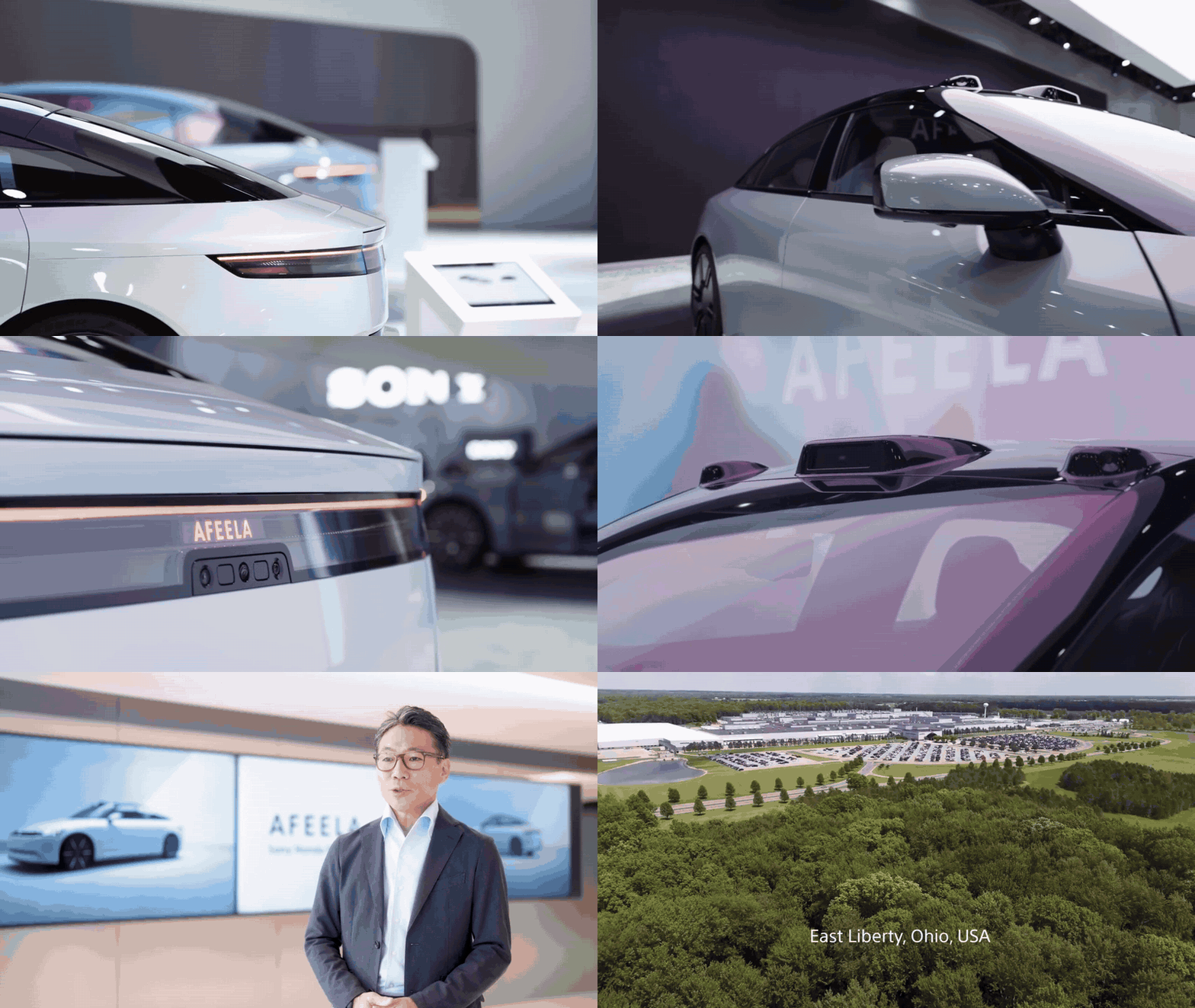
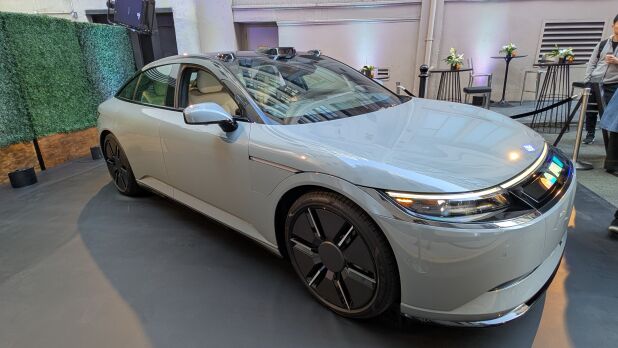
Sony Honda Mobility is positioning the AFEELA 1 electric vehicle as a “programmable mobility platform” rather than just a traditional car. Shifting focus away from raw performance like horsepower, the joint venture emphasizes digital experiences and in-vehicle applications. Leveraging Sony’s expertise in media and gaming, the car is designed as a creative entertainment space where third-party developers can run interactive content.
Hardware and Software Foundations:
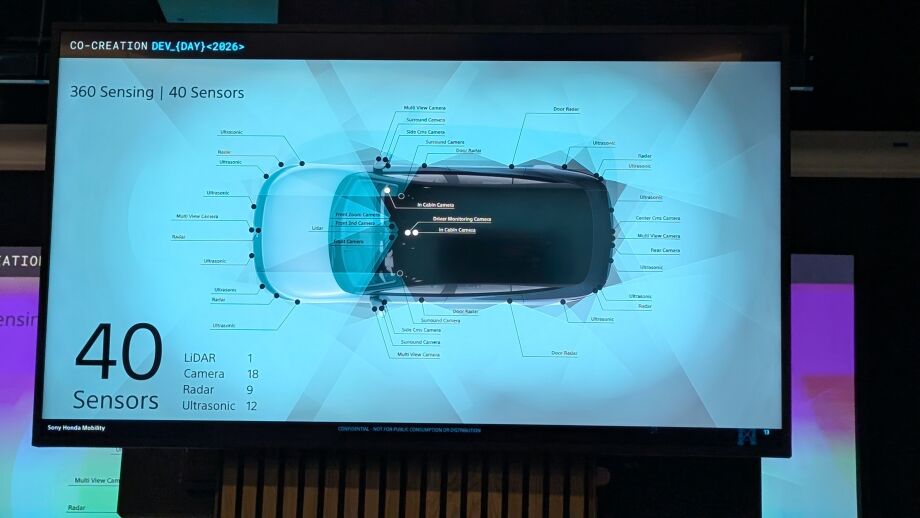
- Sensing Suite: Approximately 40 sensors, including LiDAR, radar, cameras, and ultrasonics, provide 360° environment awareness.
- Immersive Audio: Over 28 speakers with spatial audio, including headrest-integrated speakers.
- Computing Power: Powered by Qualcomm’s Snapdragon Digital Chassis, providing up to 800 TOPS for AI and high-end graphics.
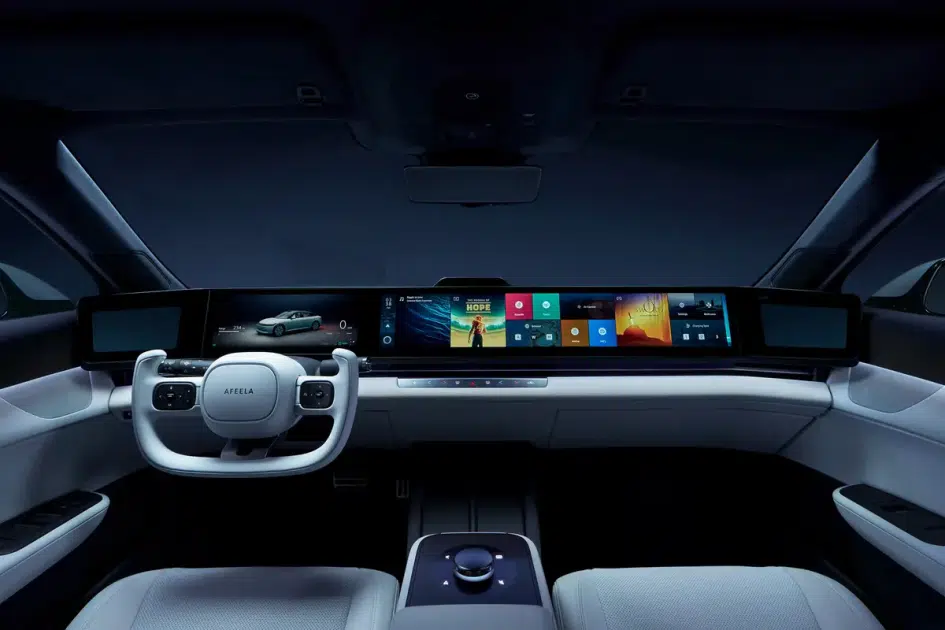
- Visual Canvas: A full-width panoramic dashboard for apps, games, and infotainment.
By opening the vehicle’s architecture to outside creators, Sony Honda Mobility aims to create an app-store-like ecosystem for the car, allowing for continuous enhancement via over-the-air (OTA) updates.

AFEELA Creator Hub: Purpose and Audience
The AFEELA Creator Hub is the central developer portal for the Afeela EV. It is designed to be an inclusive community for various types of innovators, including:
- Application and game designers.
- UI/UX and audio-visual artists.
- Service partners and startup teams.
- Indie developers and individual hobbyists.
The hub provides a gateway for co-creation, offering documentation, sample code, and design guidelines. Early pilot projects include concepts like “Doratomo” from Q-Games (interactive characters that react to driving) and ASTRO BOT-themed experiences from Team ASOBI. It serves as the primary resource for anyone wanting to build “native” experiences for the car’s environment.
Afeela SDK Beta: Release and Features
An official Software Development Kit (SDK) is scheduled for a beta release in Summer 2026. This kit provides the necessary libraries and APIs to interface with the vehicle’s hardware and software.
What the SDK Includes:
- Libraries and APIs: Tools to access vehicle telemetry, control in-cabin UI, and utilize spatial audio and ambient lighting.
- Documentation and Design Guidelines: Instructions on best practices for in-car safety, driver distraction rules, and visual compliance.
- Simulation and Testing Tools: Developers can validate apps on a workstation using simulators and recorded vehicle sensor data, removing the need for physical access to the car during development.
Building In-Vehicle Apps for the Afeela EV
The Afeela’s infotainment system is built on Android Automotive OS, allowing developers to use familiar tools like Kotlin, Java, or Unity.
Step-by-Step Development Process:
- Join the Program: Sign up via the AFEELA Creator Hub to access the SDK and design guidelines.
- Environment Setup: Use an IDE like Android Studio combined with the Afeela Virtual Emulator to mimic the panoramic display and cockpit.
- Integrate Features:
- Vehicle Data: Access real-time speed, GPS, and acceleration telemetry.
- In-Cabin UI: Use templates to adapt layouts for driver and passenger display zones.
- Audio/Lighting: Control ambient cabin lights or the external “Media Bar” display.
- Adhere to Safety Rules: Ensure apps meet “distraction optimized” standards, such as disabling video playback while the vehicle is in motion.
- Simulated Testing: Use driving logs to verify how apps react to real-world driving conditions (e.g., hard braking or turns).
- Deployment: Submit the app to the Afeela distribution channel for approval and OTA delivery to vehicles.
Development Tools, Simulators, and Virtual Testing
Sony Honda Mobility provides a comprehensive suite of tools to enable remote development:
- Infotainment System Emulator: Replicates the multi-zone display for UI testing and interaction debugging.
- Virtual Sensors: Feeds apps with time-stamped driving telemetry (speed, steering angle) to simulate movements.
- Vehicle Data Recordings: Provides “sandboxes” with sample logs, allowing developers to test how apps behave during specific scenarios, such as location changes or user input interruptions.
- Performance Profiling: Tools to ensure apps do not overburden the vehicle’s CPU or GPU during multi-tasking.

Cloud APIs and Vehicle Data Access
Afeela utilizes both local and cloud-based APIs to merge the physical car with the digital ecosystem.
Vehicle APIs (Local):
- Provide real-time access to telemetry, environmental data, and vehicle states (battery level, door status).
- Operate within a secure sandbox; apps can read data but cannot write commands to critical systems like steering or brakes.
Cloud APIs (External):
- Enable remote status checks (e.g., checking battery charge via smartphone).
- Provide webhooks for event notifications (e.g., tire pressure alerts).
- Allow integration with smart home devices, voice assistants, and ecosystems like the PlayStation Network.
Access is strictly managed through API keys and user permissions to ensure privacy and security, with comprehensive documentation detailing endpoints and usage limits for developers.
This kind of multi-faceted experience is what the Afeela’s interior software platform aims for: seamless blending of navigation, communication, entertainment, and car controls – all personalized and updateable.
In essence, the Afeela interior software platform turns the car into a smart device:
- It’s filled with screens that can adapt to show whatever content or controls are needed contextually.
- It runs a robust OS with an app framework that invites expansion (via the SDK).
- It connects with cloud services and personal devices to remain an integrated part of one’s digital life.
- Crucially, it does all this while managing attention and safety (the trickiest part – fancy features must not overwhelm the driver at wrong times).
Safety Rules for In-Car Apps: Driver Distraction Guidelines and Approvals
Sony Honda Mobility prioritizes safety by enforcing strict regulatory frameworks and anti-distraction measures for all software on the Afeela platform.
- Regulatory Framework: The platform adheres to NHTSA and ISO standards, requiring that driver screen glances remain brief (under 2 seconds) and complex visual-manual tasks (like typing) be locked during motion.
- Infotainment Design: * Glanceable Cluster: Critical information like speed and navigation is placed directly in the driver’s line of sight.
- Privacy Shield: A unique hardware/software solution that blocks the driver’s view of the passenger’s screen when engaging content like movies is playing.
- Motion Lockouts: Potentially distracting apps (YouTube, web browsers, or games) are automatically disabled on the driver’s side while the vehicle is in motion.
- Third-Party App Approvals: All software must undergo a safety review. Apps must declare interaction types, and those deemed overly engaging are restricted to passenger screens or parked scenarios.
- Distraction Optimized Mode: Developers may be required to implement simplified UIs for driving, such as showing only headlines instead of full articles.
- Driver Monitoring Integration: Interior cameras monitor the driver’s gaze. The system can dim content or issue warnings if the driver looks away from the road too long. While Level 3 autonomy may eventually allow more interaction, Level 2 requirements remain strict.
- Speed Lockouts: Certain functions may only be accessible at speeds below 5 mph.
- Built-in Safety Nets: Advanced ADAS features like emergency braking serve as a backup for distracted drivers, though they are not intended to replace driver attention.
App Distribution, Monetization, and OTA Updates
The Afeela ecosystem includes a dedicated pipeline for delivering, funding, and maintaining software through a connected “mobility platform.”
- App Distribution: * Marketplace: A dedicated on-board app store for browsing categories like Navigation, Games, Themes, and Vehicle Add-ons.
- Curation: Sony Honda Mobility will curate and approve apps, with region-specific availability.
- Monetization Models:
- Direct Sales: One-time purchases for premium theme packs or vehicle customizations.
- Subscriptions and IAP: Support for in-app purchases and recurring monthly fees for specialized services (e.g., telemetry tracking).
- Revenue Share: A platform fee model for third-party developers, similar to existing mobile app stores.
- Over-the-Air (OTA) Updates:
- System and App Upgrades: Using 5G connectivity, the vehicle can download OS patches, new ADAS features, and app updates.
- Future-Proofing: Significant hardware capabilities (like future Level 4 autonomy) are intended to be unlocked via OTA.
- Security: Rapid patching of vulnerabilities to ensure the software remains secure.
- Developer Compatibility: The developer portal will provide previews of OS updates, allowing creators to ensure their apps remain compatible with new APIs or system changes.
Over-The-Air (OTA) Updates:
- Afeela, like most new EVs, supports full OTA software updates for both system software and apps. The car has 5G connectivity so it can download updates on the go or when parked (likely encouraging to do so on Wi-Fi or at night).
- OTA means the car’s OS can be updated with new features (e.g., adding new UI functions, enabling new ADAS features, etc.). For example, they promised eventual Level 4 autonomy via updates if hardware allows, demonstrating they plan significant OTA upgrades.
- For apps, OTA is analogous to how your phone updates apps. The Afeela App Store would notify of updates and either auto-update or ask the user. Possibly user can set preferences for auto-updates or only manual.
- This is crucial for security too – any vulnerabilities can be patched quickly via OTA.
Vehicle Updates and App Compatibility:
- After a system OTA, some apps might need updates to remain compatible (if APIs changed or new OS version). The developer portal would alert devs in advance to update their apps accordingly (likely they’ll have something like a staged rollout or developer preview of new OS versions).
- Conversely, new OS updates might bring new APIs that apps can use (e.g., if they open access to another sensor, etc.).
User Account and Cloud Tie-in:
- Users might have an Afeela account (likely tied to Sony’s ecosystem or a new SHM account) which is used to sign in on the car and in the mobile app. This account holds purchases, subscriptions, etc. So if you switch cars (or have multiple Afeelas), your purchased apps/themes move with you.
- Possibly integration with Sony’s PSN or Honda’s services, but likely a distinct account that can link to others.
- Also, multiple profiles can have their own set of apps or preferences. E.g., a teen driver profile may not have certain apps accessible (parents can restrict).
App Life Cycle and Updates:
- Developers will update their apps to add features or fix bugs. They’ll submit updates to the Afeela store, Sony will review (for safety etc. again) then push out. This is continuous, like mobile apps.
- If an app misbehaves or proves unsafe (maybe it’s more distracting than thought), SHM could remove or disable it via an update or remotely.
- The car’s base software including the Android OS and Afeela UI will likely see a major update at least annually (like 2026 version, 2027 version improvements) with minor updates in between.
Monetization Example Scenarios:
- A game developer releases a premium in-car game for $9.99. The user buys it through the Afeela store (payment likely tied to credit card on file in their Afeela account). The game downloads OTA to the car and is ready to play.
- A theme designer sells a “Sci-fi interior theme” for $4.99. User buys and the theme is installed, giving new wallpapers, ambient light color schemes, and sounds.
- A service provider offers a “premium concierge app” that, for a monthly subscription, can make reservations for you en route, or do more advanced cloud services. The subscription might be managed via Sony’s portal or as in-app purchase in the car app.
- Sony might bundle some content free initially (like a few basic themes, etc.) but allow more via purchase.
- There might also be promotions: e.g., “free 6 months of XYZ app subscription with new car purchase” to seed usage.

Frequently Asked Question (FAQs)
- When will the Afeela SDK be available for developers and how do I get it?
The Afeela SDK is expected to enter beta in Summer 2026. Interested creators can sign up through the AFEELA Creator Hub or contact Sony Honda Mobility via their official site. Once released, the SDK—including libraries, documentation, and simulators—will be available for download to approved developers. - What is the AFEELA Creator Hub and who can join it?
The AFEELA Creator Hub is a collaborative community and distribution portal for developers, designers, and content creators. It is open to a broad range of participants, including indie developers, game studios, and UI/UX or sound designers. The hub provides the necessary resources to co-create in-car apps, personalized themes, and digital services. - Do I need an actual Afeela car to start developing or testing apps?
No. The Afeela SDK includes a virtual in-car simulator that runs on a standard PC. This simulator mimics the vehicle’s multi-screen interface and uses recorded sensor data to allow for end-to-end testing of UI and functionality without a physical vehicle. - What operating system and framework does Afeela use for apps?
Afeela utilizes Android Automotive OS. Apps are essentially Android apps optimized for automotive hardware and safety. Developers can use familiar tools like Android Studio and languages such as Kotlin or Java. Additionally, game engines like Unreal Engine and Unity are supported for creating interactive 3D experiences and HMI (Human-Machine Interface) elements. - What kinds of apps can I develop for the Afeela EV?
- Sony Honda Mobility encourages a variety of applications, including:
- Entertainment: Video streaming, music, and interactive games for passengers or parked drivers.
- Productivity: Integrated conferencing (e.g., Zoom), messaging assistants, and calendar tools.
- Navigation: Specialized travel add-ons and tour guide apps.
- Vehicle Utility: Tools for monitoring driving efficiency, coaching, or customizing ambient lighting and “e-Motor” sound profiles.
- Sony Honda Mobility encourages a variety of applications, including:
- How will Afeela apps be distributed and installed?
Apps will be distributed via a dedicated in-car app store. After a quality and safety review, third-party apps will be listed for users to browse and download. Installation and updates are handled over-the-air (OTA) via the car’s 5G connection. - Will Afeela support Apple CarPlay or Android Auto in addition to native apps?
This has not been explicitly confirmed. Because the system runs on Android Automotive OS, native app support may reduce the need for phone projection. While many Honda vehicles support CarPlay, Sony Honda Mobility appears to be prioritizing its own integrated ecosystem and native interface. - How is driver distraction handled with Afeela apps?
Safety is managed through several technical layers:- Privacy Shield: Automatically blocks the driver’s view of the passenger screen when video is playing.
- Motion Lockouts: Disables certain interactive or visual inputs while the car is moving.
- Driving Mode: Requires apps to use simplified UIs or voice-centric controls while in motion.
- Driver Monitoring: Uses interior cameras to alert the driver if their gaze wanders from the road.
- How will updates for Afeela and its apps be delivered?
All updates are delivered OTA via the vehicle’s network. This includes system-wide firmware (adding new vehicle functions or AI improvements) and individual app updates. Users can manage these through the car’s interface or a connected mobile app. - Are there tools to help create 3D content (like avatars or hair) for Afeela apps?
Yes. Developers are encouraged to use existing 3D asset libraries like PixelHair to create realistic avatars or characters. Tools like The View Keeper (for Blender) can also help manage 3D camera perspectives for the car’s wide panoramic displays, ensuring polished visuals for Unreal Engine-based projects.
Conclusion
Sony Honda Mobility’s Afeela EV represents a bold new fusion of automotive engineering and interactive software. By actively inviting game developers and other creators to build apps for the Afeela, the company is transforming the car from a static product into a dynamic software platform on wheels. The Afeela 1 is not just an electric vehicle with premium specs – it’s essentially a high-tech device, equipped with 40 sensors, 5G connectivity, a panoramic digital cockpit, and a cloud-connected brain. This hardware foundation, combined with Sony’s entertainment DNA, provides the canvas on which developers can paint new experiences.
Through the AFEELA Creator Hub and upcoming SDK, developers will get the keys to this canvas – with APIs granting access to the car’s real-time telemetry, in-cabin interfaces, audio system, ambient lighting, and more. The fact that you can simulate the entire car on a PC and test apps without owning the vehicle lowers the barrier for innovation tremendously.
We’re likely to see a surge of creativity as indie teams and established studios alike experiment with this platform. Imagine apps that we haven’t seen in cars before: from virtual pets riding shotgun, to educational AR overlays that turn road trips into learning adventures, to wellness apps that guide you through relaxation exercises using seat sensors and soft lighting when you’re stuck in traffic. Afeela’s openness makes all this possible.
Equally important is how Sony Honda Mobility is balancing this openness with safety and curation. The co-creation program shows they’re working closely with early partners to set the tone – the pilot projects (with companies like Q-Games, Crunchyroll, and even internal Sony teams) are essentially lighthouse examples of what’s possible.
These will likely be showcase apps/themes available at launch, proving the concept to customers. Meanwhile, by adhering to rigorous driver distraction guidelines and building in features like the passenger-side privacy shield and driver monitoring, Afeela is addressing the critical question: Can we add all this functionality without compromising safety? The answer, so far, seems to be yes – through smart design and system intelligence, Afeela aims to keep drivers focused when they need to be, and only deliver richer content when it’s appropriate.
Another cornerstone of Afeela’s approach is its emphasis on continuous improvement via OTA updates. The car that customers drive off with in 2026 is not where the experience ends – it’s just the beginning. New apps, features, and performance enhancements will roll out over the air, potentially even upgrading hardware capabilities (like higher autonomy levels) down the line.
For consumers, this means an Afeela could actually get better and more entertaining the longer you own it, as opposed to traditional cars that remain static. For developers, it means the platform can evolve – new APIs might become available, new revenue opportunities can emerge (imagine an Afeela owner deciding to purchase a new theme pack or game for their car just as easily as they’d buy a phone app).
From an SEO perspective, what’s particularly notable is how Sony Honda Mobility is positioning Afeela in the market. Phrases like “AFEELA developer platform”, “in-vehicle apps and interactive experiences”, and “PlayStation on wheels” are becoming associated with this car. The main keyword we’ve focused on – “Sony Honda Mobility Wants Game Devs To Build Apps for The Afeela EV” – encapsulates the novelty: it’s essentially turning a car launch into a platform launch. This could attract not only tech-savvy early adopters but also creators who see a new frontier here. In the competitive EV landscape (where factors like range and acceleration are often similar across models), Afeela’s differentiator is this software and entertainment ecosystem.
We’ve explored in depth all the facets of this ecosystem: from the AFEELA Creator Hub and SDK (what they are, who they’re for), to specifics like the Zoom in-car app (and how Afeela’s cabin is engineered for group video calls), the integration of HERE’s navigation SDK (for cutting-edge mapping and AR guidance), and the unique prospect of playing PS5 games via Remote Play in the car. We also delved into how apps will be delivered and monetized, with an anticipated Afeela app store and OTA updates enabling a smooth pipeline from developer to end-user. Throughout, we cited sources that confirm these points – from press releases and partner announcements to hands-on reports – establishing credibility.
Afeela’s strategy could very well set a new trend for the automotive industry: treating the vehicle as a platform for “co-creation” and continuous engagement rather than a finished product. For drivers, this means a car that’s more personalized, entertaining, and useful on a daily basis. For developers and creators, it means an exciting new playground that merges physical and digital innovation. Challenges remain – chiefly, executing on this vision and getting a critical mass of quality apps – but if any company is positioned to pull it off, a partnership between an entertainment giant (Sony) and an automotive stalwart (Honda) is a strong candidate.
The coming years will reveal how many game devs and app creators take up this call to build for Afeela, and how consumers respond. Will we see Afeela “road trip games” as a new genre? Will Afeela’s app ecosystem become a selling point that draws customers from tech ecosystems like Apple/Google? Time will tell, but one thing is clear: Sony Honda Mobility is driving toward a future where your car is not just a mode of transport, but a platform for experiences – a vehicle that moves both your body and your imagination.
Sources and citation
- Sony Honda Mobility GDC 2026 announcement – 80.lv News (David Jagneaux, Mar 13, 2026)
https://80.lv/articles/sony-honda-mobility-wants-game-devs-to-build-apps-for-the-afeela-ev - Sony Honda Mobility official site – Co-Creation Program page (SHM, 2025)
https://www.shm-afeela.com/en/co-creation/ - Zoom and Sony Honda Mobility case study – Zoom Blog: AFEELA collaboration (Zoom, 2025)
https://www.zoom.com/en/customer-stories/sony-honda-mobility/ - Engadget CES 2026 report on Afeela – Engadget (Tim Stevens, Jan 7, 2026)
https://www.engadget.com/transportation/evs/at-ces-2026-sony-honda-mobilitys-latest-afeela-1-still-feels-woefully-out-of-date-163513001.html - HERE Technologies press release – GlobeNewswire/HERE CES 2025 (Jan 6, 2025)
https://www.globenewswire.com/news-release/2025/01/08/3005919/0/en/Sony-Honda-Mobility-and-HERE-Technologies-partnering-to-reshape-the-future-of-connected-EVs-and-software-defined-vehicles.html - Sony Honda Mobility news release – PS Remote Play in AFEELA (Dec 18, 2025)
https://www.shm-afeela.com/en/news/2025-12-18/ - Autoblog news – PlayStation gaming in Afeela (Kiran Menon, Dec 23, 2025)
https://www.autoblog.com/news/sony-honda-unveils-the-worlds-first-production-car-with-built-in-playstation-gaming - Sony Honda Mobility product info – AFEELA 1 Specifications (SHM, 2026)
https://www.shm-afeela.com/en/product/afeela1/ - 80.lv article on Tesla Steam integration (related industry context)
https://80.lv/articles/tesla-integrated-steam-into-its-cars
Recommended
- How to Install and Set Up The View Keeper in Blender
- Facial Rigging in Blender: Comprehensive Guide for Beginners to Pros
- Blender and NVIDIA GeForce RTX 5090: Everything You Need to Know
- Live Link Face with Metahuman: How to Capture Real-Time Facial Animation in Unreal Engine 5
- How to Sculpt in Blender: The Ultimate Beginner‑to‑Pro Guide for 3D Sculpting
- Downloading 3D Models from Sketchfab: A Step-by-Step Guide
- The View Keeper vs. Manual Camera Switching: Which is Better?
- Famous 3D and AI Virtual Influencers and Avatars: Exploring the Digital Trendsetters of 2025
- How do you change the render resolution of a Blender camera?
- How to Retarget Any Animation in Unreal Engine: Mixamo, CC3, Daz3D, and Metahuman Workflow Guide